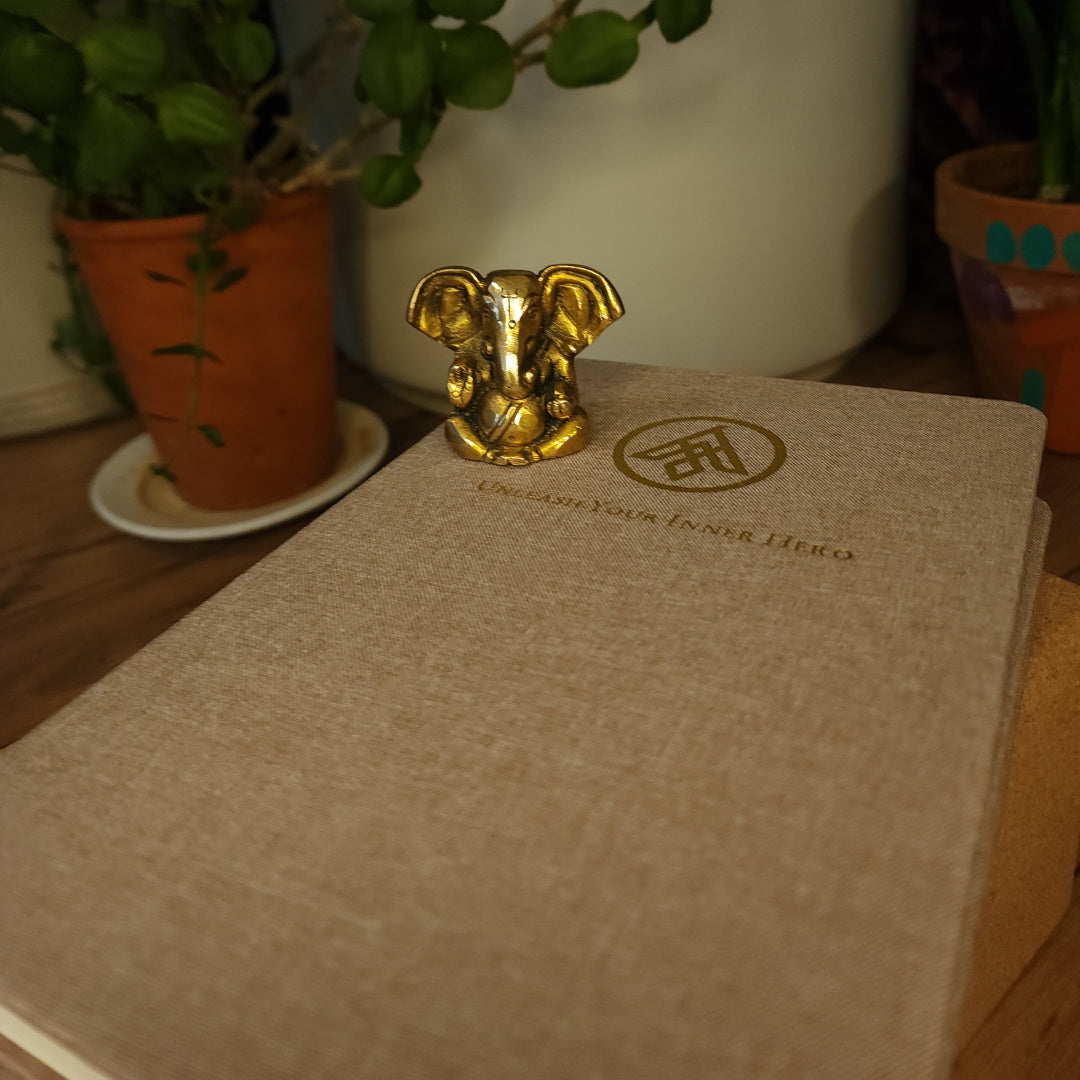
Ishvara (Lord; ruler; sovereign; Supreme Being): Meaning and Definition
Jack UtermoehlShare
Ishvara (lord; ruler; sovereign; Supreme Being)
- Devanagari: ईश्वर
- IAST: īśvara
- Pronunciation: EESH-vuh-ruh. The first syllable has a long ee sound, sh is soft, and the Sanskrit v may sound between an English v and w.
- Alternate spellings: Isvara, Ishwara, Iswara
Definition
Ishvara means “lord,” “ruler,” “sovereign,” or, in religious contexts, “the Supreme Being.” In yoga, Ishvara most specifically refers to the special purusha described in the Yoga Sutra: a supreme consciousness untouched by affliction, karma, and the results of action. Ishvara is also the focus of Ishvara pranidhana, the practice of dedication, devotion, or surrender to the Lord. The term is pronounced approximately EESH-vuh-ruh.
Ishvara carries both a straightforward linguistic meaning and several distinct philosophical meanings. Understanding the context helps clarify whether Ishvara refers to a human ruler, a supreme personal deity, the Lord within the heart, or the special purusha of classical yoga.
What does Ishvara literally mean?
Ishvara primarily means a lord, master, ruler, or sovereign. The word is related to the Sanskrit verbal root ish, which conveys ruling, possessing power, being master of something, or being capable. As an adjective, Ishvara can mean able or capable. As a masculine noun, it can refer to an owner, ruler, king, lord, or Supreme Being.
“God” is a common English translation of Ishvara, especially in devotional and philosophical writing. That translation can be too broad when it suggests that every Indian tradition defines Ishvara in the same way. “Lord” often preserves more of the word’s underlying sense of sovereignty while leaving room for the specific theology of the text or lineage.
- Primary literal meanings: lord, master, ruler, sovereign
- Religious meanings: the Lord, God, Supreme Being
- Grammatical use: a masculine noun and, in some contexts, an adjective meaning capable or powerful
What does Ishvara mean in the Yoga Sutra?
In the Yoga Sutra, Ishvara is defined as a “special purusha.” Purusha means consciousness or the seer in the dualistic framework shared by classical Yoga and Samkhya. Sutra 1.24 describes Ishvara as untouched by the kleshas, karma, the results of karma, and the latent deposits created by action.
The following sutras describe Ishvara as possessing the unsurpassed seed of complete knowledge and as the teacher of even the earliest teachers because Ishvara is not limited by time. Sutra 1.27 identifies pranava, the sacred syllable Om, as the designation or expression of Ishvara. Sutra 1.28 instructs the practitioner to repeat Om through japa while contemplating its meaning.
Patanjali’s brief definition does not fully settle every theological question. The sutras do not explicitly present a detailed creation doctrine or identify Ishvara with one named deity. Later commentators and yoga traditions interpret Ishvara through their own philosophical and devotional frameworks.
- Yoga Sutra 1.23 presents Ishvara pranidhana as a means to samadhi.
- Yoga Sutra 1.24 defines Ishvara as a special purusha untouched by affliction and karma.
- Yoga Sutra 1.25 associates Ishvara with unsurpassed knowledge.
- Yoga Sutra 1.26 calls Ishvara the teacher of the earliest teachers.
- Yoga Sutras 1.27–1.28 connect Ishvara with Om, japa, and contemplation.
What is Ishvara pranidhana?
Ishvara pranidhana means dedication, devotion, surrender, or placing oneself before Ishvara. It appears in three important places in the Yoga Sutra. Sutra 1.23 presents it as a means to samadhi. Sutra 2.1 includes it with tapas and svadhyaya as kriya yoga. Sutra 2.32 lists it as one of the five niyamas, and Sutra 2.45 associates it with the perfection of samadhi.
In practice, Ishvara pranidhana can include prayer, devotional meditation, chanting Om, mantra japa, worship, or offering the results of one’s actions to the divine. It can also shape how a practitioner meets effort and uncertainty. The practitioner acts with care while releasing the demand to control every outcome.
Some modern teachers translate Ishvara as “higher power,” “higher consciousness,” or “a principle greater than oneself.” These may be workable interpretive adaptations for students who do not use theistic language. They do not communicate the full traditional meaning in every yoga lineage, so teachers should identify them as modern interpretations rather than direct lexical equivalents.
- Offer the effort and its results to Ishvara.
- Use Om or another lineage-appropriate mantra as a focus for japa.
- Notice where attachment to control disrupts steady practice.
- Approach surrender as disciplined trust rather than passivity or avoidance.
How does Ishvara differ across yoga and Vedanta traditions?
The meaning of Ishvara changes according to the philosophical system using the word. Classical Yoga describes Ishvara as a unique purusha who is eternally free from the conditions affecting other conscious beings. This concept fits within Yoga’s distinction between purusha, consciousness, and Prakriti, material nature.
The Bhagavad Gita often presents Ishvara in a more explicitly devotional and cosmic sense. In Bhagavad Gita 18.61, Ishvara dwells in the heart of every being and directs beings through divine power. Within the Gita’s devotional context, Ishvara is closely connected with Krishna as the supreme Lord.
Vedanta schools agree that Ishvara refers to the divine Lord, but they explain the relationship among Ishvara, Brahman, the individual self, and the world differently. In Advaita Vedanta, Ishvara is commonly understood as Brahman associated with Maya and recognized as the omniscient Lord within ordinary or empirical experience. Brahman without limiting attributes is treated as the ultimate reality. Vishishtadvaita and Dvaita understand the supreme personal Lord as eternally real, while differing over how individual souls and the world relate to that Lord.
In devotional traditions, Ishvara may be identified with the lineage’s supreme deity, such as Vishnu, Krishna, or Shiva. Goddess-centered traditions often use the feminine form Ishvari. These identifications reflect distinct theological traditions rather than alternate dictionary definitions alone.
- Classical Yoga: a special purusha untouched by kleshas and karma
- Bhagavad Gita: the indwelling and governing Lord
- Advaita Vedanta: the Lord understood in relation to Brahman and Maya
- Vishishtadvaita and Dvaita: the supreme personal Lord, with differing accounts of the Lord’s relationship to souls and the world
- Devotional traditions: the supreme deity approached through Bhakti
Is Ishvara the same as Brahman?
Ishvara and Brahman should not automatically be treated as interchangeable. Brahman generally names ultimate reality in the Upanishads and Vedanta, while Ishvara emphasizes divine lordship, knowledge, power, and a relationship with the cosmos and living beings.
Some Vedanta traditions identify the supreme Brahman directly with the personal Lord. Advaita Vedanta often distinguishes Ishvara, Brahman understood as Lord in relation to the world, from Brahman considered beyond all limiting descriptions. Other schools reject this distinction or explain it differently.
The Yoga Sutra does not use Brahman as the name for Ishvara. Equating Patanjali’s special purusha with the Brahman of Vedanta requires an interpretive step supplied by later commentators or particular lineages.
How should yoga teachers explain Ishvara?
A clear starting point is: “Ishvara means Lord or Supreme Being. In Patanjali’s yoga, Ishvara is a special consciousness untouched by affliction and karma.” This gives students the lexical meaning and the Yoga Sutra definition without requiring them to adopt a single theology.
Teachers can then explain that Ishvara pranidhana is traditionally devotional and that modern yoga communities apply it in different ways. A theistic practitioner may understand it as surrender to God or a chosen deity. Another practitioner may approach it as dedication to a sacred reality or principle beyond the individual ego. The distinction should remain visible so that a modern adaptation does not replace the traditional context.
Ishvara is not a term for the practitioner’s individual ego, personal will, or desire to control events. Its practical role in yoga directs attention beyond self-centered action and toward devotion, humility, concentration, and release of attachment to results.
- Begin with “Lord,” “ruler,” or “Supreme Being.”
- Explain Patanjali’s definition before offering modern adaptations.
- Clarify whether a translation reflects a specific lineage or teaching context.
- Connect Ishvara naturally with Ishvara pranidhana, Om, japa, and samadhi.
Related Sanskrit Terms
- Isvara Pranidhana
- Purusha
- Om
- Japa (Mantra Repetition)
- Kriya Yoga
- Niyama
- Samadhi
- Brahman
- Bhakti
- Ishta Devata
- Prakriti
- Klesa (Mental Affliction)
- Karma
- Advaita (Nonduality)
- Dvaita (Dualism)
- Vishishtadvaita
- Ishvari (Divine Feminine Ruler)
- Shiva
- Vishnu
- Krishna (Divine Teacher)