What Are Yoga Sandbags Used For
Jack UtermoehlWhat are yoga sandbags used for? Yoga sandbags are weighted props that apply gentle, steady pressure to different parts of the body to support relaxation, improve body awareness, encourage grounding, and add stability in selected yoga poses. They are commonly used in restorative yoga, yin yoga, breathing practices, and some strength-focused postures where carefully placed weight helps practitioners experience more balanced alignment and a clearer sense of support.
How yoga sandbags support your practice
A yoga sandbag is a fabric bag filled with sand or another dense material that creates comfortable, even weight. Unlike free weights, a sandbag is designed to rest on the body or on the floor without rolling or creating unstable pressure.
The goal is not to increase intensity for its own sake. Instead, the added weight provides sensory feedback that helps many practitioners settle into a pose, notice muscle engagement, or release unnecessary tension. Teachers often describe this as giving the body a clear point of reference.
Depending on the pose and the student's needs, a sandbag can encourage a feeling of stability while remaining passive enough for restorative work.

Common ways yoga sandbags are used
Supporting restorative yoga
Restorative yoga is one of the most common places to use a sandbag. A lightly weighted bag placed across the thighs, hips, hands, or feet can encourage the body to soften into supported shapes. The steady pressure may help some practitioners feel more grounded during longer holds.
For example, in Supta Baddha Konasana, a sandbag resting across the tops of the thighs may provide a gentle downward sensation without forcing the knees toward the floor. Comfort should always guide the setup.
Adding feedback in standing poses
In selected standing poses, a sandbag can provide feedback rather than resistance. A teacher may place a sandbag on the front thigh in Warrior II or on the sacrum during certain alignment exercises to help students recognize where support and muscular engagement are needed.
These applications require thoughtful instruction and should never create joint discomfort.
Encouraging steadier breathing
Some breathing practices use a light sandbag on the lower ribs or abdomen while lying comfortably on the back. The gentle weight gives tactile feedback as the breath expands and settles. This can help practitioners notice movement in the breath without trying to force deeper inhalations.
Increasing body awareness
The nervous system responds to steady pressure differently than it does to movement. A sandbag may make it easier to sense where the body contacts the floor or where muscles are working harder than necessary. This increased awareness can be valuable for newer students learning alignment as well as experienced practitioners refining familiar poses.
Where to place a yoga sandbag
Placement depends on the pose, the intention, and the individual's comfort. Common locations include:
- Across the thighs in supported reclining poses.
- On the pelvis during selected floor-based stability exercises when appropriate.
- Across the feet or ankles to encourage a grounded feeling in restorative postures.
- On the hands during relaxation to reduce unnecessary arm tension.
- On the lower abdomen during quiet breathing awareness practices using light weight.
A sandbag should rest evenly and comfortably. It should never press directly onto the neck, face, throat, or joints in a way that causes pain, numbness, or restricted breathing.
When to use caution with yoga sandbags
Although yoga sandbags are simple props, they should be used with care. Weight that feels calming for one person may feel excessive for another.
Avoid placing heavy pressure on recent injuries, inflamed joints, healing surgical areas, or anywhere pain increases. Pregnant practitioners should seek guidance from a qualified teacher or healthcare professional before using weighted props over the abdomen or pelvis.
If breathing becomes restricted or a pose feels compressed instead of supported, remove the sandbag and reassess the setup. Comfort and ease remain the priority.

Choosing a yoga sandbag
If you are considering adding a yoga sandbag to your home practice, think about how you plan to use it.
A comfortable outer fabric, secure closure, and durable construction all matter because the bag will be moved frequently and may rest directly against the body. Some practitioners prefer lighter bags for breathing exercises and restorative work, while others keep multiple weights available for different purposes.
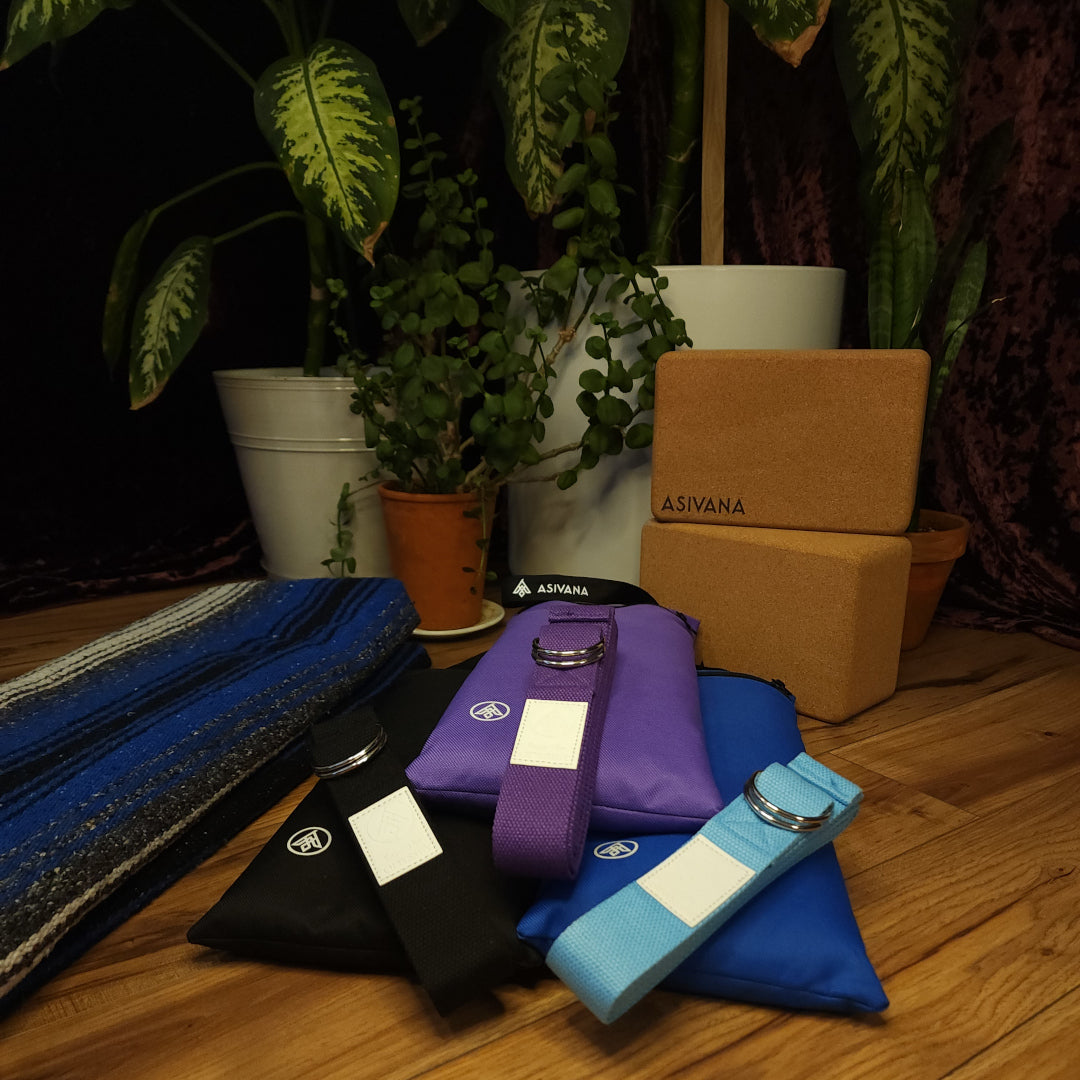
If you are shopping with Asivana Yoga, focus on selecting yoga props that match your practice rather than collecting equipment you may rarely use. A sandbag works especially well alongside bolsters, blankets, and blocks in restorative settings.
How yoga sandbags fit into a complete prop practice
Yoga sandbags work best as one part of a thoughtful prop collection. Each prop solves a different problem.
Blocks bring the floor closer. Straps extend your reach. Blankets provide cushioning and warmth. Bolsters support longer periods of rest. Sandbags contribute gentle weight that helps create stability and sensory feedback.
For example, a restorative reclining pose might include a bolster supporting the spine, blankets for warmth, blocks under the knees if needed, and a sandbag resting lightly across the thighs. Each prop has a clear purpose, creating comfort without forcing the body into a particular shape.
This is one reason experienced teachers reach for sandbags selectively. They are most effective when the added weight serves a specific intention rather than being included in every practice.
FAQ
What are yoga sandbags used for in restorative yoga?
They provide gentle, even pressure that can encourage relaxation, grounding, and greater awareness of body position during supported poses.
Can beginners use yoga sandbags?
Yes. Beginners can use yoga sandbags safely when the weight is appropriate and the placement is comfortable. Guidance from an experienced teacher is helpful when learning new setups.
How heavy should a yoga sandbag be?
The ideal weight depends on its intended use. Lighter bags are often preferred for breathing practices, while moderate weights may be suitable for restorative poses. The bag should always feel supportive rather than overwhelming.
Can a yoga sandbag improve flexibility?
A sandbag does not directly increase flexibility. It may help some practitioners relax into supported poses or become more aware of muscular tension, which can support comfortable movement over time.
What are yoga sandbags used for during breathing exercises?
They are sometimes placed lightly on the abdomen or lower ribs to provide gentle feedback about the movement of the breath. The weight should never make breathing difficult.