Yoga Blocks for Balance
Jack UtermoehlYoga blocks for balance help create a steadier foundation by bringing the floor closer, improving alignment, and giving you useful feedback as you move. Rather than replacing balance, blocks help you build it with more awareness. Used thoughtfully, they can support beginners learning stability and experienced practitioners refining control in standing, seated, and one legged postures while encouraging safe, consistent practice.
Why yoga blocks improve balance
Balance in yoga depends on several factors working together. Your base of support, joint alignment, muscle engagement, breathing, and attention all influence how stable you feel. A yoga block can make each of these easier to understand.
When a hand cannot comfortably reach the floor, many students compensate by rounding the spine or shifting weight unevenly. Placing a block beneath the hand creates a more appropriate height, allowing the body to organize with greater efficiency. This often results in steadier balance because the entire posture becomes more aligned.
Blocks also provide tactile feedback. Feeling the block beneath your hand or between your legs can help you recognize where your body is in space, an important part of developing balance over time.

How to use yoga blocks for balance in common poses
Triangle Pose
Place a block outside or inside the front foot at a height that allows your chest to stay open without collapsing toward the floor. Experiment with the block on its tallest, medium, or lowest height until you find a position that supports length through both sides of the body.
Half Moon Pose
Half Moon is one of the most common places to use yoga blocks for balance. Position the block slightly in front of the standing foot so your supporting hand can press firmly into it. This creates an additional point of contact while you learn to organize the hips and chest.
Standing Forward Fold
If your hands do not comfortably reach the floor, place blocks beneath them. This reduces strain while encouraging even weight through both feet.
Extended Side Angle
A block under the lower hand can prevent excessive leaning and help maintain space through the side body while supporting a stable lower body.
Tree Pose
Although Tree Pose does not typically require a block under the hand, placing a block between the inner thigh and foot during preparation can help develop awareness of leg engagement before practicing the full pose.

Choosing the right block for balance practice
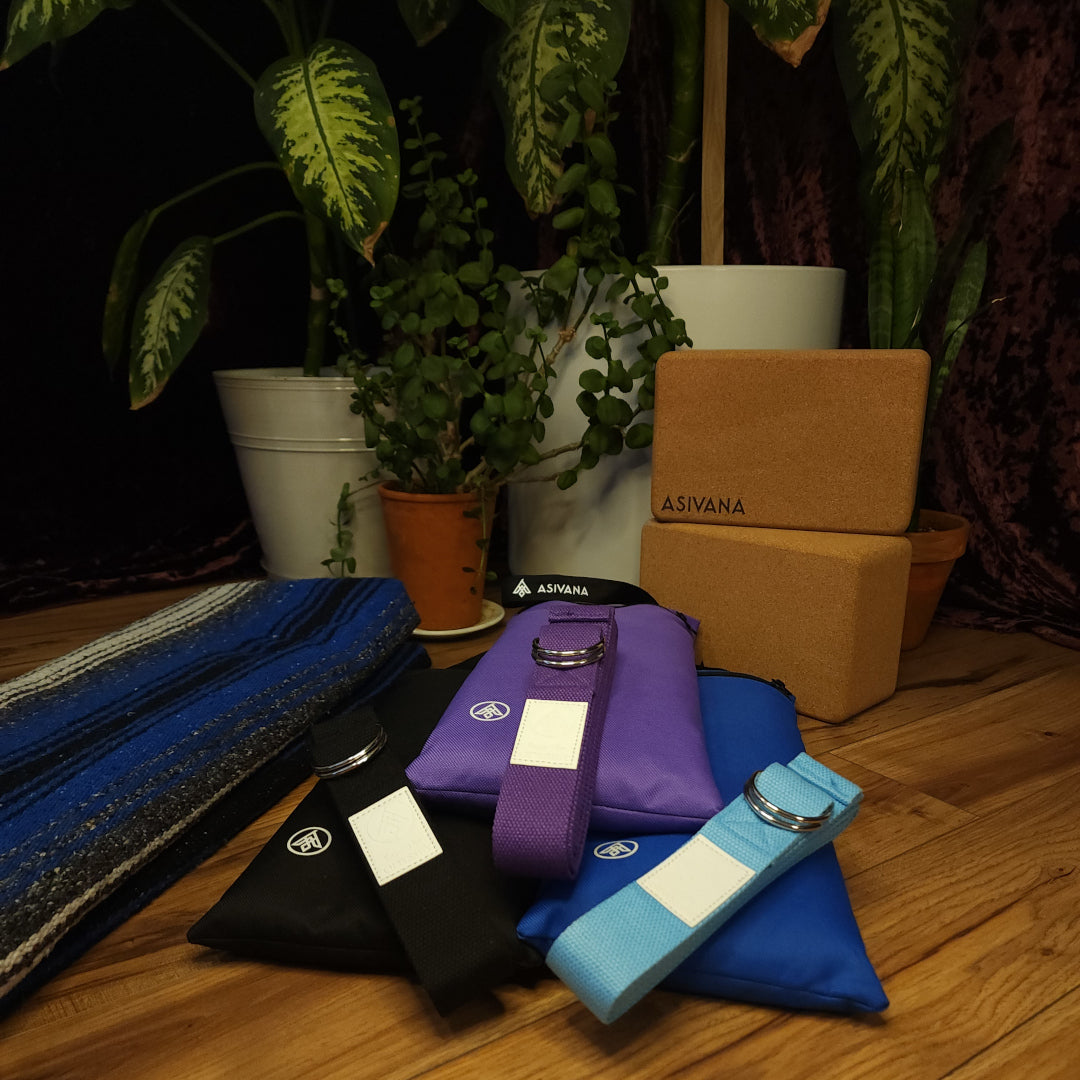
Most yoga blocks come in foam, cork, or wood. Each offers a different experience.
Foam blocks are lightweight and comfortable for many practitioners. They are easy to reposition and often work well for general classes and home practice.
Cork blocks are denser and provide a firmer surface. Many practitioners appreciate the added stability during standing balance poses because the block compresses less under pressure.
Wood blocks provide the firmest support but are less common in many home practices because they are heavier and less forgiving.
Beyond material, consider having a pair of matching blocks. Two blocks allow for symmetrical support in poses such as Forward Fold or supported squats and give you more options as your practice develops.
Asivana Yoga offers yoga prop categories designed to support thoughtful practice. When choosing blocks, focus on comfort, stability, and how they fit the types of poses you practice most often.
Building balance progressively
Balance improves through repetition and appropriate challenge. A block should make the pose more accessible without removing the work of stabilizing.
One helpful progression is to begin with the block at its tallest height. As confidence and mobility improve, lower the block to the medium height and eventually to its lowest setting if appropriate. This gradual approach allows your body to adapt without forcing unnecessary range of motion.
You can also use a block during transitions between poses. Moving slowly from Warrior III into Half Moon with one hand on a block teaches control through movement instead of focusing only on holding a final position.
Steady breathing remains essential. Many balance challenges become easier when attention shifts from trying to stay perfectly still toward maintaining smooth, consistent breath.

Common mistakes when using blocks for balance
One common mistake is placing the block too far away. This encourages reaching instead of stacking the joints efficiently. Position the block where your hand naturally wants to land while maintaining good posture.
Another mistake is choosing the lowest height immediately because it seems more advanced. There is no advantage in sacrificing alignment to reach a lower block. The appropriate height is the one that supports the posture with stability and ease.
Some practitioners also grip the block tightly. Instead, allow the hand to press firmly while keeping unnecessary tension out of the shoulders and jaw.
Finally, remember that balance changes from day to day. Fatigue, stress, and even hydration can influence stability. Using a block on one day and practicing without it on another reflects responsiveness rather than inconsistency.
Creating a simple balance practice with blocks
You do not need an elaborate sequence to improve balance. A focused practice of ten to fifteen minutes can provide meaningful progress.
Begin with Mountain Pose to establish even weight through both feet. Move into Chair Pose while noticing steady breathing. Practice Triangle Pose with a block beneath the lower hand, followed by Half Moon using the block for support. Continue with Tree Pose, then finish in a seated Forward Fold using blocks beneath the hands if needed.
Repeat this sequence regularly instead of constantly changing poses. Familiarity allows you to notice subtle improvements in coordination, confidence, and body awareness.
FAQ
Should beginners use yoga blocks for balance?
Yes. Blocks help beginners develop alignment and stability while learning balance safely and comfortably.
Are cork or foam blocks better for balance?
Both work well. Foam offers a softer feel, while cork provides a firmer base that many people prefer during standing poses.
Do I need one block or two?
A pair offers more versatility. Two blocks support symmetrical poses and provide more setup options during practice.
Can blocks make balance poses too easy?
When used correctly, blocks adjust the challenge without removing it. They help you practice with better alignment while continuing to build strength and coordination.
When should I stop using a block?
If you can maintain steady alignment and control without the block, you may choose to practice without it. Many experienced practitioners still use blocks regularly because they remain valuable teaching tools.