Simha (Lion): Meaning and Definition
Jack UtermoehlShare
Simha (lion)
- Devanagari: सिंह
- IAST: siṃha
- Pronunciation: Approximately SIM-huh. Keep the first i short, as in “sit,” give the nasal sound light resonance before the h, and keep the final a short. Sanskrit recitation traditions vary slightly in how strongly they articulate the nasal before h.
Definition
Simha means “lion” in Sanskrit. In yoga, simha most often appears in Simhasana, “Lion Pose” or literally “lion seat.” The word can also describe a powerful, eminent, or foremost person, especially when used at the end of a compound.
Simha is a masculine Sanskrit noun whose primary meaning is the animal lion. The word carries wider associations with strength, courage, authority, and excellence, but these qualities come from its literary, devotional, and compound uses rather than from a separate technical definition in yoga philosophy.
What does Simha mean in Sanskrit?
The primary meaning of Simha is “lion.” Sanskrit dictionaries also record secondary meanings such as the zodiacal sign Leo and, in certain contexts, a hero, ruler, or eminent person.
Simha is commonly used at the end of a compound to identify someone as foremost within a group. In this construction, the sense is similar to the English expression “a lion among people.” The lion conveys excellence, power, or leadership rather than describing the person as a literal animal.
The dictionary headword Simha is the noun stem. Its ending changes when the word is declined for grammatical case and number.
What does Simha mean in yoga?
In yoga, Simha is best known as the first part of Simhasana. Simha means “lion,” while asana means “seat” or “posture,” so Simhasana can be translated as “Lion Pose” or “lion seat.” Outside posture terminology, Simhasana can also mean a throne, especially a royal seat associated with lion imagery.
The Hatha Yoga Pradipika describes Simhasana in verses 1.52 through 1.54. In that description, the heels are placed on opposite sides beneath the perineal region, the hands rest on the knees with the fingers extended, the mouth opens, and the gaze rests at the tip of the nose. The text praises the posture and connects it with the coordination of three bandhas.
This classical description differs from the version commonly taught in modern yoga classes. Modern Lion Pose often includes extending the tongue toward the chin and exhaling through the mouth with an audible “ha” sound. That facial and breathing action is also called Lion’s Breath. Teachers should recognize that the classical seated posture and the modern breathing variation are related practices, but they are not identical descriptions.
Why is the lion significant in Hindu traditions?
Lion imagery appears in several Hindu traditions, where its meaning depends on the deity, text, and setting. The lion commonly suggests valor, protective force, sovereignty, or the power to overcome disorder.
Durga is frequently represented with a lion as her vahana, or animal vehicle. In this context, the lion accompanies the goddess in her protective and martial forms, including images of her victory over the buffalo demon Mahisha.
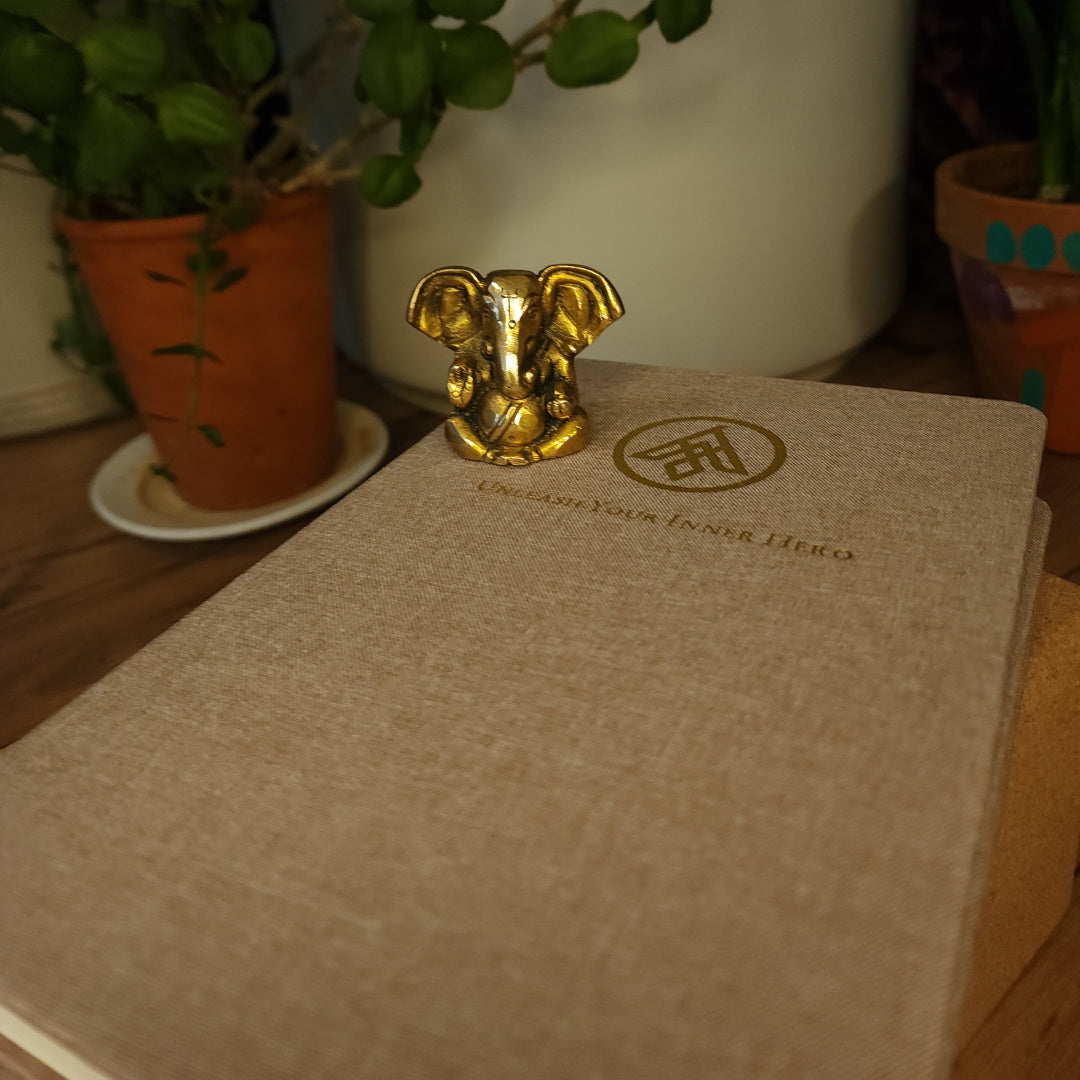
Simha also appears in the name Narasimha, the man-lion Avatar of Vishnu. Nara means “person” or “human,” and Simha means “lion.” Narasimha combines human and leonine form and is revered as a fierce protector of the devotee Prahlada.
These devotional associations can enrich a yoga teacher’s explanation of Simha, but courage, protection, and sovereignty are symbolic associations. The direct lexical translation remains “lion.”
How should yoga teachers use and pronounce Simha?
When introducing the word, teachers can say, “Simha means lion, and Simhasana means Lion Pose.” This gives students the direct translation before adding symbolic or historical context.
The pronunciation is approximately SIM-huh. The IAST dot beneath the m represents an anusvara, a nasal sound. Before h, this nasal may be heard as light nasal resonance rather than a fully separated English m. Regional speech and Sanskrit recitation traditions may produce slightly different realizations.
Simha should not automatically be translated as “courage” or “fearlessness.” Those ideas may be associated with lion imagery, but they are interpretations rather than the word’s literal meaning. The Sanskrit term Abhaya is more directly associated with fearlessness.
- Use “lion” as the primary translation.
- Explain “foremost” or “eminent” as a figurative compound meaning.
- Distinguish the classical Simhasana from modern Lion’s Breath when teaching practice history.
- Avoid presenting symbolic qualities as the literal dictionary definition.