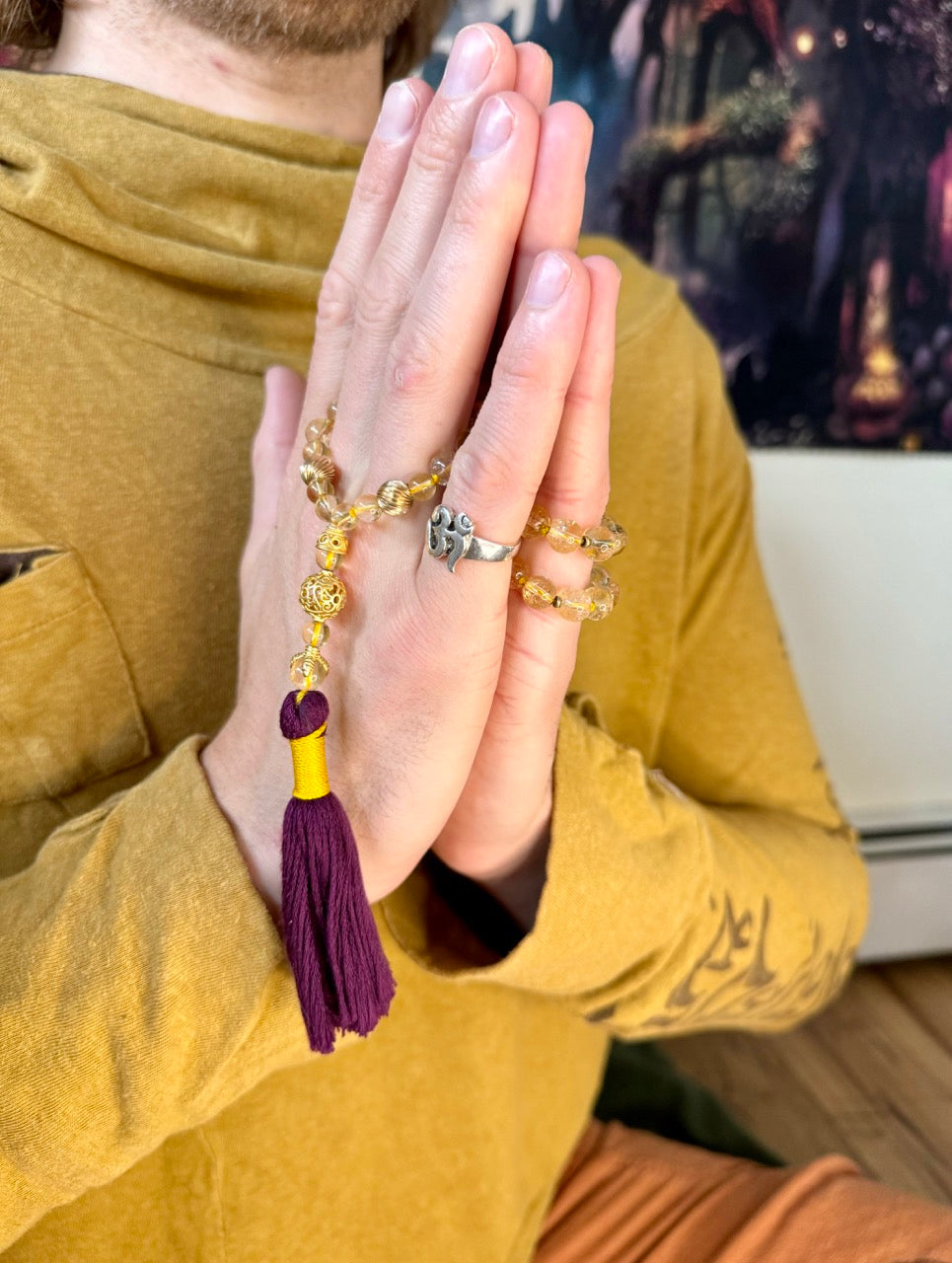
Udana Vayu: Meaning and Definition
Jack UtermoehlShare
Udana Vayu (upward-moving vital wind; ascending vital current)
- Devanagari: उदानवायु
- IAST: udāna vāyu
- Pronunciation: oo-DAA-nuh VAA-yoo. The first a in each word is held longer, the d is pronounced with the tongue near the back of the upper teeth, and the v may sound between an English v and w.
- Alternate spellings: Udana Vayu, Udana-vayu, Udanavayu, Udaan Vayu
Definition
Udana Vayu is the upward-moving vital current in the traditional yogic model of the five primary vayus. Literally, udana refers to upward or outward breathing, while vayu means wind or moving air. In yoga, Udana Vayu refers especially to the upward function of prana associated with the throat and head, speech, effort, and forms of ascent or transition. Some Upanishadic teachings also connect Udana Vayu with sleep, death, and the movement of consciousness beyond the body. “Upward-moving vital wind” is a close literal translation. “Upward-moving energy” is common in modern yoga, although energy is an interpretive translation rather than the literal meaning of vayu.
Udana Vayu is one of the Pancha Vayu, the five principal functions through which Prana is described as operating in the living body. Its defining quality is upward movement. Classical sources apply that movement to voice, bodily effort, the region extending toward the head, and the departure or elevation of consciousness. The details vary by text, so Udana Vayu is best understood as a traditional functional model rather than a single anatomical structure.
What does Udana Vayu literally mean?
Udana Vayu means “upward-moving vital wind” or “ascending vital current.” Sanskrit dictionaries describe udana as breath moving upward or outward. Vayu literally means wind or air and can also indicate movement, especially within traditional accounts of the living body.
Udana Vayu is a masculine Sanskrit compound. The joined dictionary form is udanavayu, written उदानवायु in Devanagari. In a complete Sanskrit sentence, the nominative singular may appear as udanavayuh. English-language yoga writing usually separates the two words.
The popular translation “upward energy” communicates the general direction of Udana Vayu, but it leaves out the older imagery of breath and wind. The term belongs to a model in which vital activity is described through patterns of movement rather than through a single material substance.
What is Udana Vayu in the five-vayu system?
Udana Vayu is one of the Pancha Vayu, the five major divisions of prana. Each vayu names a characteristic direction or function of vital activity. Prana Vayu is commonly associated with inward movement and respiration, Apana Vayu with downward elimination, Samana Vayu with digestion and assimilation, Vyana Vayu with distribution throughout the body, and Udana Vayu with upward movement.
The Yoga Bhashya explains udana through unnayana, the act of raising or carrying upward, and describes its range as extending toward the head. This upward orientation helps explain why later teaching commonly associates Udana Vayu with the throat, voice, expression, and upright bearing.
The five vayus are overlapping functions within a larger account of prana. They should not be treated as five separate physical winds occupying sharply divided anatomical compartments. Their assigned locations and functions differ somewhat among yoga and Ayurvedic sources.
- Primary direction: upward
- Commonly associated region: throat, chest, and head, with some Ayurvedic accounts also including the navel
- Commonly associated functions: speech, vocal expression, effort, strength, and upward transition
How is Udana Vayu described in the Upanishads?
The Prashna Upanishad gives Udana Vayu an important role in the movement of consciousness. In 3.7, the upward udana is said to lead a person after death according to the moral quality of that person’s actions. Verses 3.9 and 3.10 continue this account by connecting udana with tejas and with movement toward a destination shaped by the mind’s final intention.
Prashna Upanishad 4.4 uses the imagery of an internal sacrifice during sleep. Within that symbolic teaching, udana is compared with the fruit of the sacrifice and is said to lead the mind toward Brahman each day. This passage gives Udana Vayu a meaning that extends beyond ordinary respiration or speech.
These passages show that upward movement can refer to more than physical direction. In the Upanishadic context, Udana Vayu may represent the transition of the living being between states of consciousness, at death, or toward another realm. This should be presented as part of the text’s traditional cosmology rather than as a scientifically verified account of dying.
What does Patanjali say about Udana Vayu?
The Yoga Sutra discusses mastery of udana in the Vibhuti Pada, the chapter concerned with extraordinary capacities arising from advanced yogic concentration. Yoga Sutra 3.39 states that mastery of udana brings nonattachment or noncontact in relation to water, mud, thorns, and similar obstacles, along with utkranti, a term that can indicate rising, ascent, or departure.
The accompanying Yoga Bhashya identifies udana as the upward-raising vital function extending toward the head. The commentary connects mastery of udana with ascent and with control over departure at the time of death.
Traditional commentators may read the results of this mastery literally as yogic powers. Modern interpreters sometimes understand them symbolically or psychologically. A dictionary entry should preserve the classical claim without promising levitation or other extraordinary physical results from ordinary Pranayama practice.
How is Udana Vayu understood in Ayurveda?
Ayurveda treats udana as a subdivision of vata, the principle associated with movement. The Sushruta Samhita defines udana as the foremost vayu that moves upward and associates it with speech, song, and related actions. The text also connects disturbed udana with disorders occurring above the clavicular region.
The Charaka Samhita tradition places udana in the navel, chest, and throat and associates it with speech, effort, energy, strength, and complexion. Ayurvedic accounts may add or emphasize functions differently depending on the source and commentary.
Yoga and Ayurveda share the language of prana and vayu, but they do not always use it for the same purpose. Ayurvedic discussions often focus on bodily function, health, and disorder. Upanishadic and yogic sources may emphasize consciousness, meditation, death, or extraordinary yogic attainment.
How is Udana Vayu used in modern yoga practice and teaching?
In contemporary yoga, Udana Vayu often provides a framework for exploring the relationship among breath, voice, posture, and attention. Chanting, mindful speech, breath awareness, and practices involving the throat are sometimes taught through the lens of Udana Vayu. These applications are interpretive developments based on its traditional upward direction and association with speech.
Udana Vayu is also frequently linked with Vishuddha, the throat chakra. This is a common modern teaching association, although the classical sources do not all establish a fixed one-to-one correspondence between each vayu and a chakra. Teachers should identify this mapping as tradition-dependent rather than universal.
Jalandhara Bandha, pranayama, mantra recitation, and upright seated meditation may be discussed in relation to Udana Vayu. These practices have their own methods and cautions. The idea of balancing or directing Udana Vayu should not replace qualified instruction, especially when breath retention or strong bandha practice is involved.
- Use “upward-moving vital wind” when giving the literal translation.
- Use “upward-moving vital current” when explaining the concept in accessible yoga language.
- Describe throat and chakra associations as common teaching frameworks rather than fixed anatomical facts.
- Avoid presenting traditional subtle-body descriptions as biomedical physiology.
Common misunderstandings about Udana Vayu
Udana Vayu does not refer only to the physical exhalation. Some sources connect udana with upward or outward breath, but its traditional functions also include speech, effort, ascent, and transition between states.
Udana Vayu is also broader than positive thinking, confidence, or self-expression. Modern teachers may use these themes to make the concept practical, yet those psychological associations are interpretive extensions rather than complete translations of the Sanskrit term.
The phrase “upward-moving” does not mean that every practice involving upward motion directly activates Udana Vayu. Traditional discussions concern a subtle and functional account of prana. Claims about a particular pose, sound, or breathing exercise should be attributed to the teaching system that makes them.
Related Sanskrit Terms
- Pancha Vayu
- Vayu
- Prana
- Prana Vayu
- Apana Vayu
- Samana Vayu
- Vyana Vayu
- Pranamaya Kosha
- Pranayama
- Nadi
- Sushumna
- Vishuddha
- Vak
- Jalandhara Bandha