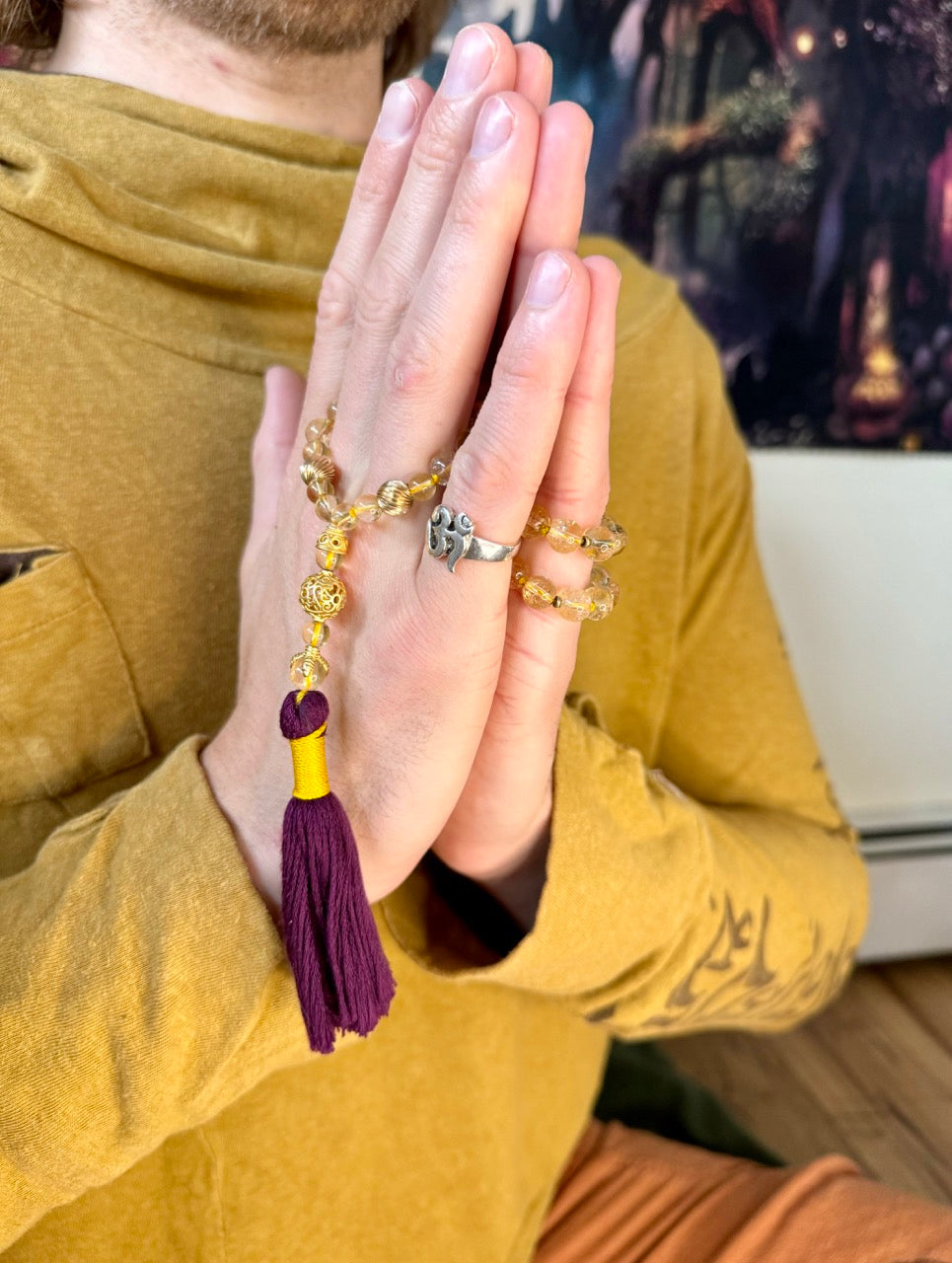
Vyana Vayu: Meaning and Definition
Jack UtermoehlShare
Vyana Vayu (pervasive vital wind; circulating vital energy)
- Devanagari: व्यान वायु; compound: व्यानवायु
- IAST: vyāna vāyu; compound: vyānavāyu
- Pronunciation: VYAA-nuh VAA-yoo. The initial vy is pronounced as a blended consonant sound. The Sanskrit v is formed with the lips and may sound between an English v and w.
- Alternate spellings: Vyana-vayu, Vyanavayu, Vyan Vayu
Definition
Vyana Vayu is the pervasive vital wind that distributes prana throughout the body. In yoga, Vyana Vayu refers to the whole-body movement of vital energy through the nadis, supporting coordinated movement, expansion, contraction, and communication among different regions of the body. It is one of the Pancha Vayu, the five principal functions of Prana, and should not be treated as an exact synonym for the cardiovascular or nervous system.
Vyana Vayu is distinguished by its wide field of activity. While the other principal vayus are commonly associated with particular regions or directions, classical sources describe Vyana as moving throughout the body. This pervasive quality explains why yoga and Ayurveda connect it with distribution, coordinated movement, and the integration of bodily functions.
What Does Vyana Vayu Mean?
Vyana names one of the five principal vital airs. Vayu literally means wind or air, but in yogic and Ayurvedic contexts it also refers to a subtle moving function within living beings. Vyana Vayu can therefore be translated as “pervasive vital wind,” “circulating vital air,” or “distributing vital energy.” The translation “circulating energy” is useful when circulation is understood broadly rather than limited to blood flow.
The Monier-Williams Sanskrit-English Dictionary connects Vyana with a verb meaning to breathe, respire, or draw breath through the whole body. It defines Vyana as the vital air that circulates or is diffused through the body. The added word Vayu identifies Vyana explicitly as a vital wind.
- Vyana: the pervasive or diffusive vital air
- Vayu: wind, air, or a vital current
- Vyana Vayu: the vital wind whose activity extends throughout the body
Vyana Vayu Among the Five Vital Winds
Vyana Vayu belongs to the Pancha Vayu, the five principal functions of Prana. These are Prana Vayu, Apana Vayu, Samana Vayu, Udana Vayu, and Vyana Vayu. The five are presented as interdependent expressions of one vital principle rather than five separate physical substances.
The other principal vayus are commonly distinguished by region or function. Prana Vayu is associated with intake and the upper body, Apana Vayu with downward elimination, Samana Vayu with digestion and assimilation, and Udana Vayu with upward movement, speech, and effort. Vyana Vayu extends through the whole body and supports distribution and coordinated movement. Classical Ayurvedic descriptions specifically connect it with walking, extending and flexing the limbs, projecting the limbs, and blinking.
- Prana Vayu: intake and sustaining functions centered in the upper body
- Apana Vayu: downward-moving elimination and reproductive functions
- Samana Vayu: digestion, assimilation, and balancing near the digestive fire
- Udana Vayu: upward movement, speech, effort, and expression
- Vyana Vayu: pervasive distribution and coordinated movement throughout the body
Vyana Vayu in the Upanishads and Yoga Texts
The Prashna Upanishad 3.6 places Vyana within an extensive network of nadis arising from the heart. In that subtle-body model, Vyana moves through the branching channels and carries vital activity throughout the organism. The passage establishes Vyana as pervasive and distributive rather than confined to one anatomical location.
The Gheranda Samhita 5.60–62 lists ten vayus and identifies five as principal. It locates Prana in the heart, Apana near the lower pelvic region, Samana around the navel, and Udana in the throat, while describing Vyana as pervading the whole body. This later yoga text preserves the same defining feature found in the Upanishadic account.
- The heart functions as an organizing center in the Prashna Upanishad account.
- The nadis are channels of the yogic subtle body and should not automatically be equated with blood vessels or nerves.
- The defining location of Vyana is the whole body rather than one isolated region.
Vyana Vayu in Ayurveda
Ayurveda commonly calls this function Vyana Vata as well as Vyana Vayu. In the Charaka Samhita, Vyana is described as swift-moving and present throughout the body. Its functions include walking, extension, flexion, limb movement, and blinking. This emphasizes bodily motion and coordination.
The Sushruta Samhita gives Vyana a broader distributive role, connecting it with the movement of nutritive fluids, blood, and perspiration throughout the organism, along with several forms of muscular movement. These descriptions help explain why modern summaries frequently associate Vyana with circulation. The traditional concept is broader than the modern cardiovascular meaning of that word.
- Ayurvedic name: Vyana Vata or Vyana Vayu
- Primary field: the entire body
- Traditional functions: distribution, locomotion, extension, flexion, and coordinated movement
- Interpretive caution: Vyana is part of an Ayurvedic functional model, not a single structure recognized by modern anatomy
How Vyana Vayu Is Applied in Yoga Practice
In yoga practice, Vyana Vayu offers a way to observe how breath, attention, and movement spread through the whole body. During asana, a practitioner can notice whether effort is isolated in one area or distributed through the feet, hands, limbs, torso, and breath. This whole-body awareness reflects the traditional description of Vyana as pervasive.
Expansive movements can be used to explore Vyana Vayu, especially when the practitioner senses energy extending from the center toward the limbs. Balanced engagement also matters. The practical aim is coordinated participation of the whole body, rather than forcing a sensation of energy or treating every physical experience as evidence of a subtle imbalance.
During Pranayama or meditation, Vyana Vayu may be contemplated as the distribution of Prana beyond a single breathing region. A simple approach is to feel the inhalation and exhalation affecting the entire body while maintaining an unforced breath. This is a modern teaching application grounded in Vyana’s classical whole-body character, not a diagnostic or medical technique.
- Observe how movement transfers between the center and the limbs.
- Use whole-body awareness rather than concentrating effort in one joint or muscle group.
- Notice expansion and contraction without forcing the breath.
- Treat subtle-body language as a contemplative framework rather than a medical diagnosis.
How Vyana Vayu Relates to Prana, Nadis, and the Pranamaya Kosha
Prana can name the general vital principle, while Vyana Vayu names one of its five principal functions. This distinction prevents confusion between Prana Vayu, one specific directional function, and Prana as the larger category that includes all five vayus.
Vyana Vayu is closely related to the nadis because the Prashna Upanishad describes it as moving through their branching network. Within later yoga teaching, this makes Vyana relevant to the Pranamaya Kosha, the vital or energetic dimension of embodied life. The term Pranamaya Kosha comes from a separate Upanishadic framework, so the relationship is interpretive rather than a single definition stated identically in every source.
- Prana: the broader vital principle
- Pancha Vayu: five principal functions of Prana
- Nadi: a channel within the yogic subtle-body model
- Pranamaya Kosha: the vital-energy layer or dimension of embodied experience
Related Sanskrit Terms
- Pancha Vayu
- Vayu
- Prana
- Prana Vayu
- Apana Vayu
- Samana Vayu
- Udana Vayu
- Pranamaya Kosha
- Nadi
- Pranayama