Japa Mala
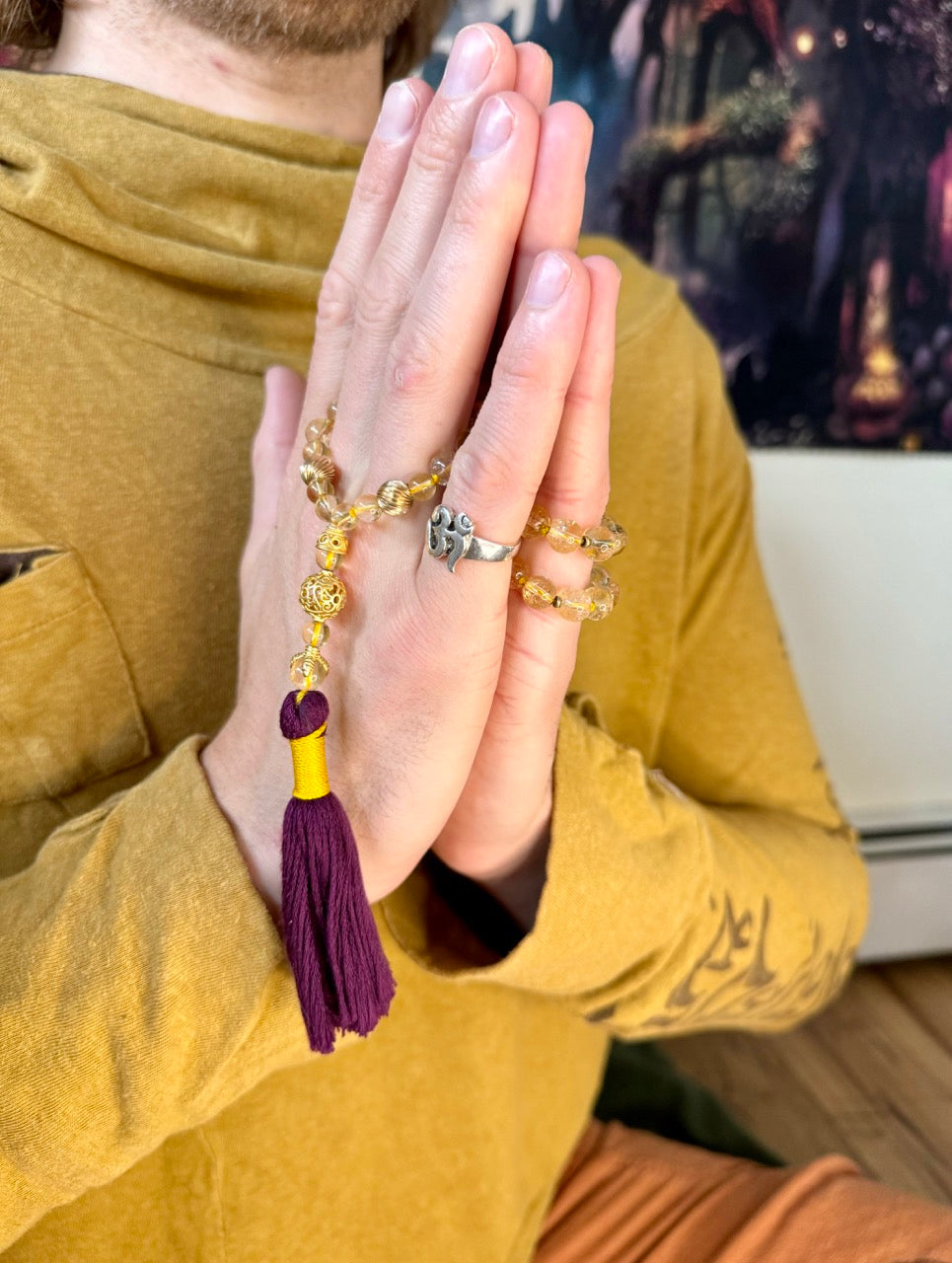
Jack UtermoehlA japa mala is a strand of meditation beads traditionally used to count mantra repetitions during meditation and prayer. It helps keep attention on the sound, rhythm, and intention of the practice instead of the counting itself. While rooted in Hindu, Buddhist, and other spiritual traditions, many modern practitioners use a japa mala as a simple tool for cultivating consistency, presence, and mindful repetition in their daily meditation.
What Is a Japa Mala?
The word japa refers to the repeated recitation of a mantra, either aloud, whispered, or silently. Mala means garland or strand. Together, a japa mala is a strand of beads that supports the practice of repeating a mantra with steady attention.
A traditional mala contains 108 beads plus one larger bead, often called the guru bead. The guru bead marks the beginning and end of a round of practice. Rather than crossing over it, many practitioners reverse direction after reaching the guru bead as a gesture of respect for the tradition.
Although malas are associated with spiritual practice, they are ultimately practical tools. Repeating a mantra while moving one bead at a time creates a gentle rhythm that helps settle wandering attention.
Why Are There 108 Beads?
The number 108 carries symbolic significance across several spiritual traditions. Different explanations exist, and no single interpretation is universally accepted. Some connect it to traditional cosmology, others to sacred mathematics, and others to symbolic completeness.
For everyday practice, the exact symbolism is often less important than the function. A strand of 108 beads provides a complete cycle of repetition, giving structure to meditation without requiring mental effort to keep count.
Smaller malas with 54, 27, or 21 beads are also common. These are often used for shorter practice sessions or for portability. The principle remains the same. The beads provide a consistent rhythm for mantra repetition.
How to Use a Japa Mala
Using a japa mala is straightforward. Begin by choosing a mantra that has personal meaning or that you have received through a teacher or tradition. Sit comfortably with an upright posture and allow your breath to settle.
Basic steps
Hold the mala comfortably in one hand. Many traditions use the right hand, although practices vary. Rest the guru bead outside the counting sequence and begin with the first bead next to it. Repeat your chosen mantra once for each bead, gently moving to the next bead after every repetition.
Continue until you return to the guru bead. If you wish to complete another round, turn the mala around and move in the opposite direction instead of crossing over the guru bead.
The purpose is not speed. A steady pace allows the mind to remain connected with the sound, meaning, or feeling of the mantra.
Choosing a Japa Mala
Many people wonder if a certain material is required. In practice, the best choice is one that supports regular use and feels comfortable in your hands.
Malas can be made from wood, seeds, gemstones, or other natural materials. Different traditions may associate specific materials with particular practices or symbolic qualities. If you are following a lineage or teacher, their guidance may influence your choice.
For general meditation, consider practical factors such as:
- Bead size that feels comfortable to hold.
- A cord that moves smoothly without excessive stiffness.
- Durable construction for regular practice.
- A design that encourages you to return to meditation consistently.
If you are exploring meditation accessories through Asivana Yoga, choose items that support a calm and intentional practice rather than focusing on appearance alone. A meditation tool should encourage presence and consistency.
Building a Sustainable Mantra Practice
A japa mala is most helpful when paired with a realistic routine. Many practitioners begin with one complete round each morning or a shorter number of repetitions that comfortably fits their schedule.
Consistency usually matters more than duration. Even a brief daily practice helps develop familiarity with the mantra and creates a regular opportunity to settle the mind.
You may choose to practice before seated meditation, after gentle yoga, or during a quiet part of your day. Over time, the simple act of holding the mala can become a reminder to pause and reconnect with your intention.
If your attention drifts, gently return to the next bead and continue. The practice is built on repetition, patience, and returning without judgment.
Respecting Tradition While Making the Practice Your Own
Japa has deep roots in living spiritual traditions. Learning about its cultural and historical context helps approach the practice with respect.
At the same time, people come to mantra meditation from many backgrounds. Some use traditional Sanskrit mantras within a specific lineage. Others use sacred phrases from their own faith or simple words that encourage qualities such as peace, compassion, or gratitude.
If you are unsure where to begin, studying with an experienced teacher can provide helpful context for selecting and understanding a mantra. A teacher can also explain pronunciation, meaning, and the role of repetition within the broader practice.
FAQ
Can beginners use a japa mala?
Yes. A japa mala is accessible for beginners. Start with a simple, meaningful mantra and focus on steady repetition rather than perfection.
Do I have to use 108 repetitions?
No. While 108 is traditional, shorter malas and shorter practice sessions are common. The important factor is establishing a consistent practice.
Can I wear my japa mala?
Some people wear their mala between meditation sessions, while others reserve it only for practice. Customs vary by tradition, so follow the guidance of your teacher if applicable.
What mantra should I use?
If you study within a tradition, use the mantra provided by your teacher. Otherwise, choose a phrase that aligns with your values and supports mindful repetition.
How should I care for a japa mala?
Store it in a clean, dry place and handle it with care. If the cord shows signs of wear, restringing the beads can help preserve the mala for continued practice.