Yoga Straps Questions Answered
Jack UtermoehlYoga straps are simple props that help you extend your reach, improve alignment, and explore poses with greater stability. They are useful for increasing flexibility over time, supporting safe movement, and making many postures more accessible without forcing range of motion. Used thoughtfully, yoga straps can benefit beginners, experienced practitioners, and teachers who want to adapt poses for different bodies and practice goals.
What Are Yoga Straps?
A yoga strap is a long woven strap, typically made from cotton or another durable fabric, with a buckle or loop at one end. It acts as an extension of your arms or hands when your natural reach is limited.
The purpose of a strap is to help create steady connections between your body and the pose. Instead of straining to grab a foot, clasp your hands, or maintain alignment, the strap bridges the distance so you can practice with more control.
This makes straps valuable for flexibility work, balance poses, seated forward folds, shoulder mobility, and restorative yoga.

Why Use a Yoga Strap?
Many practitioners assume a strap is only for beginners, but experienced yoga students often rely on one to refine alignment and reduce unnecessary effort.
Support healthy alignment
A strap helps maintain proper positioning when limited mobility would otherwise change the shape of a pose. This allows the intended muscles to work while reducing compensations elsewhere in the body.
Build flexibility gradually
Flexibility develops through consistent practice, not by forcing deeper stretches. A strap allows you to work at an appropriate range while maintaining steady breathing and muscular support.
Improve shoulder mobility
Shoulder opening exercises often become more comfortable with a strap because your hands can stay farther apart while you gradually develop range of motion.
Increase accessibility
Every body has different proportions, mobility, and strength. A strap helps adapt poses so more people can practice comfortably and safely.
Common Ways to Use Yoga Straps
Seated forward fold
Loop the strap around the soles of your feet in Paschimottanasana. Hold each end while keeping a long spine. Rather than pulling yourself forward, use the strap to maintain gentle engagement through the arms and torso.
Reclining hamstring stretch
In Supta Padangusthasana, place the strap around one foot while lying on your back. Extend the leg upward without forcing it straight. The strap lets you relax your shoulders while focusing on steady leg alignment.
Cow Face Pose arms
If your hands do not meet behind your back, hold opposite ends of the strap. Over time this allows gradual improvement in shoulder mobility while keeping the chest open.
Bound poses
Many twists and binds become more approachable when a strap connects the hands. This lets you experience the structure of the pose without sacrificing posture.
Restorative yoga
A strap can help secure the legs or support passive poses during longer holds. Combined with blocks or blankets, it creates stable and comfortable setups for relaxation.

How to Choose the Right Yoga Strap
The best strap depends on how you plan to use it.
Length
Longer straps offer more versatility for taller practitioners, shoulder mobility work, and restorative poses. Shorter straps can be easier to manage for everyday stretching.
Buckle style
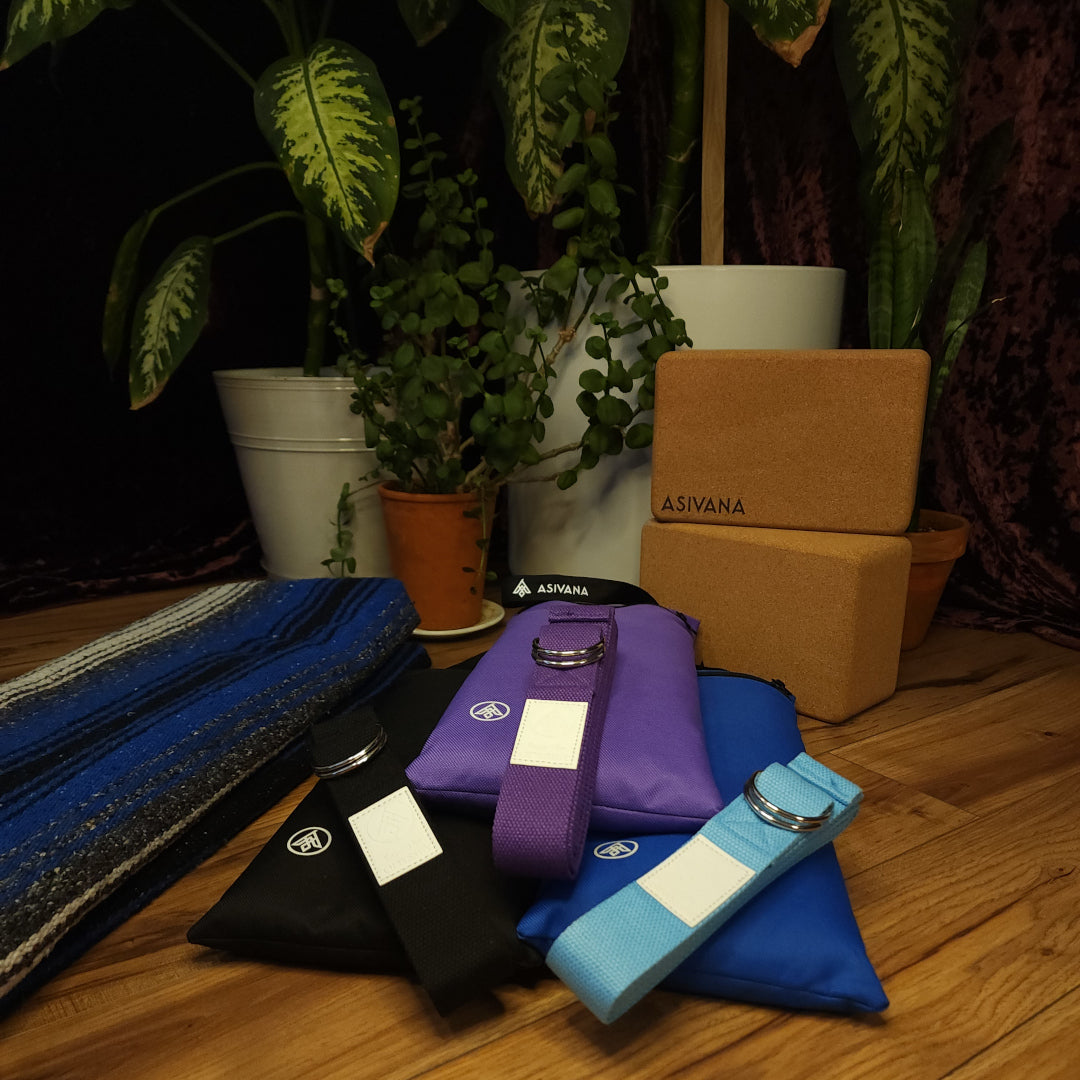
Many straps include either a D-ring buckle or a cinch buckle. Both are effective when adjusted correctly. The important consideration is that the strap remains secure during use.
Material
Look for durable woven fabric that feels comfortable in your hands and resists stretching during practice.
If you are shopping with Asivana Yoga, consider choosing a yoga strap that complements the rest of your practice space and supports the type of yoga you practice most often.
Tips for Practicing Safely with Yoga Straps
A strap should support mindful movement rather than encourage excessive stretching.
- Keep a gentle bend in joints when appropriate.
- Maintain smooth, steady breathing throughout each pose.
- Avoid pulling aggressively on the strap.
- Use the strap to improve position rather than increase intensity.
- Reduce tension if you experience sharp or pinching sensations.
Remember that flexibility changes from day to day. The strap helps you meet your body where it is instead of chasing a specific shape.

FAQ About Yoga Straps
Are yoga straps only for beginners?
No. Practitioners at every level use straps to improve alignment, support mobility work, and adapt challenging poses.
What length yoga strap should I buy?
A longer strap offers greater versatility for most practitioners, while shorter options may be suitable for basic stretching and everyday use.
Can yoga straps help improve flexibility?
Yes. They allow gradual, controlled stretching with good alignment, which supports consistent flexibility development over time.
Can I use a yoga strap in restorative yoga?
Yes. Straps are commonly paired with blankets and blocks to create stable, supported restorative postures.
Should I pull hard on a yoga strap?
No. The strap is meant to assist your movement and positioning. Gentle, steady engagement is generally more effective than force.