Ra Ma Da Sa Sa Say So Hung: Meaning, Translation, Pronunciation, and How to Chant
Jack UtermoehlPeople commonly chant Ra Ma Da Sa Sa Say So Hung as a prayer for their own well-being or for someone else. In its Kundalini Yoga lineage, the sounds are contemplated as a movement through sun, moon, earth, and infinity, ending in an interpreted affirmation of identity with the Infinite. The chant is a modern mantra taught in Kundalini Yoga as taught by Yogi Bhajan, rather than a grammatical Sanskrit sentence or a verse from Sikh scripture. A standard practice repeats the full phrase on one exhalation during a timed seated meditation.
The Mantra
Saa Say So Hung
Sa Say So Hung
Repeat cyclically. Musical settings may lengthen notes without adding words to the core mantra.
Translation
Lineage-based paraphrase: Sun, Moon, Earth, Infinity, the totality of Infinity, I am Thou.
There is no defensible literal grammatical translation of the complete eight-unit sequence.
The familiar associations of sun, moon, earth, and infinity are 3HO lineage interpretations of individual sounds, not a word-for-word Sanskrit or Punjabi translation. The ending is interpreted in the lineage as “I am Thou” and appears related to Sanskrit so'ham or Punjabi/Gurbani sohang, though it is not identical to either grammatical form.
How to Pronounce the Mantra
SAAH SAY SOH HUNG
| Mantra | Pronunciation | Notes |
|---|---|---|
| Raa | raah | Use a long open ah sound, as in father, not English ray. |
| Maa | maah | Use a long open ah sound. |
| Daa | daah | Use a long open ah sound and a clear forward d. |
| Saa | saah | Use a long open ah sound. |
| Saa | saah | This second Saa begins the descending half of the sequence in lineage explanations. |
| Say or Se | say | Both spellings occur in lineage sources, generally with the vowel sound in English day. |
| So | soh | Approximately the English word so. |
| Hung or Hang | hung, ending with a nasal ng sound | The vowel varies among teachers and recordings. Standard healing-meditation instructions say to finish it firmly rather than draw it out. |
Pronunciation Notes
- In the standard Ra Ma Da Sa Healing Meditation, chant the complete phrase on one exhalation.
- The authoritative pronunciation model is the lineage's spoken and recorded transmission rather than a tentative Sanskrit-style transliteration.
- Recordings may extend sounds such as Maa or Say melodically. This changes the melody, not the core mantra text.
How to Chant Ra Ma Da Sa Sa Say So Hung
The standard public practice is a breath-linked, timed meditation rather than a fixed number of repetitions. It may be used as a personal prayer or as a prayer for another person.
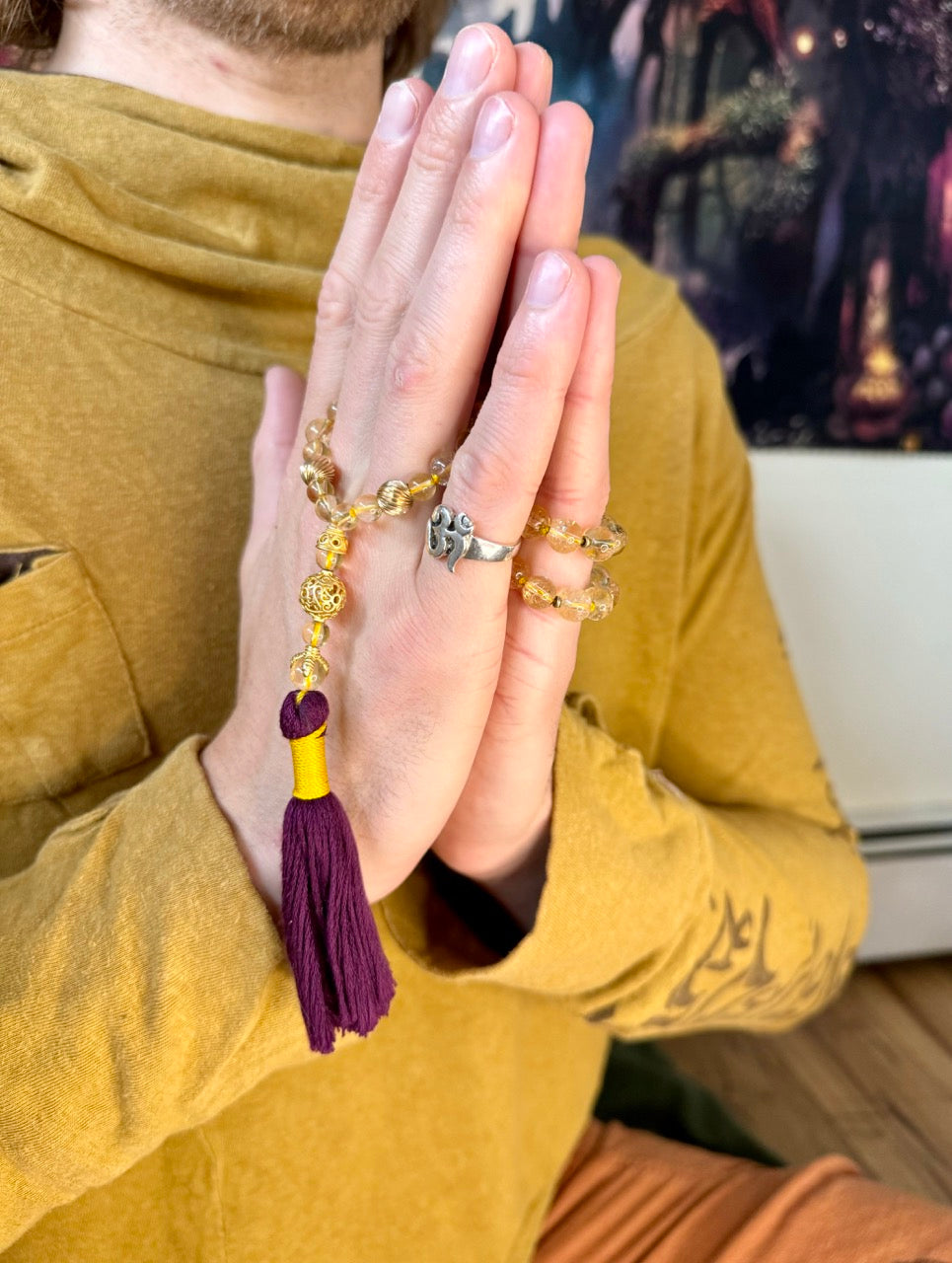
Sit upright on the floor or in a chair. Keep the elbows close to the ribs, extend the forearms outward at roughly 45 degrees, turn the flat palms upward, and draw the wrists back. Close the eyes. Inhale deeply, chant one complete cycle on one exhalation, then inhale and repeat. Lineage instructions emphasize distinct mouth movement and a firm navel action on the first Saa of the second half and on Hung. The traditional session concludes with a held-breath prayer and visualization for the intended person, followed by raising the arms and shaking the hands.
- Chanted seated meditation
- Prayer for oneself or another person
- Group unison chanting
- Chanting with a recording
- Modern kirtan or concert performance
- Silent meditation in some later practice variations
The standard Ra Ma Da Sa Healing Meditation is generally practiced for 11 to 31 minutes. A documented simplified variation uses 3 to 11 minutes with a different hand position. There is no inherent fixed repetition count for the core mantra, and 108 repetitions should not be treated as canonical.
A mala is not part of the documented standard practice, which is timed, breath-linked, and paired with a specific hand position. Counting repetitions with a mala can be a personal modern adaptation, but it is not the core method described in lineage instructions.
The practice is publicly taught, and no initiation requirement was located for the standard form. If following a more elaborate kriya that includes this mantra, use that practice's own posture, breathing, and timing instructions rather than combining elements from different versions.
Mantra at a Glance
| Tradition | Kundalini Yoga as taught by Yogi Bhajan, including 3HO and related Sikh Dharma institutions |
|---|---|
| Type | Modern meditation mantra and healing-prayer chant in its lineage context |
| Language | A modern sound formula, not a securely grammatical Sanskrit, Punjabi, or Gurbani sentence |
| Common purpose | Prayer and contemplation for oneself, another person, or a community |
| Standard practice | One full mantra on one exhalation during a timed seated meditation |
| Access | Openly published; no initiation requirement located for the standard public practice |
Word-by-Word Meaning
| Mantra | Basic Meaning | Grammar / Context |
|---|---|---|
| Ra or Raa | Lineage association: sun | An isolated sound unit, not a securely identified Sanskrit word meaning sun within a coherent sentence. |
| Ma or Maa | Lineage association: moon | An isolated sound unit without demonstrated syntax in the complete mantra. |
| Da or Daa | Lineage association: earth | An isolated sound unit without demonstrated syntax. The earth gloss is interpretive rather than an ordinary dictionary translation. |
| Sa or Saa | Lineage association: impersonal infinity | An isolated sound unit. Lineage explanations describe the first Saa as the point at which the ascending sequence reaches infinity. |
| Sa or Saa | Repeated infinity and a pivot into the second half | A repetition of the preceding sound rather than a separately inflected word. |
| Say or Se | Lineage associations include Thou, embodiment, or totality | No secure Sanskrit grammatical parsing has been established for this sound in the full sequence. |
| So | Lineage association: personal merger or identity | It may echo the Sanskrit form so in so'ham, but it should not independently be translated as I am. |
| Hung or Hang | Lineage association: the Infinite as vibrating and real | The lineage joins So Hung as I am Thou. This is not the standard spelling or grammatical division of Sanskrit so'ham. |
What Ra Ma Da Sa Sa Say So Hung Means
Ra Ma Da Sa Sa Say So Hung is commonly used as a prayerful chant for oneself or another person. In the living practice of Kundalini Yoga as taught by Yogi Bhajan, practitioners may use it to focus intention on well-being while remembering the Infinite or Creator as the source of healing.
Its usual explanation is symbolic rather than literal. In 3HO teaching, Ra, Ma, Da, and Sa are associated with sun, moon, earth, and impersonal infinity. The repeated Saa is understood as a turning point, and the final sounds are interpreted as a return from infinity toward personal identity.
The familiar phrase “I am Thou” is a lineage interpretation of So Hung. It is helpful as a devotional and philosophical paraphrase, but the eight sounds do not form a securely grammatical Sanskrit or Punjabi sentence.
The Infinite and the Healing-Prayer Context
This mantra is not consistently addressed to a named deity. In 3HO teaching, it invokes universal or Infinite reality through sounds symbolically associated with the sun, moon, earth, and infinity.
The closing portion is interpreted as personal identity or merger with the Infinite. Within this framework, practitioners may direct prayer toward the well-being of a person or community and understand themselves as an instrument rather than an independent healer.
Claims that the sounds themselves medically cure illness or transmit objectively measurable healing energy go beyond the evidence in the available record. The practice can be understood as a lineage-based prayer and meditation, not as a substitute for professional medical care.
Origin and History of the Mantra
The complete eight-sound formula is best documented as a modern element of Kundalini Yoga as taught by Yogi Bhajan. No premodern Sanskrit source, Sikh scriptural source, or independent Indian lineage witness for the full Ra Ma Da Sa Sa Say So Hung sequence was located.
The earliest securely located witness is a July 30, 1975 recording and transcript preserved by the Library of Teachings, in which Yogi Bhajan directs students in the chant in Espanola, New Mexico. Additional dated sessions from August 1975 also preserve it. Later 3HO and Sikh Dharma publications state that the healing meditation was first taught in summer 1973, but a contemporaneous 1973 recording or text was not located in this research.
The mantra developed within a system that combined yogic postures and breathing practices, Sikh-derived devotional language, and newly organized mantra sequences. Historian Philip Deslippe characterizes Yogi Bhajan's wider Kundalini Yoga system as a modern bricolage, which supports caution around describing this chant as an unchanged ancient transmission.
The mantra later became widely known in Western yoga through classes, group meditations, and recorded music. Snatam Kaur's 2004 recording on the album Grace was especially influential in bringing it into yoga playlists, concerts, and contemporary kirtan settings.
Traditional Interpretations
In 3HO and Kundalini Yoga as taught by Yogi Bhajan, Ra is associated with sun, Ma with moon, Da with earth, and Sa with impersonal infinity. Sa Say is described as the totality of infinity, while So and Hung are associated with personal merger and the Infinite vibrating and real.
These explanations present the mantra as an ascent from the manifest world toward infinity and a descent that integrates infinity with personal experience. The chant's use as a healing prayer belongs to this same lineage framework.
Later 3HO teaching manuals sometimes differ in their explanations of Da, Say, So, and Hung. These differences are one reason to treat the sound associations as lineage symbolism rather than as fixed dictionary meanings.
A related Sikh expression, sohang hansa, appears in Guru Granth Sahib on page 1093 and is interpreted in available translations as identity between the person and the Divine. It offers context for the closing sound, but it does not establish the complete Ra Ma Da Sa formula as Sikh scripture or Gurbani.
Sanskrit and Grammar
The full mantra has no demonstrated Sanskrit syntax and should not be presented as a Sanskrit sentence. It is more accurate to call it a modern liturgical sound formula transmitted primarily in Roman spelling within the Yogi Bhajan lineage.
The title Siri Gaitri can be Sanskritized as Sri Gayatri, but this chant is not the Vedic Gayatri Mantra and is not written in the standard Gayatri meter. That meter normally has three eight-syllable lines, while this is an eight-sound sequence.
The ending may evoke Sanskrit so'ham, formed from saḥ, meaning he or that one, plus aham, meaning I. Through Sanskrit sound combination, the phrase becomes so'ham and means approximately “That am I,” with the verb understood. The common lineage division So Hung and its gloss “I am Thou” are interpretive adaptations, not a direct Sanskrit grammatical parse.
Variations of the Mantra
Long-vowel instructional spelling
Saa Say So Hung
This common 3HO spelling makes the long open ah vowels explicit.
Se spelling
Sa Se So Hung
Se appears in some lineage materials in place of Say. It is generally pronounced like English say.
Hang ending
Sa Se So Hang
Hang is another Roman spelling for the final nasalized sound and appears especially in some Spanish and European materials.
Ganpati Kriya expansion
Ra Ma Da Sa
Sa Say So Hung
This adds Sa Ta Na Ma before the core mantra. It belongs to a separate kriya and does not replace the eight-sound core text.
Extended musical-mantra sequence
Sa Ta Na Ma
Ra Ma Da Sa
Sa Say So Hung
This longer sequence adds an ascending musical scale and Sa Ta Na Ma. It is a distinct practice arrangement rather than the original core mantra.
Modern recorded arrangements
Sa Say So Hung
Contemporary recordings may extend notes, add harmony or instrumental interludes, and use call and response. These can change melody and duration without changing the core words.
How This Mantra Is Used Today
Ra Ma Da Sa Sa Say So Hung is now used internationally in Kundalini Yoga classes, online group meditations, wellness events, devotional-music recordings, and yoga playlists. It is often sung slowly in group settings or along with a recording.
The standard meditation is generally chanted in unison or with recorded guidance rather than inherently as call and response. Modern kirtan leaders may arrange it responsorially as a musical choice.
It is sometimes described online as an ancient Sanskrit healing mantra or a Sikh healing mantra. Both descriptions are historically and linguistically misleading. The available evidence supports identifying it as a modern 3HO and Kundalini Yoga mantra with Sanskritic and Sikh-adjacent sound elements.
Related Concepts
So'ham · Sohang hansa · Gayatri meter · 3HO · Shabad kirtan
Related Mantras
So Ham · Sa Ta Na Ma · Sa Re Ga Ma Pa Dha Ni Sa / Sa Ta Na Ma / Ra Ma Da Sa sequence · Guru Guru Wahe Guru, Guru Ram Das Guru
Common Questions About Ra Ma Da Sa Sa Say So Hung
Is Ra Ma Da Sa a Sanskrit mantra?
The complete formula has no demonstrated Sanskrit grammar or premodern Sanskrit source. It is best classified as a modern mantra from Yogi Bhajan's Kundalini Yoga system, although its final sounds may echo Sanskrit so'ham.
Is Ra Ma Da Sa found in the Guru Granth Sahib?
The complete eight-unit phrase was not located in Sikh scripture. Guru Granth Sahib page 1093 contains the related expression sohang hansa, which provides context for the closing identity formula but is not the full modern mantra.
What does Ra Ma Da Sa literally mean?
It has no secure literal translation as a complete sentence. The familiar sun, moon, earth, and infinity explanation is a traditional 3HO interpretation of the individual sounds.
Why is it called the Siri Gaitri Mantra?
Siri Gaitri is a title used within the Yogi Bhajan lineage. The title should not be confused with the Vedic Gayatri Mantra or with the traditional Sanskrit Gayatri meter.
Should the sixth sound be written Say or Se?
Both spellings occur in lineage sources. It is generally pronounced with the vowel sound in English say.
Should the final sound be Hung, Hang, or Hum?
Hung and Hang are established lineage spellings, and recordings vary. Hum can misleadingly imply that the transmitted phrase is the exact Sanskrit form so'ham, which is not securely established.
How long should I chant Ra Ma Da Sa?
The standard healing meditation is commonly practiced for 11 to 31 minutes. A documented simplified variation uses 3 to 11 minutes. These are timed practices rather than a required number of repetitions.
Do I need a mala for Ra Ma Da Sa?
No. A mala is not part of the standard breath-linked, timed, mudra-based practice. Using one for personal counted repetition would be a modern adaptation.
Does this mantra require initiation?
No initiation requirement was located in public instructions issued by 3HO, the Kundalini Research Institute, and Sikh Dharma International for the standard practice.
Can this mantra medically heal someone at a distance?
Distant healing is a lineage belief and prayer intention, not a clinically established claim. The practice should not be presented as medical treatment or as a replacement for professional care.
Sources and Further Reading
- Summer Workshop - Prosperity Is A Divine Gift, Yogi Bhajan; Library of Teachings
- Ra Ma Da Sa Healing Meditation, Library of Teachings / The Teachings of Yogi Bhajan
- Ra Ma Da Sa Sa Say So Hung - Instructions for 40 Day Global Meditation, Sikh Dharma International
- Simple Healing Meditation to Help Those in Need, Yogi Bhajan; Sikh Dharma International
- From Maharaj to Mahan Tantric: The Construction of Yogi Bhajan's Kundalini Yoga, Philip Deslippe
- Guru Granth Sahib, Page 1093, SriGranth.org digital presentation of Guru Granth Sahib
- Siri Gaitree Mantra Search Results, Library of Teachings
- Ganpati Kriya, 3HO International
- Ra Ma Da Sa, Snatam Kaur and Thomas Barquee
- Gayatri, Encyclopedia.com