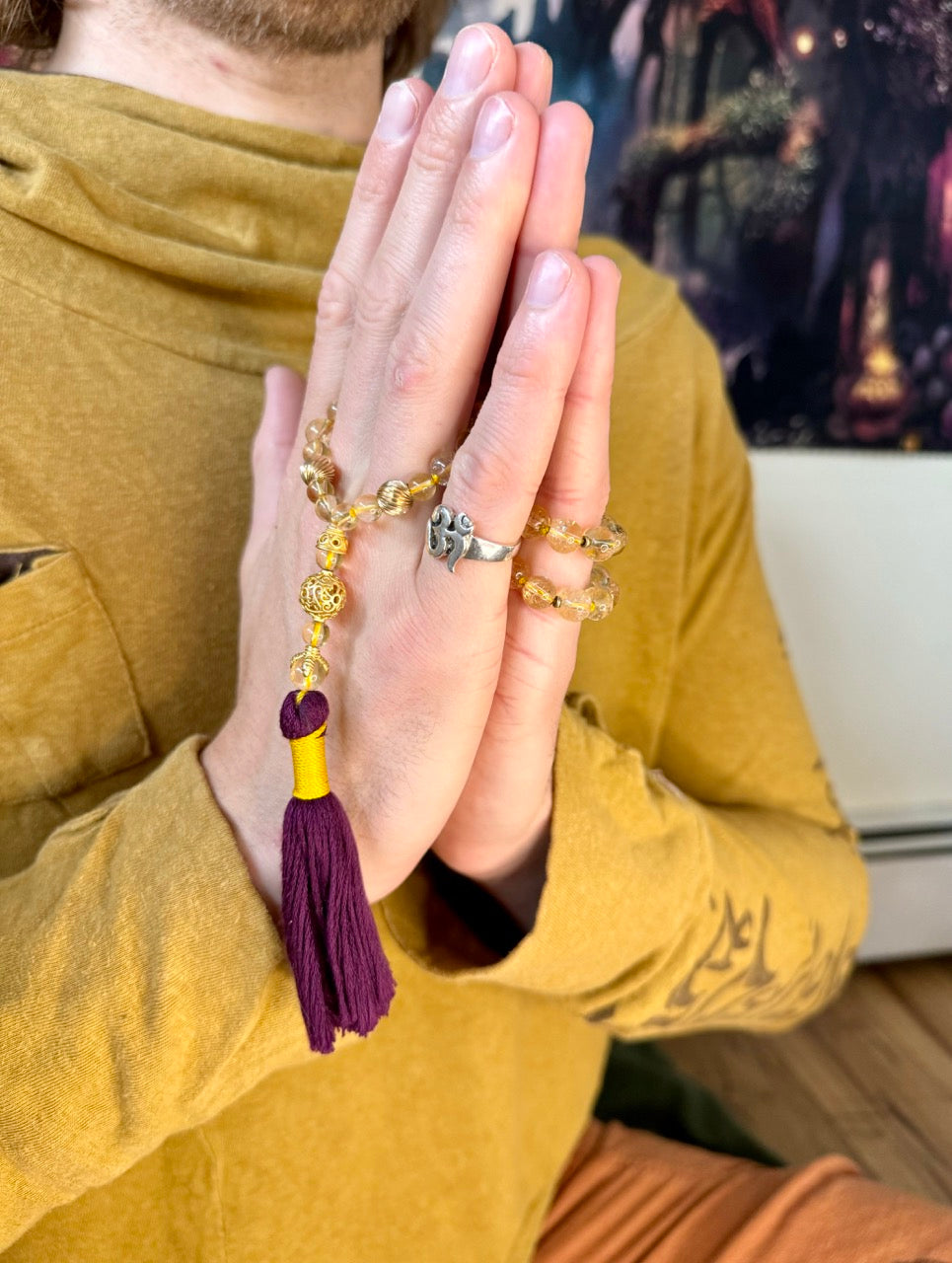
Bhastrika (Bellows; bellows breath): Meaning and Definition
Jack UtermoehlShare
Bhastrika (bellows; bellows breath)
- Devanagari: भस्त्रिका
- IAST: bhastrikā
- Pronunciation: bhus-tri-kaa. Pronounce bh as a single breathy consonant, tri as in trip, and the final kaa with a long vowel.
- Alternate spellings: Bhastrika Pranayama, Bhastrika Kumbhaka, Bellows Breath
Definition
Bhastrika means “bellows” and refers to a forceful yoga breathing practice modeled on the repeated movement of a blacksmith’s bellows. In yoga, Bhastrika is a form of pranayama or kumbhaka that uses repeated nasal inhalations and exhalations, often followed by breath retention. Modern methods commonly make both inhalation and exhalation active, although the pace, breathing mechanics, nostril pattern, and use of retention differ among texts and teaching traditions.
Bhastrika takes its name from the image of bellows repeatedly drawing in and expelling air. This image communicates the rhythm and vigor of the practice, but it does not establish one universal technique. Classical Hatha yoga texts describe more than one method, and many modern classes teach simplified versions without the nostril sequence or breath retention found in some traditional instructions.
What does Bhastrika literally mean?
Bhastrika is a feminine Sanskrit noun related to bhastra, a bag, leather vessel, or bellows. General Sanskrit dictionaries may define bhastrika as a small bag or pouch. In hatha yoga, the intended image is the blacksmith’s bellows, as the practice repeatedly moves air through the nostrils.
“Bellows breath” is therefore an accurate contextual translation in yoga. The broader dictionary meanings of bag and pouch explain the word’s linguistic background but do not adequately identify the breathing practice.
How is Bhastrika practiced in yoga?
In contemporary yoga, Bhastrika commonly refers to repeated, active inhalations and exhalations through both nostrils. The torso remains upright while the diaphragm, rib cage, and abdominal wall participate in a steady pumping rhythm. A round may end with a full inhalation, a comfortable pause, or a prescribed retention, depending on the method being taught.
Bhastrika is usually categorized under Pranayama. Classical texts often call it a kumbhaka, a term that can refer specifically to breath retention or more broadly to a complete pranayama method organized around retention. This explains why traditional Bhastrika includes more than rapid breathing alone.
The practice is commonly described as heating or activating because of its vigorous respiratory rhythm and its traditional association with increasing bodily fire. These descriptions belong to yogic practice language and should not be treated as precise biomedical claims.
- Both inhalation and exhalation are commonly active in modern Bhastrika.
- Most forms use the nose rather than the mouth.
- The rhythm may be slow and strong or rapid and forceful.
- Some methods add Kumbhaka and Bandha after the pumping breaths.
- A complete method should be learned within a specific teaching tradition rather than assembled from unrelated instructions.
How do classical hatha yoga texts describe Bhastrika?
The Hatha Yoga Pradipika lists Bhastrika among eight kumbhakas. Its description compares the repeated movement of breath to a blacksmith rapidly working bellows. The sequence begins with repeated nasal exhalations and inhalations. When fatigue arises, the practitioner inhales through the right nostril, retains the breath, and exhales through the left nostril.
The Gheranda Samhita also classifies Bhastrika as a kumbhaka and compares it to a blacksmith’s bellows. Its instructions describe moving the breath through both nostrils, completing twenty repetitions, performing retention, and practicing three rounds.
These descriptions show that Bhastrika historically included repeated breathing and Kumbhaka. They also show meaningful differences in pace, nostril use, repetition count, and sequencing. Modern instruction may preserve selected elements while omitting others.
What is the purpose of Bhastrika in hatha yoga?
In traditional hatha yoga, Bhastrika is used to influence Prana, kindle the body’s inner fire, clear impediments associated with the subtle channels, and prepare the practitioner for deeper yogic states. The Hatha Yoga Pradipika specifically connects Bhastrika with Sushumna, Kundalini, and the piercing of three subtle knots or granthis.
These claims belong to the subtle-body framework of hatha yoga. Within that framework, Nadi refers to a channel through which Prana moves, Sushumna is the central channel, and Kundalini is the latent yogic power described as awakening and ascending through that channel. These concepts should be presented as features of traditional yoga philosophy rather than translated directly into anatomical structures.
For modern practitioners, the immediate effects may include warmth, respiratory stimulation, heightened alertness, or lightheadedness. Individual responses vary, and intensity alone is not a measure of effective practice.
How is Bhastrika different from Kapalabhati?
In much modern yoga instruction, Bhastrika uses an active inhalation and an active exhalation, while Kapalabhati emphasizes a sharp, active exhalation followed by a passive inhalation. Bhastrika is usually taught as Pranayama, while the Hatha Yoga Pradipika classifies Kapalabhati among the six cleansing practices.
The distinction is useful for students, but historical and modern sources are not fully consistent. The Hatha Yoga Pradipika also compares Kapalabhati’s rapid inhalation and exhalation to a blacksmith’s bellows. Research studies use varying definitions, breathing rates, depths, and retention patterns for both techniques.
Teachers should therefore describe the mechanics they intend rather than relying only on the practice name. Clear cues such as “active inhale and active exhale” or “active exhale and passive inhale” reduce confusion.
How should Bhastrika be taught and practiced safely?
Bhastrika is an intensive breathing practice, especially when performed rapidly or combined with Kumbhaka and Bandha. Classical hatha yoga itself advises developing breath control gradually and warns that improper pranayama can cause harm.
Beginners should learn Bhastrika from a qualified teacher, begin with a moderate pace and a small number of repetitions, and rest between rounds. The breath should remain controlled rather than violent. Stop the practice if it produces dizziness, faintness, chest pain, unusual shortness of breath, panic, or persistent discomfort.
Rapid forceful breathing and breath retention can temporarily affect heart rate, blood pressure, carbon dioxide levels, and circulation. People with hypertension, cardiovascular or respiratory conditions, or other relevant medical concerns should consult an appropriate healthcare professional before practicing. Pregnancy and recovery from surgery or acute illness also warrant individualized guidance. Breath retention should not be added merely because it appears in a textual description.
Related Sanskrit Terms
- Pranayama
- Kumbhaka
- Kapalabhati
- Prana
- Puraka
- Recaka
- Bandha
- Agni
- Nadi
- Sushumna
- Kundalini
- Hatha
- Asana
- Padma