Murti (form; embodiment; sacred image): Meaning and Definition
Jack UtermoehlShare
Murti (form; embodiment; sacred image)
- Devanagari: मूर्ति
- IAST: mūrti
- Pronunciation: MOOR-tee (IPA: /muːr.t̪i/). Hold the first vowel like the “oo” in “food.” The Sanskrit t is dental, pronounced with the tongue near the upper teeth.
- Alternate spellings: moorti, murthi, moorthi
Definition
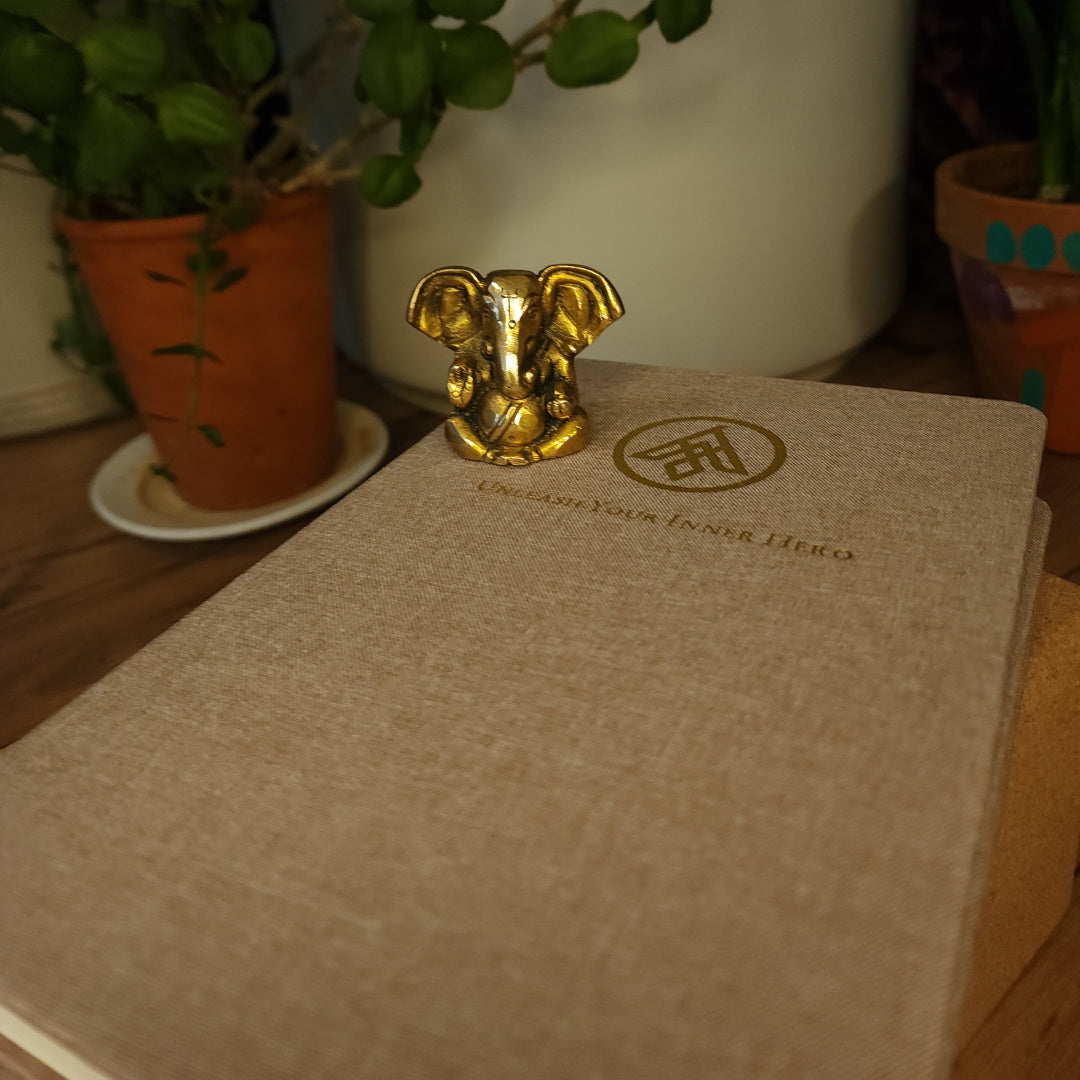
Murti is a Sanskrit word meaning “form,” “embodiment,” or “manifestation.” In yoga and Hindu devotional practice, murti commonly refers to a visible sacred form of a deity or revered being, often approached through puja, meditation, and darshan. A murti may be a sculpture, painting, symbol, or naturally occurring form. Depending on the tradition and ritual context, practitioners may understand the murti as a representation, an embodied divine presence, or the deity’s accessible form.
Murti describes something that has taken a recognizable form. This broad meaning helps explain why the word can refer both to an ordinary material figure and to a sacred image treated as a living presence in devotional practice.
What does Murti literally mean?
Murti is a feminine Sanskrit noun whose meanings include solid body, material form, shape, figure, appearance, embodiment, manifestation, personification, image, and statue. “Sacred image” is therefore an important contextual translation rather than the word’s only literal meaning.
The central idea is form made perceptible. Murti can describe an abstract quality embodied in a person, a deity appearing in a particular form, or a physical image with a defined shape. In compounds such as Trimurti, the word means “form” or “manifestation,” rather than necessarily referring to three statues.
- Grammatical gender: feminine
- Basic sense: a defined or embodied form
- Extended senses: manifestation, personification, image, or statue
What does Murti mean in yoga?
In yoga, Murti refers most often to a sacred form used within bhakti, puja, meditation, mantra practice, or a personal shrine. It is more closely associated with devotional and temple-related practice than with the technical vocabulary of asana or pranayama.
A practitioner may direct attention toward a murti of an Ishta Devata, a personally chosen form of the divine. The murti gives the eyes and mind a stable focus while its gestures, posture, attributes, and expression communicate teachings associated with the deity. Some practitioners regard the image primarily as a meditation support. Others approach a consecrated murti as the actual, accessible presence of the deity. These understandings depend on lineage and theology.
Yoga teachers should avoid assuming that every student relates to sacred images in the same way. A murti in a studio, classroom, or home shrine carries religious meaning for many people and should be placed and handled respectfully.
Is a Murti simply a statue?
A statue describes an object’s physical form. Murti can also describe the object’s sacred and relational role. A decorative sculpture of a deity and a murti established for worship may look similar while functioning differently within a community.
In many temple traditions, priests perform a consecration called prana pratishtha, inviting or establishing divine presence in the image. Ritual details and theological explanations vary. Consecrated images may be bathed, dressed, adorned, offered food, carried in procession, and cared for as honored living presences.
Not every tradition claims that the limitless divine is confined to a physical object. The murti provides a particular form through which relationship, attention, service, and devotion become possible. Some traditions emphasize symbolic representation, while others speak more directly of the deity’s real presence.
How is a Murti used in puja and darshan?
A murti often serves as the focal point of puja, a ritual of honoring and attending to a deity. Devotees may offer flowers, light, incense, water, food, clothing, mantra, or song. The offerings express bhakti and may later be received as prasad, something blessed through contact with the deity.
Darshan means sacred seeing or the experience of seeing and being seen by the divine. In traditions centered on murti worship, the eyes of the image can carry particular importance because darshan is understood as a reciprocal encounter between devotee and deity.
This context explains why a murti may be treated with forms of care that would seem unusual for an ordinary artwork. Adornment, food offerings, processions, rest, and seasonal clothing can be expressions of an ongoing devotional relationship.
Why can the translation “idol” be misleading?
Older Sanskrit dictionaries include “idol” among the English meanings of Murti. In present-day American English, however, “idol” can suggest a false god or an object mistakenly treated as divine. Those implications do not accurately represent the beliefs of many practitioners.
“Sacred image,” “embodied form,” or “manifest form” usually communicates the term more respectfully. No single English expression covers every use. The best translation depends on whether Murti refers to a physical image, a deity’s particular form, a personification, or embodiment in a broader literary sense. Scholarly discussions also note that Hindu images can function in religious, artistic, cultural, political, and commercial settings, sometimes simultaneously.
Does Murti have the same meaning in every tradition?
Hindu traditions do not offer one universal explanation of a murti. Some devotional communities describe a consecrated murti as a living manifestation of the deity. Other interpretations emphasize the image as a symbol, support for concentration, or finite form through which the mind approaches a reality that exceeds all form. Regional customs and temple lineages also shape how images are installed and served.
Murti is also used in Jainism for sacred images of the Jinas. Some Jain communities practice image veneration, while others reject it. The term Murtipujaka, meaning “worshipper of images,” identifies an image-venerating branch of the Shvetambara Jain tradition.
In Buddhist contexts, consecrated sacred images and related rituals are widespread, especially in Mahayana and Vajrayana traditions. Murti remains an intelligible Sanskrit word for embodied form or image, although it is not always the principal technical term used to identify Buddhist icons.
How should a Murti be approached in teaching or personal practice?
A murti should be understood within the practice and community that gives it meaning. Before placing one in a yoga space, learn which deity or sacred figure it depicts, what its iconography communicates, and whether there are customary guidelines for its location and care.
For personal practice, a murti can support steady attention, mantra recitation, prayer, contemplation, or bhakti. Formal temple worship and consecration belong to specific traditions and should be learned from qualified teachers or priests. A practitioner does not need to adopt image worship to understand why a murti holds profound meaning for others.
- Identify the figure and its traditional attributes.
- Keep sacred images in a clean and respectful location.
- Avoid placing a murti directly on the floor or using it as casual decoration.
- Follow lineage-specific guidance when undertaking formal puja or consecration.
Related Sanskrit Terms
- Bhakti
- Puja (Devotional Worship)
- Darshan (Sacred Seeing)
- Ishta Devata
- Deva (Divine Being)
- Devi (Goddess)
- Prasad (Blessed Offering)
- Archana (Devotional Worship)
- Aarti (Devotional Light Ceremony)
- Upasana
- Rupa
- Trimurti