Rudraksha: Meaning and Definition
Jack UtermoehlShare
Rudraksha (rudra's eye; sacred prayer bead associated with Shiva)
- Devanagari: रुद्राक्ष
- IAST: rudrākṣa
- Pronunciation: rud-RAAK-sha. Keep the first u short, hold the aa sound in the second syllable, and pronounce ksh as a combined sound.
- Alternate spellings: Rudraksh, Rudraksa, Rudra aksha
Definition
Rudraksha means “Rudra’s eye” and names the sacred fruit stone commonly used as a prayer bead, especially in traditions devoted to Shiva. In yoga, Rudraksha usually refers to one of these textured brown beads or to a mala made from them for japa, meditation, or devotional wear. “Tear of Shiva” is a traditional interpretive translation connected with stories in which the Rudraksha tree grows from Shiva’s tears. The Sanskrit compound itself is formed from Rudra and aksha, meaning “eye.”
Understanding Rudraksha begins with the literal Sanskrit compound and then moves into its use as a sacred bead in yoga, mantra practice, and Shaiva devotion.
What does Rudraksha literally mean?
Rudraksha combines Rudra, a Vedic divine name closely associated with Shiva, and aksha, meaning “eye.” The clearest literal translation is “Rudra’s eye.” Sanskrit lexicons also interpret the compound as “Rudra-eyed” and use it as the name of the Rudraksha tree, its fruit, and the bead made from that fruit.
“Tear of Rudra” or “tear of Shiva” expresses the word’s sacred narrative rather than its strict lexical construction. In Shaiva accounts, the tree arises when drops fall from Shiva’s eyes. This story connects the bead’s physical origin with Shiva’s meditation, compassion, and blessing.
Classical dictionaries generally treat the name of the tree as masculine. Some also record a neuter form referring specifically to its berry or fruit. In English, Rudraksha is used for the tree, the bead, and sometimes an entire strand of beads.
- Literal components: Rudra plus aksha, “eye”
- Primary literal translation: “Rudra’s eye”
- Devotional interpretation: “tear of Shiva”
- Practical meaning: a sacred bead used for prayer, mantra repetition, or devotional wear
How is Rudraksha used in yoga?
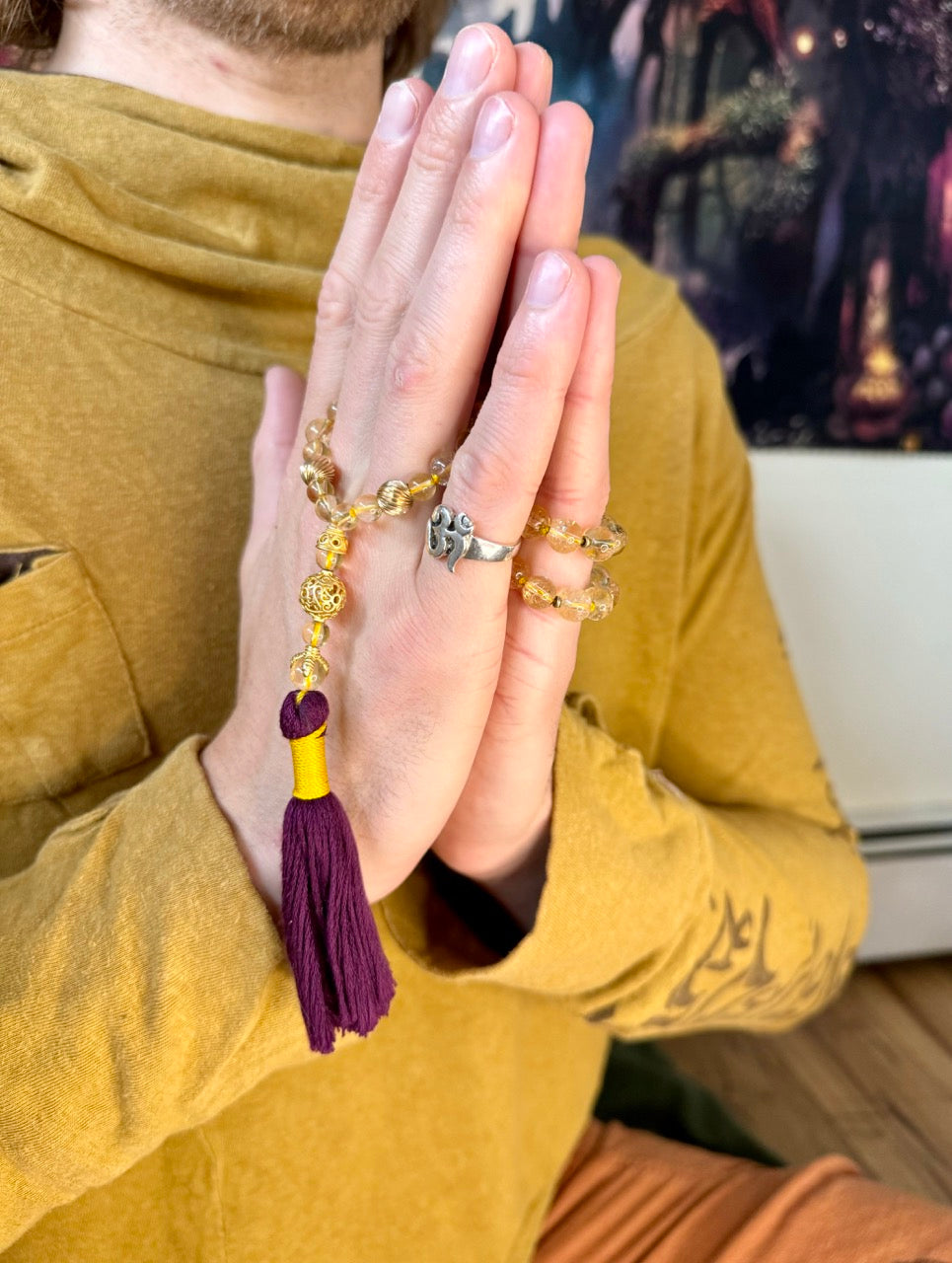
In yoga practice, Rudraksha is most often used in a Mala for Japa, the repeated recitation of a mantra or divine name. The practitioner moves through the mala one bead at a time, allowing the beads to support counting, concentration, and a steady rhythm of repetition.
Rudraksha beads may also be worn around the neck, wrist, arms, or head as signs of devotion and spiritual commitment. Their strongest traditional association is with Shiva and Shaiva practitioners, including yogis, renunciants, and household devotees. Historical and textual evidence also shows use in wider Hindu and other religious settings, so wearing Rudraksha does not always indicate one specific lineage.
Rudraksha is a practice object rather than a central philosophical category of yoga. Its meaning depends on how it is used. A mala may support mantra meditation, function as a devotional symbol, or be worn as a reminder of a practitioner’s sadhana.
- Used in japa to count mantra repetitions
- Strung into a Rudraksha Mala
- Worn as a devotional or ascetic marker
- Closely associated with Shiva, Rudra, and Shaiva practice
- Used in both formal ritual and personal meditation
Why is Rudraksha sacred to Shiva?
Shaiva texts explain the sacredness of Rudraksha through stories of its origin from Shiva’s body. The Shiva Purana describes drops falling from Shiva’s half-closed eyes after a long period of spiritual discipline, with Rudraksha trees growing from those drops. The Rudraksha Jabala Upanishad presents a related account involving Rudra’s meditation before the destruction of Tripura.
These narratives explain why Rudraksha is commonly called a tear of Shiva and why the bead is regarded as carrying Shiva’s blessing. The stories belong to devotional theology. They communicate the bead’s sacred meaning within Shaiva tradition rather than offering a botanical history.
The surviving accounts are not fully uniform. A passage in the Padma Purana describes a Rudraksha tree arising from Rudra’s perspiration after battle. Such differences are common in Puranic literature, where multiple texts may preserve distinct versions of a sacred origin story.
- The Shiva Purana connects Rudraksha with drops from Shiva’s eyes
- The Rudraksha Jabala Upanishad gives a similar Shaiva origin account
- The Padma Purana preserves a different account involving Rudra’s perspiration
- The stories establish devotional significance rather than a single historical explanation
What part of the Rudraksha tree becomes a bead?
Rudraksha beads come from trees in the Elaeocarpus genus. The botanical name Elaeocarpus ganitrus appears frequently in older dictionaries and modern publications. Royal Botanic Gardens, Kew currently treats that name as a synonym of the accepted name Elaeocarpus sphaericus.
The tree produces a drupe, a fleshy fruit containing a hard, sculptured inner stone. This woody inner stone is cleaned, dried, and drilled for use as a bead. It is commonly called a Rudraksha seed, although botanically the stone surrounds the actual seeds.
Natural grooves divide the bead’s surface into sections commonly called faces or mukhi. Religious texts and later traditions assign particular associations to different numbers of faces. Those correspondences and promised effects vary among scriptures, lineages, regional practices, and commercial sources.
- Common historical botanical name: Elaeocarpus ganitrus
- Currently accepted name in Kew’s taxonomy: Elaeocarpus sphaericus
- The bead is the fruit’s hard, sculptured inner stone
- Natural surface divisions are commonly described as faces or mukhi
How should teachers explain Rudraksha?
A clear yoga teaching should begin by identifying Rudraksha as a sacred bead associated especially with Shiva and commonly used for japa. Teachers can then distinguish the literal meaning “Rudra’s eye” from the devotional expression “tear of Shiva.”
Traditional texts attribute purification, protection, merit, and other spiritual benefits to seeing, touching, wearing, or praying with Rudraksha. These statements should be presented as teachings preserved within particular religious traditions. They should not be converted into universal medical or scientific claims.
Modern descriptions sometimes assign fixed powers to every bead type or suggest that particular beads guarantee health, wealth, or spiritual attainment. These claims are not consistent across all sources. Practitioners using Rudraksha within a lineage can follow the guidance of a qualified teacher regarding selection, mantra, consecration, and care.
- Separate literal translation from sacred origin narrative
- Describe promised benefits as tradition-specific teachings
- Avoid presenting commercial classifications as universally authoritative
- Follow lineage guidance when Rudraksha is part of a formal practice
Related Sanskrit Terms
- Rudra
- Shiva
- Japa
- Japa Mala
- Rudraksha Mala
- Mala
- Mantra
- Bhakti
- Puja
- Sadhana