The Science of Mudras
Jack UtermoehlWhat does science say about mudras? Mudras are meaningful gestures used in yoga, meditation, ritual and Indian performing arts. Practitioners may find them useful as reminders of an intention or as part of an attentive practice. However, direct scientific evidence that a particular finger position independently treats illness, regulates organs, or alters a measurable flow of prana remains limited. Traditional explanations and clinical findings should be understood separately.
What is a mudra?
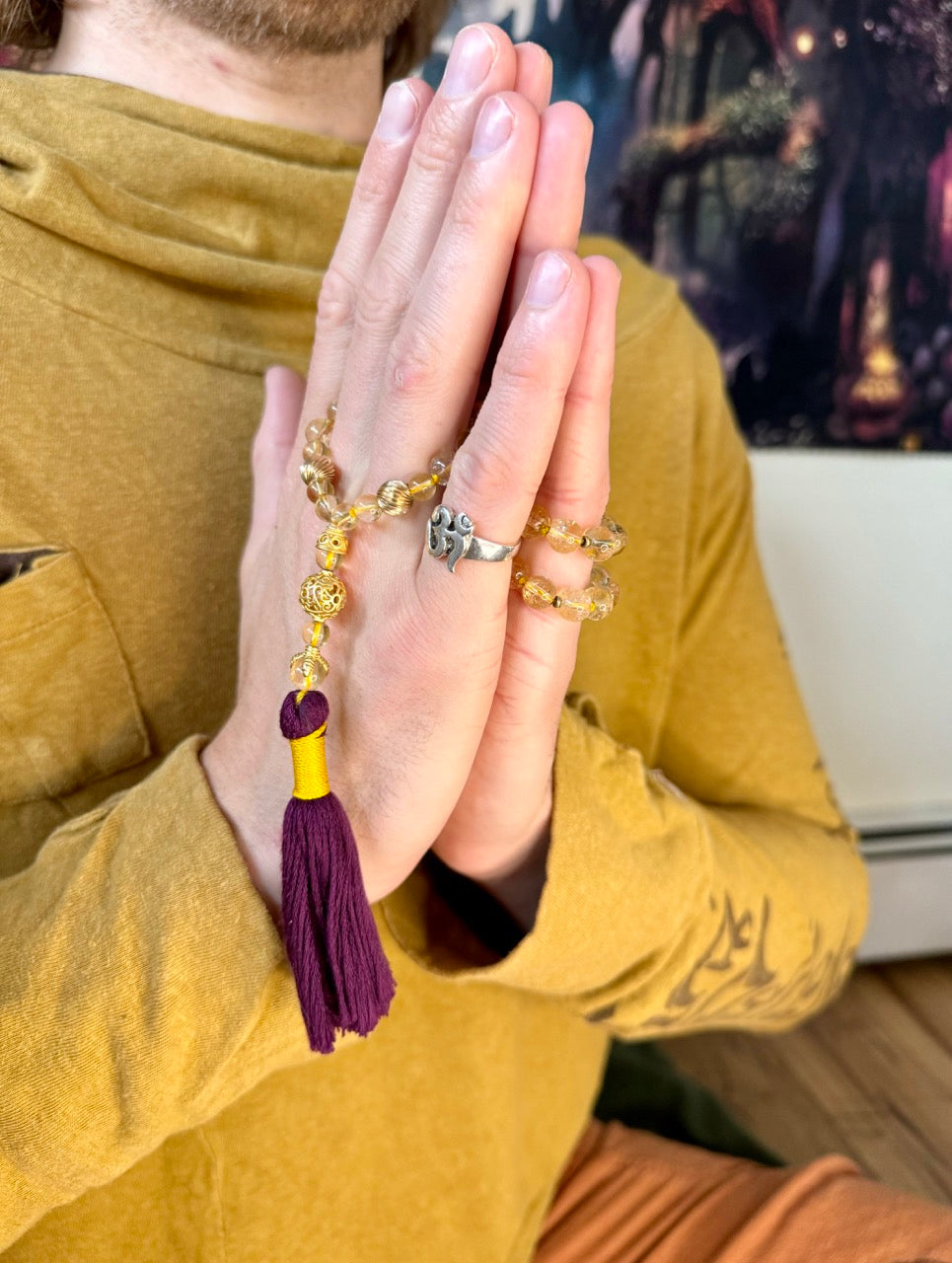
Mudra is commonly translated as a seal, mark or gesture. Yoga traditions describe hand, body and other forms of mudra, while many modern classes emphasize hand gestures called hasta mudras. Practitioners use them during meditation, chanting and pranayama. Their significance changes according to lineage and setting.
A gesture can help give structure to attention: hands rest in a deliberate position, a practitioner remembers why they chose it, and the practice proceeds with breathing, mantra or reflection. Those are practical possibilities. They do not establish specific medical effects attributable to the gesture itself.

Traditional mudra theory and the five elements
Some contemporary yoga teachings associate the fingers with five traditional elements: thumb with fire (agni), index with air (vayu), middle with space (akasha), ring with earth (prithvi), and little finger with water (jala). These associations can organize symbolic reflection within a teaching tradition. They are not a scientifically established map of anatomy or physiology.
Likewise, traditional discussions of prana, nadis and chakras belong to yogic systems of practice and interpretation. Claims that modern instruments have verified finger-to-organ energy circuits go beyond the evidence reviewed here. For further cultural context, read mudras for the elements.
What does research actually show?
1. Research on isolated hand positions is scarce
The central question is whether holding a particular finger position has a measurable effect beyond quiet sitting, breathing, concentration or participants' expectations. Few well-controlled trials isolate these factors. A 2026 conceptual review of hasta mudras likewise notes that direct evidence for isolated mudra techniques is scarce and that many studies combine several yoga practices.
2. A pilot result is not proof of treatment
A 2026 preliminary study of Bhoochari Mudra observed changes on cognitive tests after a short intervention involving a mudra and breath awareness. It enrolled 30 participants in a single group and had no control group. The researchers themselves identify these limitations. That design cannot show whether the hand or gaze technique caused the observed changes.
3. Studies of yoga cannot be attributed to mudras alone
A 2025 systematic review of yoga and blood pressure examined broader yoga interventions and rated the certainty of the evidence as very low for several comparisons. Those results do not demonstrate that individual mudras lower blood pressure. It would be misleading to transfer findings from combined posture, breath and meditation programs to one finger gesture.
4. Physiological measurements need appropriate interpretation
Researchers have explored hand-grip strength and electrophotonic imaging in mudra studies. For example, an older study comparing breathing and mudra groups found no hand-grip change in the mudra group, while an electrophotonic imaging study reported differences in its measured parameters. Neither finding independently validates the existence of prana as a measurable energy channel or establishes a therapeutic benefit.
Common mudras and how they are used
The following gestures have traditional associations worth learning. Descriptions of their meaning are not claims of clinical efficacy.
Jnana Mudra: Knowledge and contemplation
Gently touch the tip of the index finger to the thumb, resting the other fingers comfortably. This gesture is often used during seated meditation as a reminder of inquiry or awareness. Read our Jnana Mudra guide.

Prana Mudra: A traditional life-energy symbol
Bring the thumb, ring and little fingertips together without strain while the other fingers extend softly. Traditions associate the shape with vitality or life energy. The symbolic name does not mean the gesture is proven to restore health or treat fatigue. See Prana Mudra.

Hakini Mudra: Focused attention
Bring corresponding fingertips of both hands together, leaving space between the palms. Some teachers use this hand shape as a cue for reflection or concentration. Claims of a specific brain-activation or memory effect need stronger evidence. See Hakini Mudra.

Vishnu Mudra: A hand position used in breathing practices
Vishnu Mudra is commonly used to position the hand for alternating nostrils during Nadi Shodhana. Research on a breathing practice cannot automatically establish an independent effect of the hand position.

A simple five-minute mudra practice
- Sit in a comfortable and supported posture.
- Choose a hand gesture for its traditional meaning or as a reminder of your intention.
- Let the hands rest lightly, without pressing the fingers into discomfort.
- Breathe comfortably for three to five minutes, observing your attention.
- Release the gesture and note what you actually experienced without assuming a cause.
Keep the breath natural. If a position creates pain, tingling or distress, release it. Mudras should not replace evidence-based care for cardiovascular, neurological, digestive or other medical conditions.
Why continue practicing mudras?
Yoga includes practices of meaning, ritual, attention and self-study alongside physical movement. A gesture can carry a teaching or help remind you of what you value. That is sufficient reason to explore it thoughtfully without overstating the scientific case. For more examples, visit our yoga hand symbols guide and hand meditation introduction.

Frequently asked questions
Can mudras cure health conditions?
There is no high-quality evidence establishing that specific hand mudras cure medical conditions. Treatment claims require appropriate controlled research.
Do mudras have to be used with meditation?
No. They occur in several ritual, yogic and artistic contexts. In a modern yoga class they are often paired with meditation or breathwork.
Do mudras physically change prana?
Directing prana is a traditional account within certain yogic systems. It should be presented as a traditional framework, not as a verified biophysical measurement.
For a consistent space to reflect on your experience, you can use an Inner Hero Yoga Journal. The journal is a tool for recording practice, not a therapeutic intervention.