Yoga Bolster for Restorative Yoga
Jack UtermoehlA yoga bolster for restorative yoga provides steady, comfortable support so your body can rest into poses with less muscular effort. By supporting the spine, hips, knees, or chest, a bolster helps create positions that can be held longer without strain. Choosing the right shape and learning a few simple setups can make restorative practice more accessible, comfortable, and sustainable for many different bodies and experience levels.
Why a yoga bolster is central to restorative yoga
Restorative yoga emphasizes supported postures that encourage stillness and ease. Instead of asking your muscles to hold you in place, carefully placed props carry much of your body weight. A bolster is often the primary prop because it offers broad, stable support across larger areas of the body.
When you use a yoga bolster for restorative yoga, the goal is to reduce unnecessary effort. A well-supported position allows you to settle your attention on breathing, awareness, and relaxation rather than constantly adjusting for comfort.
Bolsters are commonly used for gentle backbends, forward folds, reclining poses, side-lying positions, and seated meditation. They can also make restorative poses more approachable for practitioners who experience limited mobility or discomfort on the floor.
Choosing the right yoga bolster for restorative yoga
Shape
Round bolsters create a higher lift and work well for chest opening and supported backbends. Rectangular bolsters provide a broader, flatter surface that many practitioners appreciate for seated poses, forward folds, and general versatility.
Firmness
A restorative bolster should be supportive enough to hold its shape under your weight while still feeling comfortable. If it compresses too easily, you may lose the intended support. If it is extremely firm, it may feel less accommodating in longer holds.
Size
Your height, body proportions, and preferred poses all influence what feels comfortable. Larger practitioners may appreciate a fuller bolster, while others may prefer a more compact option that is easier to position.
Cover and care
A removable, washable cover makes routine care simpler, especially if you practice regularly. Keeping your props clean helps maintain a pleasant practice space over time.
If you are shopping through Asivana Yoga, focus on selecting a bolster category that matches the types of restorative poses you practice most often rather than assuming one style suits every need.
If you are choosing a shape, compare round and rectangular bolsters. For a broader selection of supported setups, our guide to using a yoga bolster walks through more applications.
Restorative yoga poses that benefit from a bolster
Supported reclining pose
Place the bolster lengthwise behind you and slowly recline so it supports your spine and head. This setup creates a gentle chest opening while allowing the shoulders to soften.
Supported child's pose
Position the bolster between your knees or thighs and rest your torso on top. Turning your head halfway through the pose helps keep the neck comfortable.
Supported bound angle pose
Sit with the soles of the feet together and knees apart. Recline onto a lengthwise bolster while supporting the outer thighs with blankets or blocks if needed.
Supported forward fold
In a seated forward fold, place the bolster across your legs so your torso can rest comfortably without reaching toward the floor.
Legs up the wall variation
A bolster under the pelvis can slightly change the angle of the pose for some practitioners. Comfort should guide the setup, and a folded blanket may be a better option if additional height feels excessive.
Using other props alongside a bolster
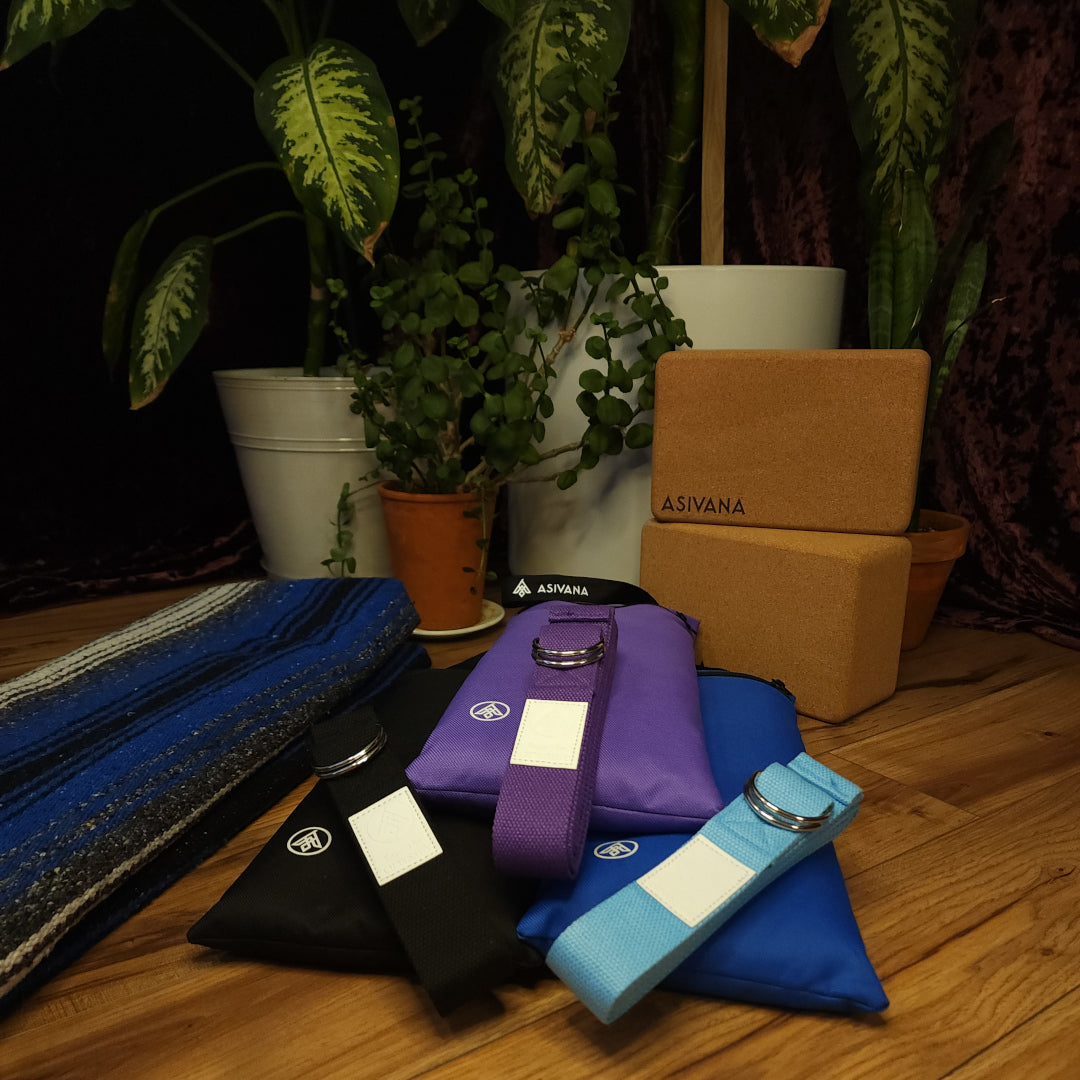
Although the bolster often provides the main support, restorative yoga frequently combines several props to create balanced positioning.
- Blankets add warmth, cushion joints, or fine tune height.
- Blocks bring the floor closer in supported poses.
- Straps help maintain gentle leg positions without gripping.
- Eye pillows can reduce visual stimulation during relaxation.
- Sandbags may provide gentle grounding in selected poses when used appropriately.
Small adjustments often make a noticeable difference. For example, placing a folded blanket under the head can help keep the neck neutral, while supporting the knees may reduce tension through the lower back.
Simple restorative setups at home
You do not need a dedicated studio to enjoy restorative practice. A quiet space with enough room to stretch out is often sufficient.
For a short session, try beginning with supported child's pose for several minutes, followed by a reclining chest opener using the bolster, then finish in a fully supported relaxation pose with a blanket for warmth. Keep transitions slow so the body remains settled.
If you do not yet own every prop, folded blankets and firm cushions can temporarily replace some supports. Even so, a purpose-built bolster generally provides more stable and consistent support across a wider range of restorative poses.
Buying priorities for long term practice
If restorative yoga is becoming a regular part of your routine, choose props that encourage repeated use by being comfortable, practical to care for, and appropriate for your space. Think about where you will store your bolster, how often you practice, and which poses you return to most often.
Many practitioners begin with a bolster and a couple of blankets, then gradually add blocks, a strap, or an eye pillow as their practice develops. Building your collection over time allows each purchase to serve a clear purpose.
FAQ
Do I need a yoga bolster for restorative yoga?
A bolster is one of the most useful restorative props because it supports the body comfortably in many poses. You can begin with blankets or firm cushions, but a bolster offers more consistent support.
Should I choose a round or rectangular bolster?
Rectangular bolsters are often chosen for versatility, while round bolsters provide greater lift for certain reclining and chest opening poses. Your preferred practice style can guide the choice.
Can beginners use a yoga bolster?
Yes. Bolsters can make restorative yoga more comfortable and help reduce unnecessary effort during longer supported holds.
How long should I stay in restorative poses with a bolster?
Many restorative poses are held for five to twenty minutes, depending on comfort, experience, and the purpose of the practice. Support should remain comfortable throughout the hold.
What other props work well with a bolster?
Blankets, blocks, straps, eye pillows, and sandbags can all complement a bolster by improving alignment, warmth, and overall comfort.