Yoga Props for Restorative Yoga
Jack UtermoehlYoga props for restorative yoga create steady, comfortable support so your body can rest without unnecessary muscular effort. A well supported position allows you to remain in a pose longer, breathe more naturally, and settle your attention. The most useful restorative props include bolsters, blankets, blocks, straps, eye pillows, and sandbags, each serving a specific purpose in improving comfort, alignment, and ease during practice.
Why restorative yoga depends on props
Restorative yoga is built around the idea of support. Instead of holding the body with muscular strength, external props hold much of your weight so your nervous system has an opportunity to soften. This changes the experience of a pose from one of effort toward one of sustainable rest.
Without enough support, many people compensate by gripping through the shoulders, lower back, neck, or hips. Even small adjustments with the right prop can make a pose feel significantly more comfortable over several minutes.
Props also make restorative yoga accessible for different body shapes, mobility levels, and levels of flexibility. There is no single setup that fits everyone. The goal is to build the pose around your body rather than forcing your body into a predetermined shape.

The main yoga props for restorative yoga and how they are used
Bolsters
A bolster is often the centerpiece of a restorative practice. Its long, supportive shape helps lift the body into comfortable positions that reduce strain on joints and muscles.
Common uses include supporting the spine during reclining heart openers, placing under the knees in relaxation, or creating gentle forward folds where the torso can completely rest.
Blankets
Yoga blankets are among the most versatile props available. Folded blankets can raise the hips, cushion sensitive joints, support the neck, or fill small gaps between the body and the floor.
They also provide warmth, which helps many practitioners remain comfortable during longer holds.
Blocks
Blocks create stable height where the floor feels too far away. In restorative yoga they often support the knees, hands, pelvis, shoulders, or feet rather than helping you reach deeper into a stretch.
Because blocks come in different heights, they allow fine adjustments that improve comfort without changing the overall intention of a pose.
Straps
A yoga strap helps maintain gentle positioning without excessive muscular effort. For example, a strap around the feet during a reclining hamstring stretch allows the shoulders to stay relaxed while the legs remain supported.
Straps are also useful for keeping the legs comfortably positioned in certain reclining poses.
Eye pillows
An eye pillow adds gentle weight over the eyes, reducing visual stimulation and encouraging stillness. Many practitioners find this especially helpful during Savasana or guided relaxation.
Sandbags
Sandbags provide steady, grounding weight when used appropriately. They may rest across the thighs, pelvis, hands, or feet in selected poses to encourage a sense of stability. The weight should always feel comfortable and should never create pressure that restricts breathing or causes discomfort.
Simple restorative yoga setups to try at home
Supported child's pose
Place a bolster lengthwise between your knees and fold forward until your chest and head rest comfortably on it. Add a folded blanket beneath your ankles or knees if additional cushioning is needed.
Reclining relaxation with knee support
Lie on your back with a bolster or several folded blankets beneath your knees. Place a blanket under your head if your chin lifts toward the ceiling. An eye pillow may help reduce visual distractions.
Supported bound angle pose
Sit with the soles of your feet together and allow your knees to open comfortably. Support each thigh with blocks or folded blankets so the hips can relax without strain. Lean back onto a bolster placed along the spine if that position feels comfortable.
Gentle reclining heart opener
Position a bolster lengthwise beneath your spine so your chest is comfortably supported. Place a folded blanket under your head if needed and another beneath the knees to reduce tension through the lower back.
These examples show that yoga props for restorative yoga work together. A single pose often becomes more comfortable through several small supports instead of relying on only one prop.

How to choose the right restorative props
If you are building a home practice gradually, begin with the items that offer the greatest flexibility.
A bolster is usually the first choice because it supports many restorative positions. A pair of blankets comes next because blankets solve countless small comfort issues. Blocks and a strap add adaptability across both restorative and active yoga practices.
When selecting props, consider these priorities:
- Stability so the prop stays in place.
- Comfort during longer holds.
- Enough support for your body size and the poses you practice most.
- Durable construction for repeated use.
- Easy storage if you practice in a shared space.
If you are exploring Asivana Yoga's prop collections, choose pieces that fit your practice needs rather than trying to collect every available accessory. A small group of thoughtfully chosen props often serves practitioners very well for years.
Using props with awareness instead of dependence
Some practitioners wonder whether using props means they are making a pose easier. In restorative yoga, support is the practice. The intention is to reduce unnecessary effort so the body can experience stillness with steadiness and comfort.
As your practice develops, your setups may change. You might discover that adding another blanket creates more ease, or that lowering a block one level improves your breathing. These refinements reflect greater awareness rather than increased complexity.
Take time to notice how each adjustment influences your breath, muscular tension, and ability to remain present. Those observations are often more valuable than holding a particular shape.
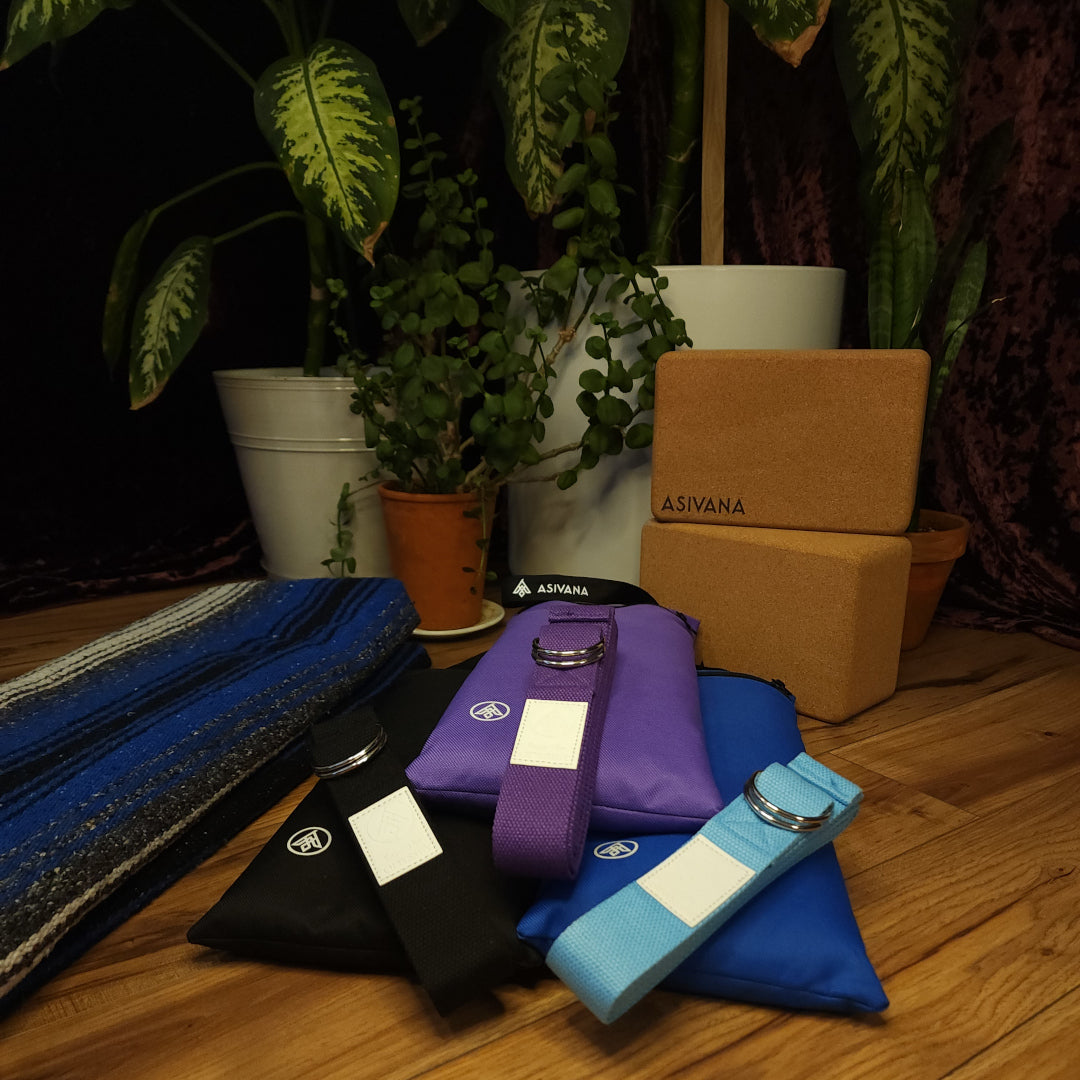
The Asivana Cork Yoga Block offers a firm cork option at 9 × 6 × 4 inches, while the Asivana II 8-foot Yoga Strap uses recycled polyester and an adjustable metal D-ring. Compare these specifications with the props and positioning your teacher recommends for your restorative setups.
FAQ
What are the most important yoga props for restorative yoga?
A bolster, blankets, blocks, and a strap form the core collection for most restorative practices. Eye pillows and sandbags can add comfort and grounding when appropriate.
Can I practice restorative yoga without a bolster?
Yes. Firm pillows and folded blankets can provide similar support for many poses. A dedicated bolster offers greater stability, but household items can work while you build your collection.
How many blankets should I have?
Two blankets provide good flexibility for most home practices. Additional blankets allow more customization if you regularly support the head, knees, hips, or shoulders at the same time.
Are blocks necessary for restorative yoga?
Blocks are very useful because they provide consistent height and support. They help fine tune alignment and comfortably support different parts of the body.
How long should restorative poses be held?
Many restorative poses are held for five to twenty minutes depending on comfort, experience, and the purpose of the practice. Good prop support helps make longer holds comfortable.
Can beginners use yoga props for restorative yoga?
Yes. Props make restorative yoga more accessible for beginners by supporting the body and reducing unnecessary strain. They also remain valuable as experience grows because every body benefits from thoughtful support.