Rudraksha Mala: Meaning and Definition
Jack UtermoehlShare
Rudraksha Mala (rudraksha prayer beads; garland or rosary of rudraksha beads)
- Devanagari: रुद्राक्षमाला
- IAST: rudrākṣamālā
- Pronunciation: rood-RAAK-sha MAA-laa. Keep the first “oo” short, lengthen both “aa” sounds, and pronounce “ksha” as a blended ksh sound.
- Alternate spellings: Rudraksha mala, Rudraksha-mala, Rudrakshamala, Rudraksh mala
Definition
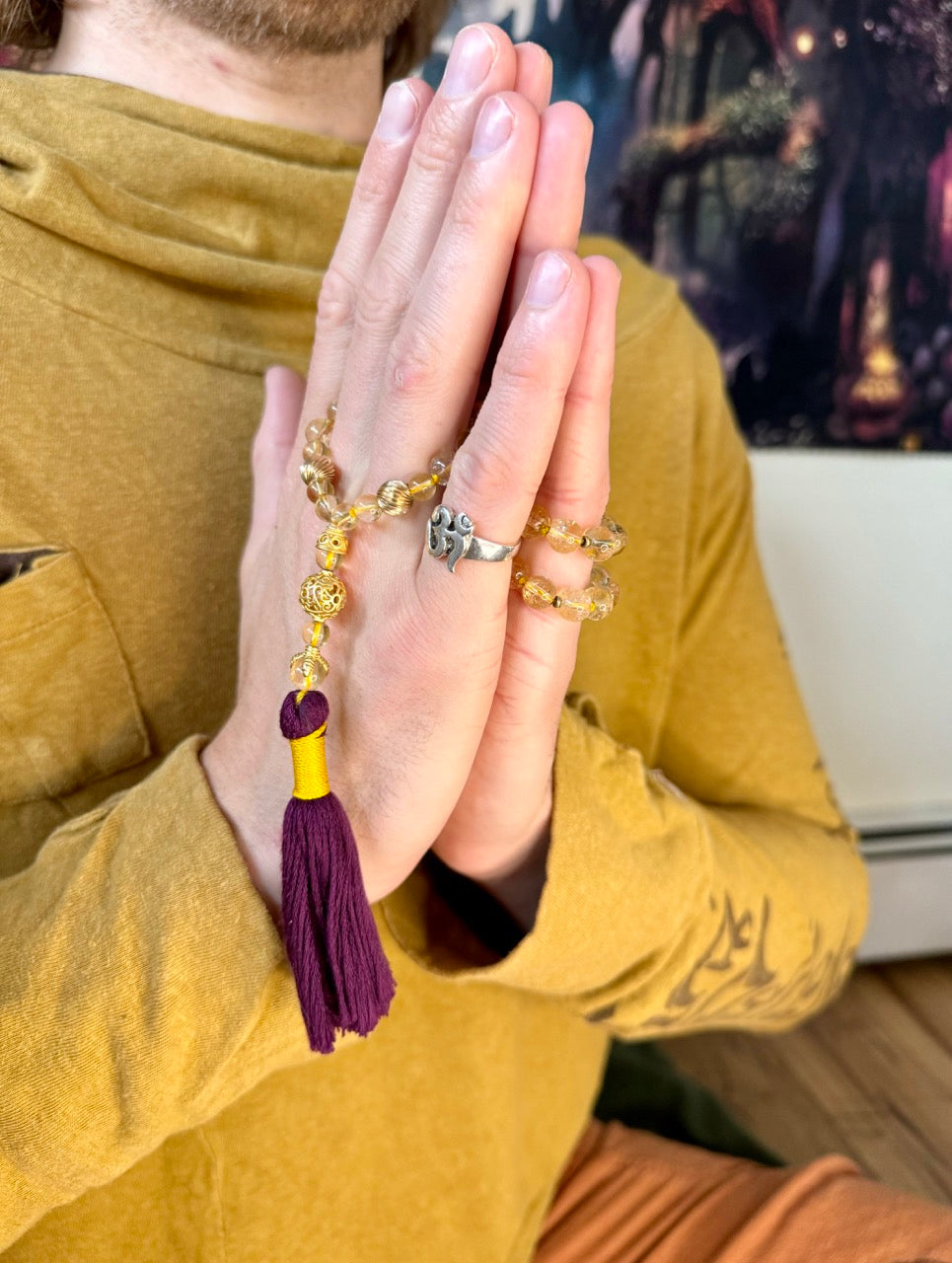
Rudraksha Mala is a string of prayer beads made from rudraksha fruit stones and used for mantra repetition, devotional practice, or sacred adornment. In yoga, a Rudraksha Mala most often supports japa, the repeated recitation of a mantra, by helping the practitioner maintain attention and count repetitions. The Sanskrit compound literally means “garland of rudraksha beads.” Rudraksha itself means “Rudra’s eye,” while the familiar translation “tears of Shiva” comes from traditional sacred narratives about the beads’ origin.
A Rudraksha Mala is both a practical counting tool and a sacred object, especially in traditions devoted to Shiva. Its form, number of beads, method of use, and religious interpretation vary among lineages, so no single arrangement represents every Hindu, Buddhist, or modern yoga practice.
What does Rudraksha Mala literally mean?
Rudraksha Mala is a feminine Sanskrit compound formed from rudraksha, a sacred bead associated with Rudra or Shiva, and mala, meaning a garland, necklace, wreath, or string of beads. Classical Sanskrit writes the compound as one word: rudrakshamala.
The element aksha means “eye,” so rudraksha is most directly understood as “Rudra’s eye” or “the eye of Rudra.” Traditional Shaiva narratives explain the beads as arising from drops that fell from Rudra’s eyes. This story supports the devotional translation “tears of Shiva,” although “tear” is contextual rather than the primary dictionary meaning of aksha.
What is a Rudraksha Mala made from?
A Rudraksha Mala is strung from the hard, naturally grooved stones found inside the fruit of trees in the Elaeocarpus genus. These objects are commonly called seeds or beads, although botanical descriptions identify the durable outer structure used for malas as the fruit’s hard endocarp.
The plant associated with traditional rudraksha beads is often named Elaeocarpus ganitrus in older literature. Current botanical authorities may treat that name as a synonym of Elaeocarpus sphaericus. Because botanical classification has changed and more than one Elaeocarpus species may be called rudraksha in regional usage, identification should be stated with appropriate qualification.
- Each bead has natural longitudinal divisions commonly called faces or mukhis.
- Traditions may assign different ritual meanings to the number of faces on a bead.
- The details of these classifications vary among texts, teachers, and devotional communities.
How is a Rudraksha Mala used in yoga?
In yoga practice, a Rudraksha Mala is primarily used for Japa, the disciplined repetition of a Mantra or sacred name. The practitioner moves through the beads one repetition at a time, allowing touch and rhythm to support concentration. This places the mala most directly within mantra, meditation, and devotional forms of yoga rather than within asana technique.
Many contemporary japa malas contain 108 counting beads and an additional larger bead often called the guru or meru bead. Historical and religious sources also describe rudraksha garlands with other numbers of beads, including forms intended to be worn on the neck, arms, wrists, head, or torso. A Rudraksha Mala should therefore not be defined by a universal bead count.
When a particular lineage provides instructions for handling the mala, choosing a mantra, or turning at the guru bead, practitioners should follow that tradition’s guidance. These details are matters of transmitted practice rather than fixed rules shared by every yoga community.
- Japa uses the beads to count mantra repetitions.
- Nama Japa uses the mala while repeating a divine name.
- A wearable Rudraksha Mala may express devotion or religious affiliation even when it is not being used for counting.
Why is Rudraksha associated with Shiva?
Rudraksha beads are especially significant in Shaiva traditions, where Rudra is understood in relation to Shiva. The Rudraksha Jabala Upanishad presents a sacred origin narrative for the beads and gives detailed instructions concerning their selection, arrangement, wearing, and association with Shiva mantras. These instructions document a specific Shaiva religious framework and should not be treated as universal requirements for all yoga practitioners.
Rudraksha beads have also served as recognizable signs of Shaiva devotion and ascetic identity. Historical artworks depict holy people, worshippers, and other figures wearing rudraksha necklaces or carrying rudraksha prayer beads. A mala may therefore function as a counting implement, a devotional ornament, or both.
Is Rudraksha Mala used outside Shaiva traditions?
Rudraksha remains most strongly associated with Shiva, but its use is not limited to one community. Museum collections document rudraksha prayer beads in Tibetan Buddhist practice, including malas used for mantra recitation in connection with wrathful deities. Hindu practitioners outside explicitly Shaiva settings may also use or wear rudraksha beads.
The meaning of a Rudraksha Mala depends on context. In a Shaiva setting it may signify devotion to Shiva. In a mantra practice it may serve as a counting tool. In a Buddhist setting it may be selected for a particular class of recitation. Modern yoga practitioners sometimes wear rudraksha as a general symbol of spiritual practice, though that use does not erase the beads’ specific religious histories.
How should yoga teachers explain Rudraksha Mala?
Yoga teachers can define a Rudraksha Mala as sacred prayer beads made from rudraksha fruit stones, traditionally associated with Shiva and commonly used for japa. It is helpful to distinguish the literal meaning “Rudra’s eye” from the devotional explanation “tears of Shiva.”
Claims that particular beads automatically cure disease, alter electromagnetic fields, remove karma, or guarantee spiritual attainment should be identified as traditional beliefs or modern claims rather than established facts. Respectful teaching can acknowledge the mala’s sacred status without presenting one lineage’s symbolism as scientifically proven or universally binding.
- Ask before handling another person’s mala, especially if it has been consecrated or used for personal practice.
- Avoid assuming that every Rudraksha Mala contains 108 beads.
- Present bead-face symbolism and wearing customs as tradition-specific teachings.