Tulasi Mala: Meaning and Definition
Jack UtermoehlShare
Tulasi Mala (tulasi garland; sacred basil necklace or prayer beads)
- Devanagari: तुलसीमाला
- IAST: tulasī-mālā
- Pronunciation: too-luh-SEE MAA-laa. The final syllables in both words are long, and the initial t is a light dental sound.
- Alternate spellings: Tulsi Mala, Tulasi-mala, Tulsi-mala, Tulasi Mala beads, Tulasi Kanthi Mala
Definition
Tulasi mala is a garland, necklace, or set of prayer beads made from the sacred tulasi plant. In yoga and Hindu devotional practice, especially Vaishnava bhakti traditions, a tulasi mala may be worn around the neck as a sign of devotion to Vishnu or Krishna, or used as a japa mala to count mantra repetitions. The literal meaning is “tulasi garland,” and the context determines whether the term refers to neck beads, chanting beads, or a garland of tulasi leaves.
Tulasi Mala combines tulasi, the sacred plant commonly called holy basil, with mala, a word that can mean a garland, necklace, string of beads, or rosary. Its meaning is shaped by how the mala is made and used.
What does Tulasi Mala mean in Sanskrit?
Tulasi mala is a feminine Sanskrit compound meaning “a garland or mala of tulasi.” Tulasi names the sacred aromatic plant associated especially with Vishnu and Krishna, while mala has a broad range of meanings that includes garland, necklace, and rosary.
The compound is conventionally written as one word in Devanagari: तुलसीमाला. English-language sources often separate the words or join them with a hyphen. The spelling “tulsi mala” reflects a common modern North Indian pronunciation and is widely used outside formal Sanskrit transliteration.
How is a Tulasi Mala used in yoga and devotional practice?
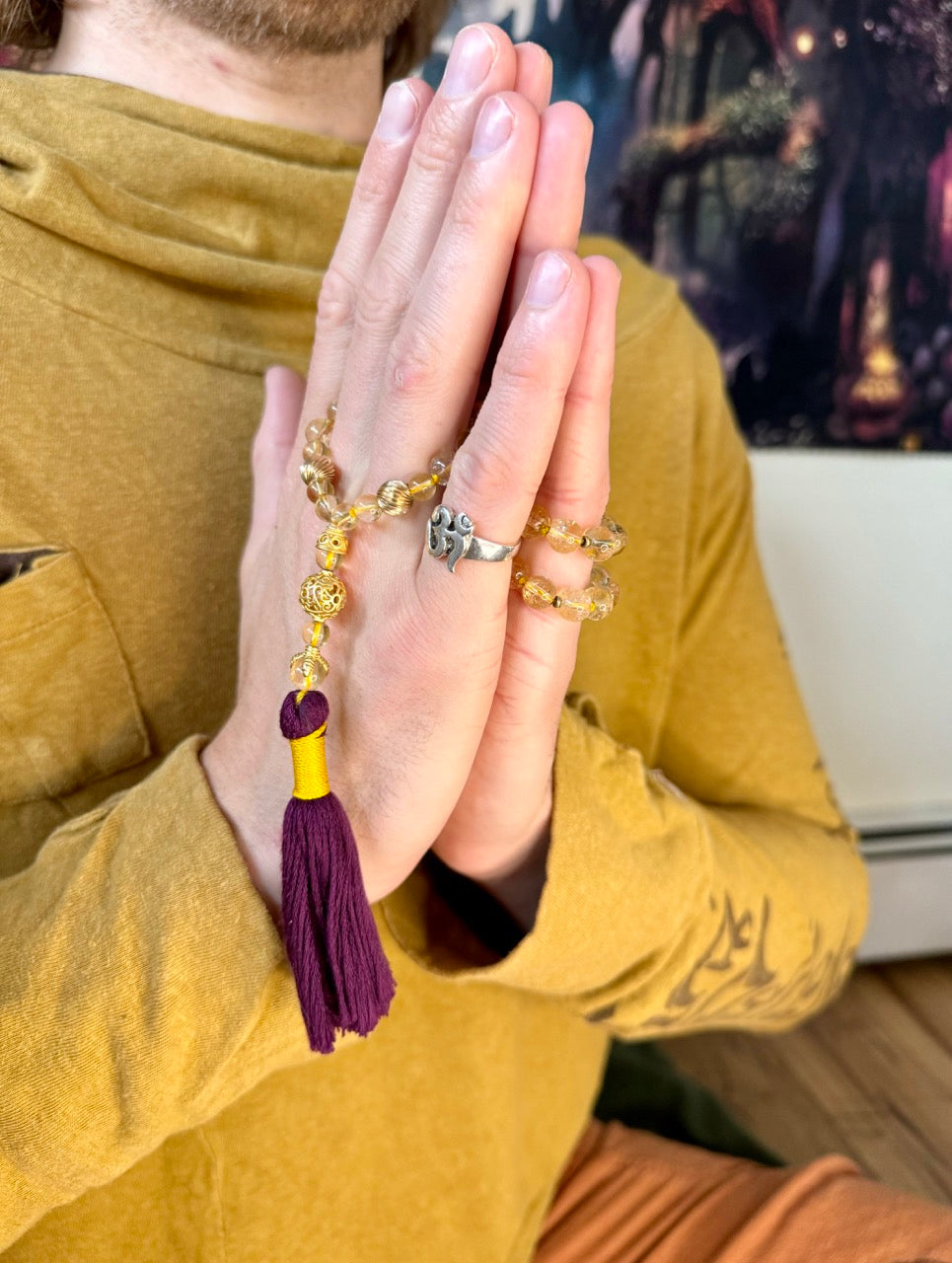
In devotional yoga, a tulasi mala supports Bhakti, the cultivation and expression of devotion. Practitioners may use tulasi prayer beads during Japa, the repeated recitation of a Mantra or divine name. The beads provide a physical method for tracking repetitions while helping attention return to the sound and meaning of the practice.
Tulasi japa malas often contain 108 counting beads, although smaller configurations are also used. The exact construction and method of handling the beads depend on the practitioner's tradition and teacher.
- Used for mantra japa or Nama Japa
- Worn around the neck in some Vaishnava traditions
- Placed on sacred images or used in devotional offerings when formed from leaves
Tulasi neck beads and Tulasi Japa Mala
The term tulasi mala commonly refers to two related objects. A tulasi Japa Mala is a longer strand held in the hand and used to count mantra repetitions. A tulasi neck mala is a shorter necklace worn around the throat, often called a kanthi mala.
In many Vaishnava communities, neck beads serve as an outward expression of devotion and religious identity. They are not necessarily used for counting japa. A practitioner may therefore own both a tulasi neck mala and a separate tulasi japa mala.
The number of strands, preparation of the beads, conditions for wearing them, and relationship to initiation vary among Vaishnava sampradayas. Guidance from one lineage should not automatically be presented as a universal rule for all practitioners.
Why is Tulasi sacred in Vaishnava traditions?
Tulasi is especially sacred in traditions centered on Vishnu and Krishna. The plant is honored in household worship, temples, devotional literature, and daily ritual. It may be understood as a sacred plant, a goddess, or a manifestation associated with divine devotion, depending on the tradition and text.
Because tulasi is closely connected with Vishnu and Krishna worship, beads made from its woody stems carry devotional significance beyond their practical use. Wearing or handling a tulasi mala can express remembrance, dedication, and participation in a Vaishnava community.
Devotional texts such as the Hari-bhakti-vilasa discuss wearing ornaments and malas made from tulasi material. The Bhakti-rasamrita-sindhu also cites the wearing of tulasi garlands among recognizable Vaishnava practices. These sources represent particular bhakti traditions rather than a single rule followed throughout Hinduism.
What is a Tulasi Mala made from?
Modern tulasi beads are generally carved from the dried woody stems of the tulasi plant. The accepted botanical name is Ocimum tenuiflorum. The older name Ocimum sanctum remains common in books and devotional materials but is treated by current botanical authorities as a synonym.
Some Sanskrit passages also describe malas made from tulasi leaves. For this reason, “tulasi garland” is the most literal translation, while “tulasi wood prayer beads” is often the clearest translation when referring to the object used for japa or worn around the neck.
Teaching and using the term respectfully
Yoga teachers can explain tulasi mala as a devotional object associated primarily with Vaishnava practice. It should not be presented as a required accessory for yoga, a universal Hindu symbol, or merely decorative jewelry.
A student who wishes to wear tulasi neck beads may want to ask a teacher within the relevant Sampradaya about local customs. Some communities welcome broad devotional use, while others connect particular forms of the mala with initiation, vows, or established standards of conduct.
For a general yoga class, the clearest description is: “A tulasi mala is a sacred garland or set of beads made from the tulasi plant, used especially in devotion to Vishnu or Krishna and sometimes for counting mantra repetitions.”
Related Sanskrit Terms
- Tulasi
- Mala
- Japa Mala
- Japa
- Nama Japa
- Mantra
- Bhakti
- Krishna
- Vishnu
- Rudraksha Mala
- Sampradaya
- Sadhana