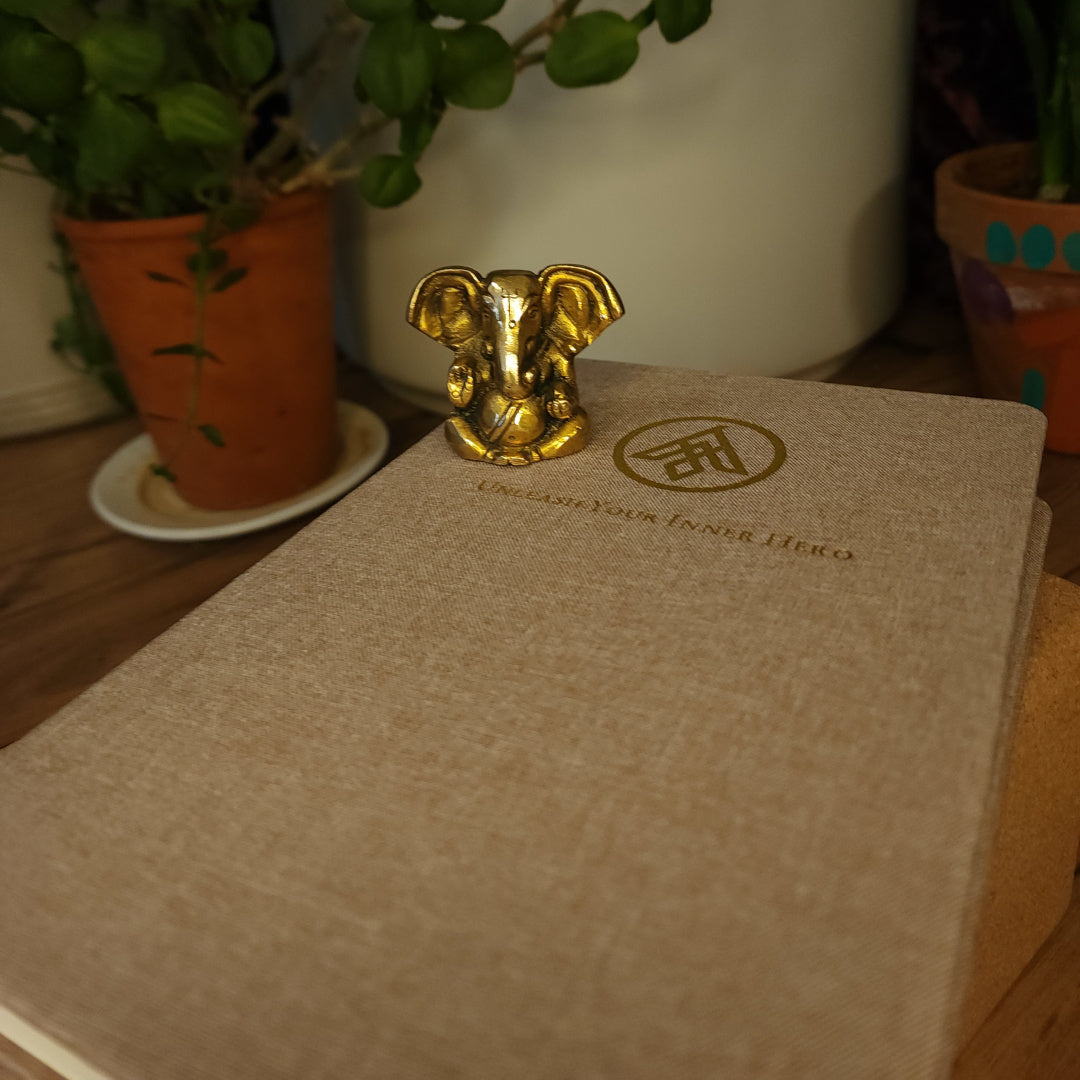
Ishta Devata: Meaning and Definition
Jack UtermoehlShare
Ishta Devata (chosen deity; cherished deity; preferred form of the divine)
- Devanagari: इष्टदेवता
- IAST: iṣṭa-devatā
- Pronunciation: ISH-ta day-va-TAA. The final “aa” is held slightly longer. In careful Sanskrit pronunciation, the “sh” and “t” in Ishta are retroflex, formed with the tongue slightly curled back.
- Alternate spellings: Ishtadevata, Ishta-devata, Ishta Deva, Ishtadeva, Ishta Devta
Definition
Ishta Devata means “chosen deity” or “cherished deity.” In yoga and Hindu devotional practice, Ishta Devata refers to the particular form of the divine toward which a practitioner directs primary devotion, meditation, prayer, mantra, or worship. The term does not necessarily imply rejection of other deities, and its theological meaning varies among traditions. In Yoga Sutra 2.44, svadhyaya is linked with contact or communion with one’s Ishta Devata.
An Ishta Devata gives devotional and contemplative practice a specific focus. The deity may be experienced as a beloved divine presence, the supreme reality in a particular form, a support for meditation, or the central deity of an initiated practice. The relationship may arise through personal devotion, family and community tradition, or guidance from a Guru. For this reason, “chosen deity” is accurate, but “cherished deity” often conveys the relational quality more clearly.
What does Ishta Devata literally mean?
Ishta Devata combines Ishta, meaning desired, cherished, preferred, beloved, or particularly worshiped, with Devata, meaning a deity or divine being. The compound can therefore be translated as “chosen deity,” “cherished deity,” or “preferred deity.”
Older dictionaries sometimes translate Ishta Devata as “tutelary deity.” That translation emphasizes guidance or protection, but it may sound narrower than the Sanskrit term. “Personal deity” is common in modern English, although personal here means the practitioner’s primary devotional relationship, not a deity privately owned or created by that person.
Devata is grammatically feminine in Sanskrit, so the compound Ishta Devata is also feminine as a grammatical form. It may refer to a male deity, a female deity, or another sacred form. The related masculine expression Ishta Deva is also used.
- Ishta: desired, cherished, preferred, beloved, or worshiped
- Devata: deity, divinity, or divine being
- Literal sense: the deity who is cherished or specially worshiped
What does Ishta Devata mean in yoga?
In yoga, Ishta Devata refers to a specific divine form that supports concentration, devotion, sacred recitation, and meditation. This meaning appears directly in Yoga Sutra 2.44, which connects Svadhyaya with samprayoga, meaning contact, conjunction, or communion, with one’s chosen deity.
In this classical context, svadhyaya includes the study and recitation of sacred teachings, especially Mantra and scripture. It should not be limited to the modern idea of personal journaling or psychological self-reflection. Traditional commentary on the sutra describes the disciplined practitioner as coming into the presence of deities, rishis, and siddhas.
The Yoga Sutra does not provide a universal list of acceptable Ishta Devatas or require every practitioner to choose one. It indicates that sacred recitation and study can establish a relationship with the deity toward whom the practice is directed. Interpretations of this relationship range from devotional communion to visionary encounter or deep meditative attunement.
- Yoga Sutra 2.44 explicitly uses the term Ishta Devata.
- The relevant practice is svadhyaya, especially sacred study and recitation.
- Samprayoga may be translated as contact, communion, conjunction, or connection.
- The sutra concerns contemplative and devotional practice rather than the naming of an asana.
How is an Ishta Devata practiced with?
Practice centered on an Ishta Devata may include mantra Japa, Puja, meditation, visualization, prayer, kirtan, nama japa, or contemplation of a Murti or yantra. The exact practice depends on the deity, lineage, and practitioner’s level of initiation.
A practitioner may repeat a name or mantra associated with Krishna, Shiva, Devi, Rama, Ganesh, Vishnu, Lakshmi, Durga, or another sacred form. Devotion becomes concentrated through a stable name, image, story, or mantra. This focus can make an abstract understanding of the divine more immediate and relational.
In some settings, a practitioner feels naturally drawn toward a particular deity. In others, the Ishta Devata and corresponding mantra are received from a guru through Diksha. Tantric practices may require specific initiation, instruction, and commitments, so they should not be assembled solely from general descriptions or visual preference.
Yoga teachers can explain the concept without asking students to adopt a deity. Ishta Devata belongs to devotional and philosophical dimensions of yoga that may or may not be part of an individual student’s practice.
- Japa: repetition of a divine name or mantra
- Puja: ritual worship and offering
- Dhyana: meditation on the deity’s form or qualities
- Kirtan and nama japa: devotional singing or repetition of sacred names
- Murti or yantra: a sacred form used as a focus of worship or contemplation
Does “chosen deity” mean the same thing in every Hindu tradition?
Hindu traditions do not all interpret Ishta Devata in the same way. “Chosen deity” names the focus of practice, while the theological status of that deity depends on the practitioner’s sampradaya, or tradition.
In some Advaita Vedanta and Smarta interpretations, the Ishta Devata is a personally accessible form of Ishvara or Brahman with qualities. Worship of that form prepares and concentrates the mind while remaining compatible with recognition of other divine forms.
Many Vaishnava, Shaiva, and Shakta traditions understand their central deity as the supreme divine reality rather than one interchangeable option among several. A devotee may still use the language of Ishta Devata, but the relationship can express exclusive refuge, eternal devotion, or commitment to a particular lineage.
In Tantra, the deity may be inseparable from mantra, visualization, ritual, and initiation. The word “chosen” can therefore be misleading if it suggests casual personal selection. The deity may be prescribed or revealed within a lineage-based practice.
- Advaita and some Smarta contexts may treat the deity as an accessible form of the one Brahman.
- Bhakti traditions may regard the beloved deity as the supreme and eternal object of devotion.
- Tantric traditions may connect the deity with initiation, mantra, visualization, and lineage commitments.
- The term should be explained according to the tradition in which it is being used.
How is Ishta Devata different from Ishvara and Kuladeva?
Ishta Devata and Ishvara can overlap, but they are not automatic synonyms. Ishvara means Lord or sovereign divine being and has specific philosophical meanings in Yoga and Vedanta. Ishta Devata identifies the particular deity or divine form toward whom an individual’s principal practice is directed. Traditions differ in how they relate that form to Ishvara.
A Kuladeva is a deity associated with a family, clan, or hereditary community. An Ishta Devata is primarily defined by an individual practitioner’s special devotion or practice. The same deity may serve as both Kuladeva and Ishta Devata, but the relationships are conceptually distinct.
Ishta Devata also differs from the deity of a single ritual occasion. A person may honor many deities while maintaining one primary devotional focus. Conversely, some practitioners do not organize their spiritual lives around an Ishta Devata at all.
- Ishvara: the Lord or supreme governing consciousness, interpreted differently across philosophical schools
- Ishta Devata: the practitioner’s cherished or principal deity
- Kuladeva: a family or lineage deity
- These categories can overlap without becoming identical.
What does Ishta Devata mean in Vajrayana Buddhism?
In Vajrayana Buddhist contexts, Ishta Devata may be used for a meditational deity commonly called a yidam in Tibetan. The deity is an enlightened form central to visualization, mantra, and deity yoga rather than a creator god or a merely preferred supernatural figure.
A yidam practice is generally received through empowerment and instruction. The practitioner visualizes the deity and may identify body, speech, and mind with the deity’s awakened qualities. Commitments called samaya may accompany the practice.
This Buddhist usage is related linguistically to “chosen deity,” but it should not be treated as identical to Hindu devotional choice. The philosophical framework, ritual method, purpose of visualization, and understanding of deity differ across Vajrayana and Hindu traditions.
- Yidam is commonly translated as meditational deity.
- The practice is usually connected with empowerment, instruction, and samaya.
- The deity embodies awakened qualities within a Buddhist framework.
- Hindu and Buddhist uses of Ishta Devata should be distinguished when teaching the term.
Common misunderstandings about Ishta Devata
Ishta Devata does not necessarily mean a deity selected from a menu according to personal preference. Attraction and affection may be important, but family tradition, a guru, initiation, sectarian affiliation, or an established Sadhana may shape the relationship.
The term does not establish a single Hindu doctrine that all deities are interchangeable. Some traditions understand many forms as expressions of one reality, while others teach that a particular deity is uniquely supreme.
Having an Ishta Devata does not always require exclusive worship. A practitioner may honor several deities while maintaining a primary relationship with one. Practices and expectations vary, so teachers should avoid presenting one lineage’s approach as a universal rule.
- “Chosen” may mean cherished, received, recognized, or made central through practice.
- “Personal deity” does not mean an imaginary or privately invented deity.
- An Ishta Devata may or may not be worshiped exclusively.
- Not every yoga practitioner is expected to have an Ishta Devata.
Related Sanskrit Terms
- Ishta (Chosen Ideal)
- Deva (Divine Being)
- Devi (Goddess)
- Ishvara (Supreme Being)
- Bhakti
- Bhakta (Devotee)
- Svadhyaya
- Japa (Mantra Repetition)
- Mantra
- Puja (Devotional Worship)
- Murti (Sacred Image)
- Upasana
- Isvara Pranidhana
- Sadhana
- Guru
- Diksha (Spiritual Initiation)
- Kuladeva