Cork Yoga Mat Benefits
Jack UtermoehlShare
cork yoga mat benefits are most noticeable when your practice needs steady grip, natural materials, and a surface that feels supportive without feeling sticky or synthetic. Cork can offer traction that improves with light moisture, a firm grounded feel, and a plant-based top layer. It is not the right mat for every student, but it is a strong option if you value grip, clean design, and lower-impact materials.
What Matters Most When Choosing a Yoga Mat
A yoga mat is not just a rectangle you stand on. It affects how your hands settle in Downward Facing Dog, how your knees feel in low lunges, how stable your feet feel in standing poses, and how willing you are to practice consistently. A good mat should support the way you actually practice, not the way a product page imagines you practice.
When students ask me what to look for, I usually bring the conversation back to four practical categories: grip, thickness, material, and sustainability. These are the areas where you will feel the difference most clearly. Grip affects safety and confidence. Thickness affects comfort and balance. Material affects texture, cleaning, weight, and how the mat feels against your skin. Sustainability affects the values behind the purchase and how the mat fits into a lower-waste practice setup.
The clearest cork yoga mat benefits show up when these four categories work together. Cork tends to feel firm, grounded, and responsive. It is especially useful for students who sweat lightly to moderately, prefer a natural surface, or dislike the slick feel that some synthetic mats can have when moisture builds.
Grip
Grip is often the first reason students consider a cork yoga mat. Cork has a unique relationship with moisture. When completely dry, cork can feel smooth and firm. With a little warmth or moisture from your hands and feet, the surface often becomes more grippy. This makes cork a useful option for active practices where the body gradually warms, such as vinyasa, power yoga, or strong standing sequences.
If your hands are very dry at the beginning of practice, you may need a short warm-up before the mat reaches its best grip. Some students lightly mist the hand and foot areas with water before beginning. You do not need to soak the mat. A small amount of moisture is usually enough to activate the surface.
Grip should be understood as a relationship between your body, the mat, the room, and the style of practice. If you practice slow hatha or restorative yoga and rarely sweat, cork may feel more firm than sticky. If you practice in a warm room or build heat through repeated transitions, cork can feel secure without the tacky sensation of rubber or PVC surfaces.
For beginners, reliable grip helps reduce the feeling of fighting the mat. In poses like Plank, Warrior II, and Downward Facing Dog, a stable surface lets you focus on alignment and breath mechanics rather than constantly adjusting your hands and feet.
Thickness
Thickness matters because it changes both comfort and stability. A very thin mat can feel connected to the floor, but it may not provide enough padding for knees, wrists, or bony joints. A very thick mat can feel comfortable in seated or kneeling poses, but it may reduce balance in standing postures.
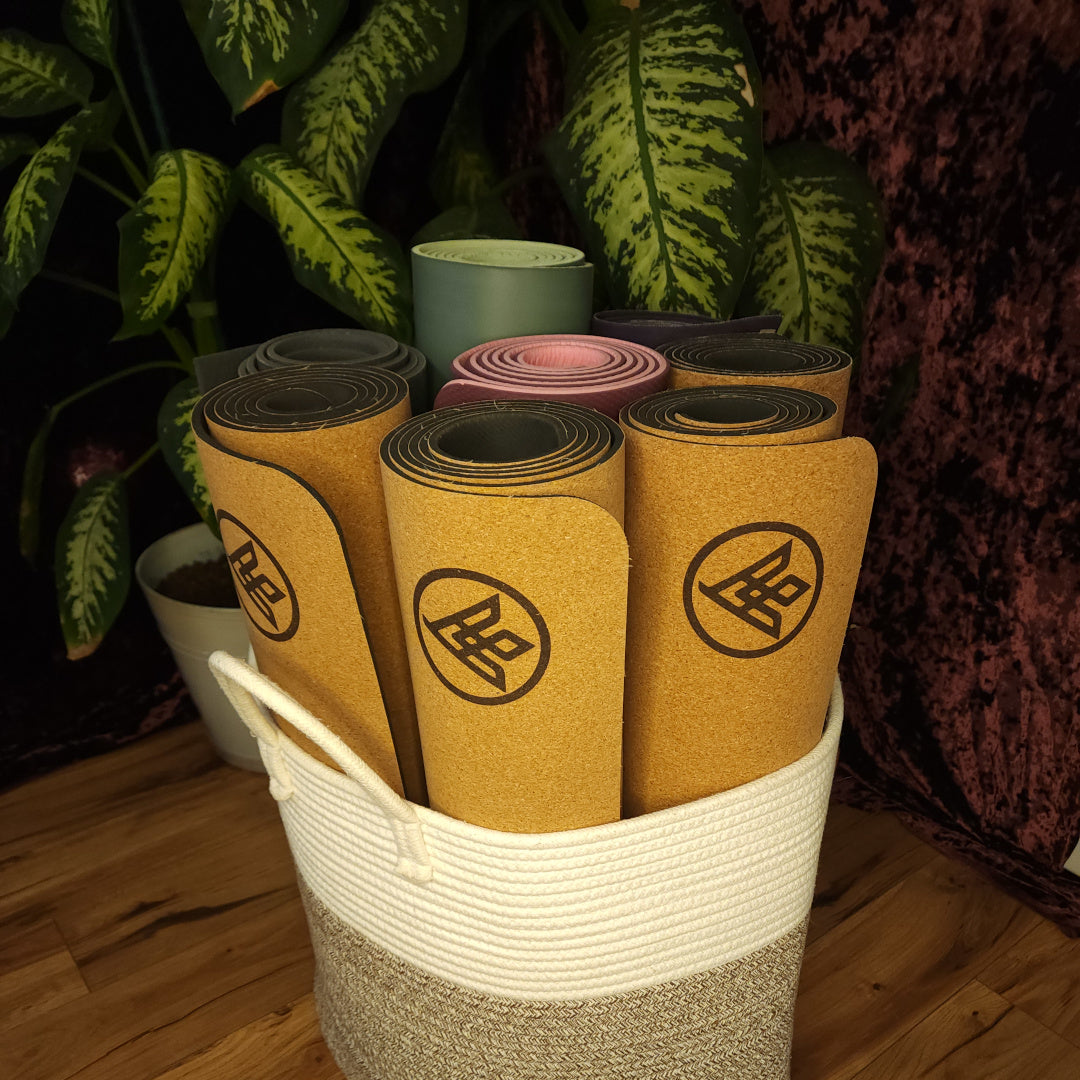
Most cork yoga mats are designed with a cork top layer and a base layer underneath, often made from natural rubber or another cushioning material. The cork itself is usually thin. The comfort comes from the base. For many students, a mat around 4 to 5 millimeters thick offers a good middle ground: enough support for daily practice without feeling wobbly underfoot.
If your practice includes many kneeling poses, low lunges, or tabletop work, choose a mat with enough cushion to reduce pressure. If your practice emphasizes balance poses, standing transitions, and strength work, avoid going too thick. You can also use a folded blanket under the knees when needed rather than choosing an overly padded mat for every posture.
The best thickness is the one that supports your joints while still allowing you to feel grounded. That balance is more important than choosing the thickest mat available.
The Asivana Cork Yoga Mat combines a cork surface with a natural rubber base and 5mm cushioning. Its moisture-activated grip makes it an option to consider for active practice.
Material
Material affects almost every part of your experience on the mat. Cork is harvested from the bark of cork oak trees, which can regenerate after harvesting. As a surface material, it has a naturally smooth, slightly textured feel. It does not have the same sticky hand feel as some synthetic mats, and many students appreciate that it feels clean and simple under the body.
One of the practical cork yoga mat benefits is that cork is less prone to holding odor compared with some absorbent fabric surfaces. That does not mean it never needs cleaning. Sweat, skin oils, dust, and studio floors still build up over time. After practice, wipe the mat with a damp cloth and let it dry fully before rolling it. Avoid harsh cleaners, heavy oils, and abrasive scrubbing, since those can shorten the life of the cork surface.
The base material is just as important as the cork top. A cork layer needs a stable foundation so the mat does not bunch, stretch, or slide. Natural rubber bases are common because they add weight, cushion, and floor grip. If you have a latex allergy, check the product materials carefully before purchasing, since many cork mats use rubber underneath.
Compared with very lightweight travel mats, cork mats can feel a bit heavier. For home practice, that extra weight can be welcome because it helps the mat lie flat. For commuting, you may want to consider whether carrying a heavier mat fits your routine.
Sustainability
Sustainability is one reason many students are drawn to cork. Cork oak bark can be harvested without cutting down the tree, and the bark grows back over time. This makes cork an appealing natural material when compared with mats made entirely from petroleum-based plastics.
Still, sustainability is not only about the top surface. A mat is a complete product. The base material, adhesives, dyes, packaging, manufacturing process, shipping distance, and lifespan all matter. A cork mat that lasts for years and supports regular practice is generally a better choice than a cheaper mat that breaks down quickly and needs replacing.
When evaluating sustainability, look for clear material information rather than vague claims. Ask practical questions. What is the top layer made from? What is the base made from? Is the mat durable enough for your practice frequency? Can it be cleaned easily? Does the company explain care instructions so the mat lasts longer?
At Asivana, we think of sustainability as a practice of care. It includes the materials we choose, how we maintain what we own, and whether our purchases support a meaningful practice rather than collecting gear we do not use.
How to Choose the Right Yoga Mat for Your Practice
Start with your style of yoga. If you practice dynamic classes, sweat moderately, or want a surface that grips better with a little moisture, cork is worth considering. If you practice mostly slow, dry, floor-based classes and want a very soft surface, you may prefer a different material or a thicker base.
Next, consider your body. Sensitive knees may need more cushioning. Balance-focused practitioners may need a firmer mat. Students with sweaty hands may appreciate cork once the surface is activated, while students with very dry hands may need a light mist at the start of practice.
Then think about where you practice. For home practice, a slightly heavier cork mat can feel stable and grounding. For studio practice, make sure the mat is easy enough to carry. For outdoor practice, cork can feel natural and comfortable, but you should avoid leaving it in strong sun, rain, or damp storage conditions.
Finally, consider care. A cork mat is simple to maintain, but it does need consistent habits. Wipe it down, let it dry, and roll it with the cork side facing out if the brand recommends it. Do not store it wet or compressed under heavy items.
If you are choosing your first serious mat, focus less on trends and more on fit. The right mat should help you practice with steadiness. It should support your hands, feet, knees, and values. Cork can do that well for many students, especially those who want a natural-feeling surface with practical grip and a grounded presence.
FAQ
What are the main cork yoga mat benefits?
The main cork yoga mat benefits include grip that improves with light moisture, a natural surface feel, a firm grounded base, simple cleaning, and a material choice that can align with lower-impact values. Cork is especially useful for students who practice active yoga and want a mat that feels steady without a synthetic sticky texture.
Are cork yoga mats good for beginners?
Yes, cork yoga mats can be good for beginners, especially if the mat has enough cushion and a stable base. Beginners often benefit from a surface that supports hand and foot placement without bunching or sliding. If your hands are dry, lightly misting the mat before practice can help the surface feel more secure.
Do cork yoga mats get slippery?
Cork can feel smoother when completely dry, but it often becomes grippier with a small amount of moisture. This is why cork works well for many heated or active practices. If your practice is slow and dry, you may need to warm up first or mist the mat lightly where your hands and feet land.
How thick should a cork yoga mat be?
For most students, a cork yoga mat around 4 to 5 millimeters thick offers a balanced mix of comfort and stability. Choose more cushion if your knees or wrists need support. Choose a firmer, thinner option if you prioritize balance, standing poses, and a close connection to the floor.
How do you clean a cork yoga mat?
Wipe the mat with a damp cloth after practice and let it dry completely before rolling. Use mild cleaning methods and avoid harsh chemicals, heavy essential oils, and abrasive scrubbing. Good care helps preserve the cork surface and keeps the mat ready for consistent practice.
Is a cork yoga mat better than a rubber yoga mat?
It depends on your needs. Cork offers a natural top surface and grip that responds well to moisture. Rubber often provides a tackier feel right away and strong floor grip. Many cork mats use rubber as the base, so the choice is often about the top surface feel as much as the material itself.