What Does Namaste Mean in Yoga?
Jack UtermoehlIn yoga, namaste most commonly means “I bow to you” or “salutations to you.”
In modern yoga classes, teachers often use it to close class as a gesture of respect, gratitude, or shared presence. The widely repeated line “the divine in me honors the divine in you” is best understood as a spiritual interpretation, not the strict literal translation.
Whether to say it depends on context, intention, pronunciation, and respect for its roots.
What Does Namaste Mean in Yoga?
If you're asking, “What does namaste mean in yoga?”, the clearest answer is this: in yoga settings, namaste is a respectful closing or greeting borrowed from South Asian usage, and its literal sense is closer to “I bow to you” than to a full theological statement.
In Western yoga, it often functions as gratitude, mutual respect, and a transition out of practice.
The confusion starts because yoga culture often mixes literal translation, spiritual commentary, and studio habit. The literal layer comes from Sanskrit. The spiritual layer comes from Hindu and yogic ideas that the sacred, soul, or inner light is present in each person. The studio-habit layer comes from modern Western classes, where namaste may simply mean “thank you for practicing with me” or “class is complete.” Those are related, but they are not identical.
- Literal meaning: “bow,” “obeisance,” “salutation,” addressed “to you.”
- Spiritual interpretation: “the divine in me honors the divine in you.”
- Modern classroom use: a respectful, often secular or semi-spiritual closing ritual.
Literal Sanskrit Meaning and Etymology
The strongest language evidence in the sources reviewed points to namaḥ or namas + te, not “nama + as + te.” Sanskrit dictionary sources define namas as “bow,” “obeisance,” “reverential salutation,” or “adoration,” and give te as the dative form meaning “to you.” Merriam-Webster’s word history says the same, tracing the phrase to namaḥ, “bow, obeisance, adoration,” and te, “to you.”
That point matters because one common yoga explanation says “nama means bow, as means I, te means you.” That explanation is popular, and it appears in a major yoga publications and presentations, but Sanskrit-oriented commentary from Susanna Barkataki explicitly rejects the claim that there is an “I” inside the word, arguing instead for namas-te, “reverence/salutations to you.” On philological grounds, the second reading is stronger.
The phrase is also old. The string namaste appears in Vedic material, including a Rig Veda passage indexed by Sacred Texts, which supports the claim that the expression predates modern studio yoga by many centuries or millenia.
Why Teachers Say It in Class
In contemporary yoga classes, teachers usually say namaste for one of four reasons: to thank students, to mark closure, to signal shared respect, or to add a spiritual tone to the end of class. This is why many students experience it less as a dictionary term and more as yoga class culture.
The practice works because yoga class often ends in stillness. After Savasana, a single word plus a bow can compress several meanings at once: “thank you,” “I honor your practice,” “let’s leave quietly,” or “let’s remember something deeper than performance.” That helps explain why even teachers of most paths and lineages still use it.
Some South Asian and roots-conscious teachers find this use odd. In the 2024 explainer on the term, Barkataki says namaste or namaskar is typically said when meeting an elder, not when leaving. She describes it as “rather formal,” and questions using it as shorthand for “class is over.”
At the same time, it is important not to overstate that formality. In India, namaste and namaskar are also very common parts of everyday life. They are used regularly in homes, shops, workplaces, schools, and daily conversations, often in the same natural way someone might say “hello,” “good morning,” or “goodbye.” Many people who have spent time in India hear the greeting multiple times throughout the day.
The modern Western custom of ending yoga classes with “Namaste” appears to be a hybrid cultural evolution rather than a direct ancient yogic requirement or a formal practice established by one swami or lineage. It grew organically as yoga adapted to Western studio culture while trying to preserve a sense of reverence, gratitude, and connection.
That tension helps explain why some teachers continue using Namaste traditionally, others avoid it, and others replace it with a simple “thank you.” Whether you use the term at the end of a yoga class or not, as either teacher or student, you're right.
Perspectives and Common Phrasings
The most accurate way to map the word is by context, not by searching for a single universal translation. Traditional Indian use, spiritual yoga use, secular yoga use, and commercialized use all branch from the same term but do not carry the same meaning.
The most common phrasing was some version of “I bow to you” / respectful greeting, followed by “the light or divine in me honors the light or divine in you.” Another common use was purely functional: end-of-class closure.
Some common community comments from Reddit capture the split well:
“It just isn't true outside of an American yoga class.”
“Namaste is greeting, and can be used to mean both hello and bye.”
Those comments should not be treated as universal verdicts. They are not cultural authority. They do, however, show the real interpretive gap between lived usage in India and Western yoga evolution of the term.
Named Figures and Contemporary Teachers
The long-view reference points here are B.K.S. Iyengar, Pattabhi Jois, T.K.V. Desikachar, and Ram Dass. Contemporary teacher examples include Brett Larkin, Kino MacGregor, Barkataki, Sadie Nardini, Adriene Mishler, and channels such as Yoga with Kassandra and SarahBethYoga. Not all of the historical figures left an easily accessible stand-alone definition of namaste itself, so the most reliable approach is to cite their broader teaching frame and say so plainly.
Iyengar’s accessible materials emphasize humility, awareness, and reverence in practice. Pattabhi Jois is represented less by namaste-specific commentary than by breath, devotion, and self-realization through practice. Desikachar centers adaptation to the individual and respectful teacher-student relationship. Ram Dass frames yoga and spirituality through loving awareness and recognition of the sacred in others.
Together, these figures help explain why many Western students came to hear namaste as more than a simple hello, even if that fuller meaning is interpretive rather than literal.
Religious, Cultural, and Appropriation Questions
Is namaste religious?
Not necessarily in every use, but it is not culture-free. A literal “salutations to you” can function as a respectful greeting without requiring a detailed metaphysical claim. Once a teacher glosses it as “the divine in me honors the divine in you,” the wording becomes more explicitly spiritual and rests on ideas associated with Hindu and yogic thought about divinity, soul, or sacred presence in all beings.
Is it cultural?
Yes. The strongest sources consistently place the term in Indian linguistic and cultural use, not as an invention of modern studios. That is why critics object when it is flattened into merchandise, puns, or a vaguely exotic sign-off disconnected from origin and meaning.
What are the appropriation concerns?
The concerns are not simply “non-Indians may never say it.” They are more specific: using it without knowing the meaning, mispronouncing it while claiming authority, turning it into slogans like “Namaslay,” or using it to perform spiritual status. Barkataki and MacGregor both argue that intention alone is not enough; practice should be paired with study, humility, and context.
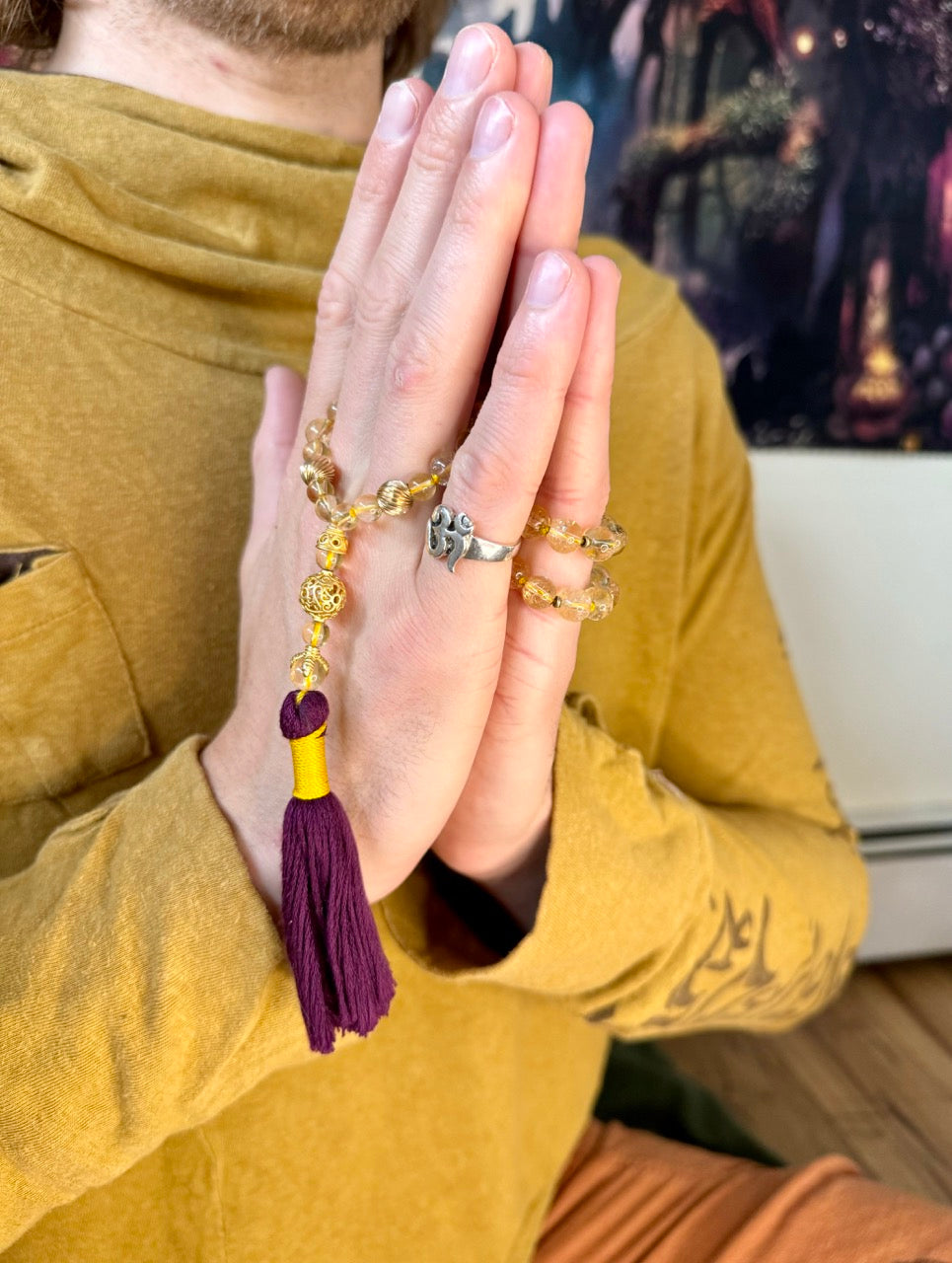
Pronunciation and gesture matter here, too. Rina Deshpande advises pronunciation closer to nuh-MUH-stheh, not the stretched nah-mah-STAY common in U.S. studios. The gesture usually paired with the word is Anjali Mudra, palms together at the heart with a slight bow. The gesture can be used with or without the spoken word.
Conclusion and Usage Guidance
A balanced conclusion is simple: you can say namaste in yoga, but you should know what you mean by it. If you mean “I bow to you,” “thank you,” or “I honor our shared practice,” and you use it with care, it can be sincere. If you are reaching for a dramatic spiritual flourish, misusing it as branding, or using it only because it sounds “yoga-ish,” the word weakens and the criticism becomes understandable.
For most teachers and students, the best guidance is:
- Say it if you understand its roots, pronounce it respectfully, and mean it as an actual gesture of respect.
- Do not feel required to say it. “Thank you,” “be well,” or silent Anjali Mudra are legitimate alternatives.
- Avoid punning or merchandising it. That is where the strongest appropriation critiques converge.
In yoga, namaste is best understood as a respectful bow whose meaning expands or contracts with context, from simple greeting, to spiritual recognition, to modern classroom gratitude.
Let me know how you use, or don't use, namaste in your classes in the comments below.