Yoga Mat Thickness Guide
Jack UtermoehlShare
A practical yoga mat thickness guide starts with your body, your floor, and the style of practice you do most. Thinner mats support stability and balance, while thicker mats add cushioning for knees, wrists, and seated shapes. Most students do well with a 4mm to 5mm mat, then adjust thinner for travel or firmer balance work, thicker for extra joint support when needed in class or at home.
What Matters Most When Choosing a Yoga Mat
Choosing a yoga mat is not only about thickness. A good mat supports how you move, how you place weight through your hands and feet, and how your joints feel over time. Thickness matters, but it works together with grip, density, material, size, and the surface you practice on.
As a teacher, I usually ask students five questions before suggesting a mat. Do your knees feel sensitive in low lunges or tabletop? Do your hands slide in downward facing dog? Do you practice mostly standing flows, slower floor-based classes, or a mix? Do you carry your mat often? Do you prefer natural materials or easy-clean synthetic surfaces?
This yoga mat thickness guide focuses on the practical details that affect your practice immediately. A mat should feel steady under your feet, supportive under your joints, and reliable enough that you are not distracted by slipping, bunching, or sinking. For most home and studio practitioners, the best mat is not the thickest mat. It is the mat that gives enough cushion without taking away your connection to the floor.
Grip
Grip is the first thing most students notice. If your hands slide forward in downward facing dog or your front foot shifts in warrior poses, your practice starts to feel less stable. A grippy surface helps you stay planted without adding unnecessary effort through the shoulders, wrists, or toes.
There are two kinds of grip to consider. Surface grip is how the top of the mat holds your hands and feet. Floor grip is how the bottom of the mat stays in place on wood, tile, carpet, or studio flooring. A mat can feel sticky under your palms but still slide across the floor if the underside is too smooth or lightweight.
Thickness can affect grip indirectly. Very thick mats, especially soft foam mats, may compress under pressure. That can make balance postures feel wobbly because your foot is not receiving clear feedback from the ground. A dense 4mm or 5mm mat often feels more stable than a soft 6mm or 8mm mat, even if the thicker mat feels comfortable at first touch.
If you sweat easily, look for a mat surface designed for traction when damp or pair your mat with a yoga towel for higher heat classes. For steady home practice, a natural rubber or cork surface can offer dependable grip, especially when the material has enough density to keep you grounded.
Thickness
Yoga mats commonly range from about 1.5mm to 8mm thick. Each range has a clear purpose. A 1.5mm to 2mm mat is best for travel, layering over a studio mat, or practitioners who want a very close connection to the floor. It is light and compact, but it offers limited cushioning for knees, hips, and wrists.
A 3mm mat is still fairly light and stable. It can work well for practitioners who value balance and portability, but it may feel too firm for those with tender knees or bony ankles. If you practice mostly standing postures and do not need much joint padding, 3mm can be a clean, minimal choice.
A 4mm to 5mm mat is the most practical range for many students. It offers enough cushioning for kneeling shapes and seated work while still keeping standing poses steady. If you are unsure where to begin, this is the range I usually recommend. It supports a wide variety of practices without feeling bulky or unstable.
A 6mm mat can be useful if you need more cushion for knees, wrists, or hips. This is especially helpful in slower classes, restorative-style shapes, gentle movement, or home practice on hard floors. The tradeoff is that balancing postures may feel less precise. If the mat is dense, 6mm can still feel supportive. If it is soft and spongy, it may feel unstable.
Mats thicker than 6mm are often better for stretching, general floor exercise, or therapeutic support than for active yoga asana. They can be comfortable, but they may reduce your ability to feel the floor. When your feet sink into the mat, the small stabilizing muscles in the feet and ankles have to work differently, and balance can become less reliable.
Material
Material changes how a mat feels as much as thickness does. Two mats can both be 5mm, yet feel completely different because of density, texture, and surface response. A dense mat will usually feel more supportive than a soft mat of the same thickness.
Natural rubber is known for strong floor grip, good density, and reliable support. It can feel substantial under the body without needing excessive thickness. Some students prefer it because it gives clear feedback from the floor. If you have a latex sensitivity, natural rubber may not be the right choice.
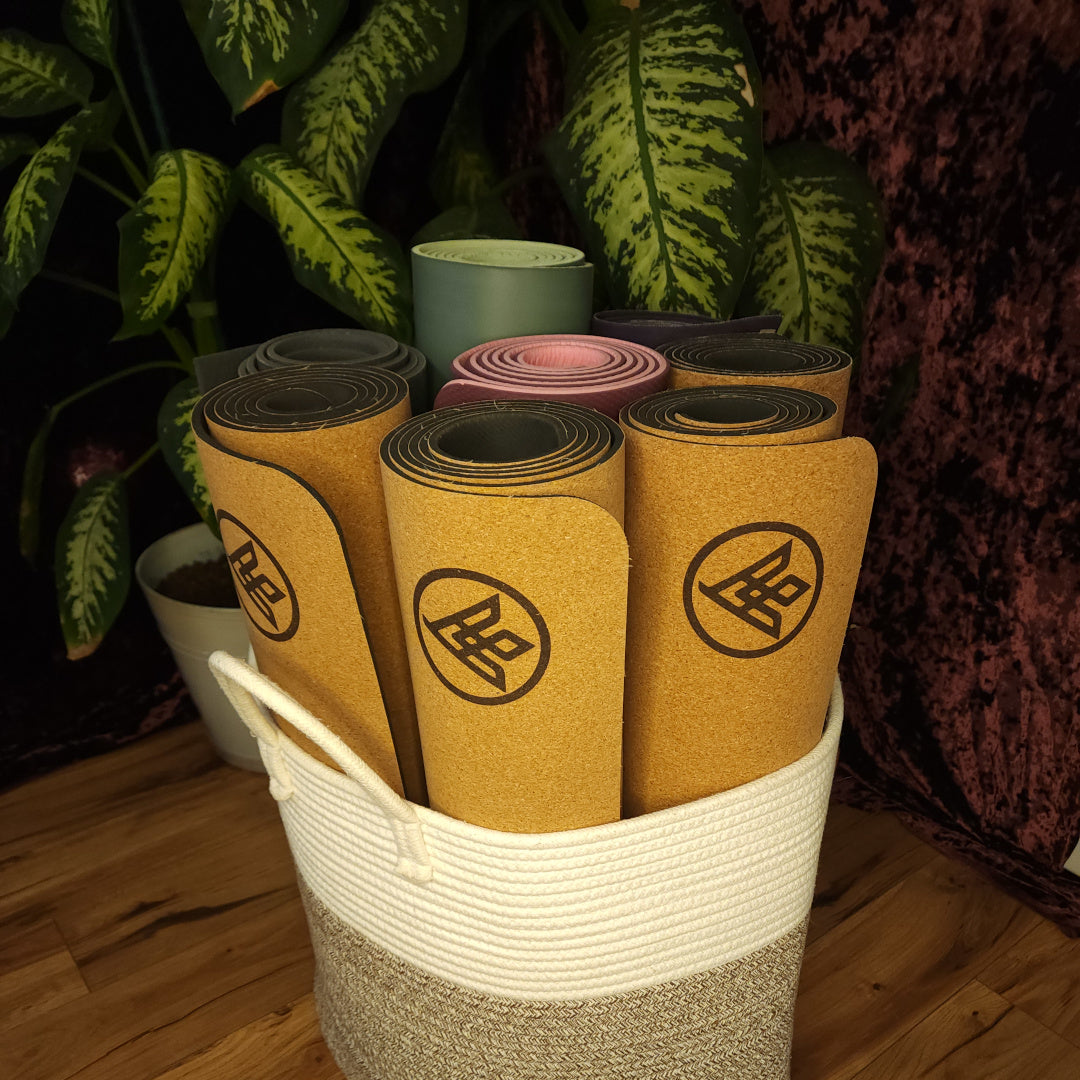
Cork yoga mats offer a firm, natural surface with a grounded feel. Cork often performs well when slightly damp, which can be helpful for students whose hands get warm during practice. Cork is usually paired with a base material, often natural rubber, to provide structure and floor grip.
PVC mats are common and can be durable, sticky, and easy to clean. The feel varies widely. Some are thin and dense, while others are thick and soft. If you choose PVC, consider durability and how the material aligns with your values. A long-lasting mat can reduce replacement, but not all synthetic mats are made with the same care.
TPE and foam mats tend to be lightweight and affordable. They can be comfortable for beginners, but lower-density versions may compress quickly or lose grip over time. If you are choosing a thicker foam mat, check whether it rebounds evenly after pressure. A mat that dents under your hands may not support a steady practice.
Sustainability
Sustainability is part of choosing a mat because yoga gear has a life cycle. A mat is made from raw materials, used for months or years, cleaned repeatedly, and eventually replaced. The most sustainable mat is often the one you will use consistently, care for properly, and keep for a long time.
Natural materials such as cork and natural rubber can be a strong option for students who want to reduce reliance on petroleum-based materials. These mats still require thoughtful sourcing and responsible manufacturing, but they often align well with a values-based practice. Look for clear material information rather than vague eco language.
Durability matters too. A mat that breaks down after a few months is not a practical choice, even if it looks appealing at first. Check for surface flaking, edge curling, strong chemical odor, and loss of traction. A well-made mat should hold its shape, clean without degrading, and support repeated rolling and unrolling.
Care also affects sustainability. Wipe your mat after sweaty sessions, let it dry fully before rolling, and avoid storing it in hot direct sun unless the manufacturer recommends it. A simple care routine extends the life of the mat and keeps the surface more pleasant to practice on.
How to Choose the Right Yoga Mat for Your Practice
Start with your main practice style. If you practice active vinyasa, standing flows, or balance-heavy sequences, choose stability first. A 4mm or 5mm dense mat is usually a good fit. You get enough cushioning for transitions and kneeling postures without losing your sense of the floor.
If your practice includes more floor work, slower movement, or longer-held seated shapes, consider 5mm to 6mm. This gives more comfort under hips, knees, and ankles. If balance is still important, choose a dense mat rather than the softest one available.
If you travel often, a 1.5mm to 3mm mat may be useful. Travel mats are easy to fold or roll, but they are not designed to replace a supportive daily mat for everyone. Many students use a travel mat on top of a studio mat or keep one in a bag for practice away from home.
If your knees are sensitive, do not assume you need the thickest mat. First try a dense 5mm or 6mm mat. You can also use a folded blanket or small knee pad during low lunges, tabletop, and kneeling shapes. This lets you keep a stable mat while adding targeted support where you need it.
If you practice on carpet, avoid very soft mats. Carpet already adds movement under the mat, so a thick foam mat can feel unstable. A firmer, denser mat will usually work better. On hard floors, you may appreciate a little more cushioning, especially for wrist and knee pressure.
For most beginners and intermediate practitioners, the simplest recommendation is this: choose a 4mm to 5mm mat if you want one mat for regular practice. Choose thinner if portability and balance are your priority. Choose thicker only when you need more cushioning and are comfortable with a little less floor feedback. That is the practical heart of any useful yoga mat thickness guide.
FAQ
What is the best thickness for a yoga mat?
For most students, 4mm to 5mm is the best all-around thickness. It offers a useful balance of cushioning, grip, and stability. This range works well for home practice, studio classes, standing poses, kneeling postures, and seated shapes.
Is a thicker yoga mat better for beginners?
Not always. Beginners often benefit from moderate cushioning, but a mat that is too thick and soft can make balance harder. A dense 4mm or 5mm mat is usually a better starting point than a very thick foam mat.
What does a yoga mat thickness guide recommend for knee pain?
A yoga mat thickness guide usually recommends a dense 5mm to 6mm mat for students who need more knee support. If pressure is still uncomfortable, add a folded blanket or knee pad rather than choosing a mat so thick that standing poses become unstable.
Are thin yoga mats good for daily practice?
Thin mats can be good for daily practice if you like firm support and do not need much cushioning. A 3mm mat may work well for balance-focused practice. A 1.5mm to 2mm travel mat is usually better as a portable option or as a layer over another mat.
Which material is best for yoga mat grip?
Natural rubber and cork-rubber mats often provide strong grip and a grounded feel. PVC can also be grippy, depending on the surface. The best choice depends on your sweat level, floor type, material preferences, and how much density you want under your body.