Yoga Props for Back Pain
Jack UtermoehlYoga props for back pain can help create more comfortable, well-supported positions that reduce unnecessary strain while improving alignment and body awareness. Blocks, bolsters, blankets, straps, and chairs each serve different purposes, making poses more accessible without forcing range of motion. When used thoughtfully, these tools can help you practice with greater stability, adapt to changing needs, and build confidence through steady, mindful movement.
Why yoga props can help with back pain
Back pain can have many causes, including muscle tension, reduced mobility, overuse, poor movement habits, or underlying medical conditions. Because every person is different, yoga should be adapted to the individual rather than expecting the body to fit every pose.
Props support this approach by bringing the floor closer, reducing excessive stretching, improving balance, and allowing muscles that work too hard to soften. They also encourage better positioning of the spine and pelvis, making it easier to move with control.
If your pain is severe, follows an injury, includes numbness or weakness, or has been diagnosed as a medical condition, consult a qualified healthcare professional before beginning or changing a yoga practice.
Essential yoga props for back pain

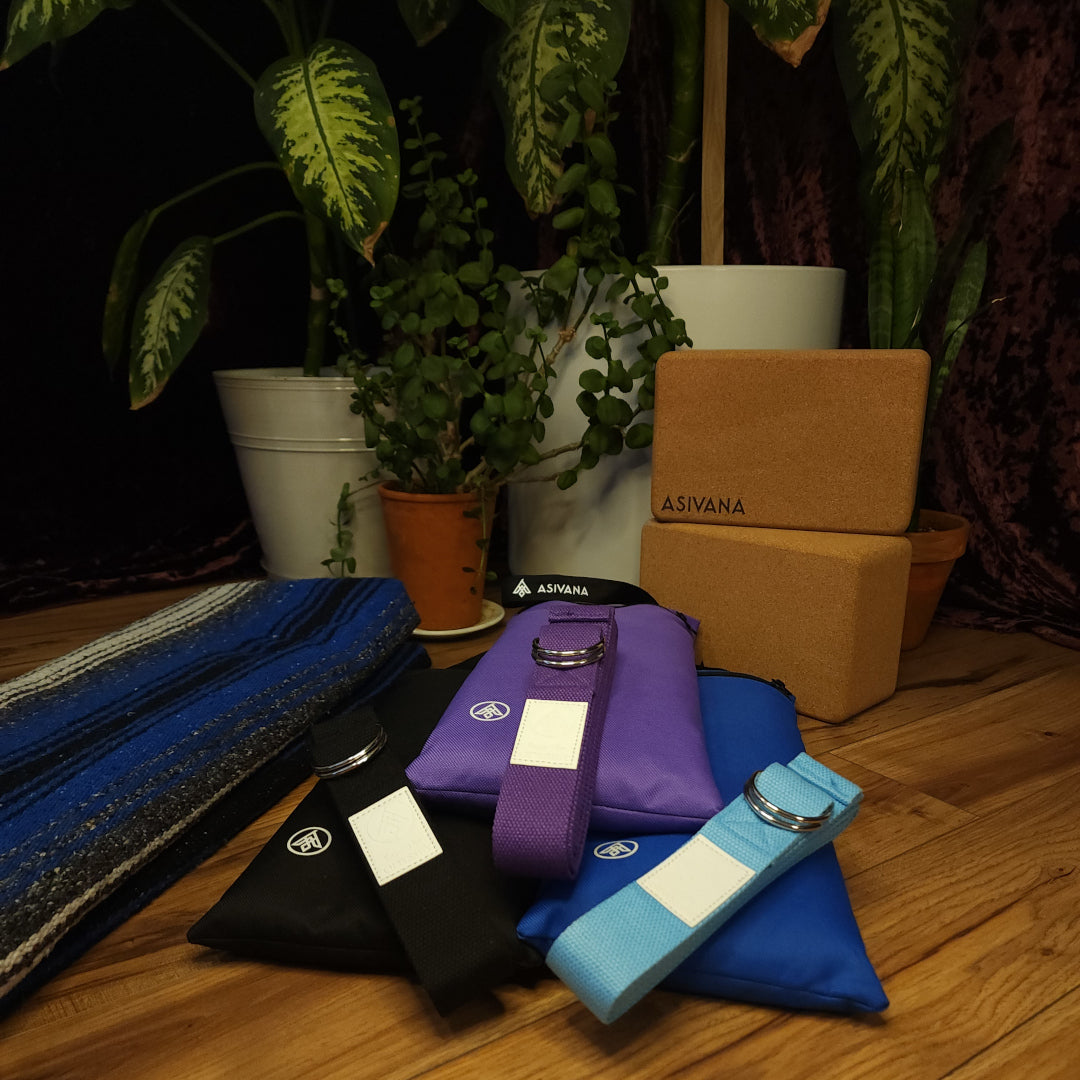
Yoga blocks
Blocks reduce the distance between your hands and the floor. This is especially helpful in standing poses, forward folds, and seated positions where reaching too far may increase strain through the lower back.
For example, placing blocks beneath the hands in Triangle Pose or a standing forward fold can help maintain length through the spine instead of rounding excessively.

Bolsters
Bolsters provide broad, stable support for restorative positions. Lying with the spine gently supported by a bolster can encourage the chest to open while allowing the muscles surrounding the back to relax.
A bolster is also useful beneath the knees during relaxation, helping reduce tension that sometimes develops in the lower back when the legs are fully extended.

Blankets
Folded blankets are among the most versatile props. They can lift the hips in seated poses, cushion sensitive joints, support the head, or create gentle height changes that improve comfort.
Sitting on a folded blanket often allows the pelvis to tilt more naturally, making it easier to maintain a long spine during seated stretches or breathing practices.

Yoga straps
Straps extend your reach without requiring you to round the back or force flexibility. During hamstring stretches, a strap around the foot allows the shoulders and spine to remain relaxed while the legs work gradually.

Yoga chairs
A sturdy chair can provide additional balance during standing poses and support seated movements for people who find getting up and down from the floor challenging. Chair-supported yoga can also make gentle spinal mobility exercises more accessible.
How to use yoga props for back pain safely
The goal of using props is support, not achieving a deeper pose. A few simple principles make a significant difference.
- Move slowly into and out of each position.
- Use enough support that you can breathe comfortably.
- Avoid pushing through sharp or increasing pain.
- Keep movements steady instead of bouncing into stretches.
- Adjust the prop height when a position feels unstable or strained.
Comfort does not mean the absence of effort. Many supported poses still develop strength, coordination, and awareness while reducing unnecessary stress on sensitive areas.
Simple supported pose ideas
Supported Child's Pose
Place a bolster or several folded blankets beneath the chest and abdomen. This reduces the amount of hip flexion and allows the torso to rest comfortably while encouraging relaxed breathing.
Constructive Rest
Lie on your back with knees bent and feet on the floor. A folded blanket beneath the head can help keep the neck neutral. Some people also find placing a bolster beneath the knees comfortable during longer periods of rest.
Supported Forward Fold
While seated, place a bolster across the legs and rest the forearms and torso onto the support. This encourages relaxation without asking the back muscles to hold the body up.
Bridge Pose with support
A yoga block placed beneath the sacrum in a supported bridge position can provide gentle support for restorative practice. The block should rest beneath the pelvis rather than the lower back itself.

Choosing the right props for your practice
If you are building a home practice, start with the props you are most likely to use consistently. For many people managing occasional back discomfort, a pair of blocks and a folded blanket provide the greatest versatility. A bolster becomes especially valuable for restorative sessions or longer supported positions.
Quality matters because stable, reliable props create confidence. Choose products that feel supportive, are easy to maintain, and suit your available practice space.
Asivana Yoga offers yoga prop categories designed to support mindful practice. When selecting props, focus on what helps you move comfortably and consistently rather than collecting equipment you may rarely use.
If you are comparing equipment specifications, the Asivana Cork Yoga Block measures 9 × 6 × 4 inches and is made from firm cork with rounded edges. This is a product reference, not a recommendation for treating back pain.
FAQ
Which yoga prop is best for lower back pain?
There is no single best option. Blocks, bolsters, and blankets are often the most useful because they improve support and reduce unnecessary strain during common poses.
Can yoga props replace treatment for back pain?
No. Props can make movement more comfortable and accessible, but they are not a substitute for medical evaluation or treatment when needed.
Should beginners use yoga props for back pain?
Yes. Props are valuable for practitioners of all experience levels because they allow poses to be adapted to the body's current needs.
How many yoga props do I need?
Many home practitioners can begin with two blocks, one blanket, and one strap. A bolster is a worthwhile addition if you enjoy restorative yoga or need more support.
When should I stop a pose?
Stop if pain becomes sharp, radiates, or increases as you continue. Gentle muscular effort is common, but worsening pain is a signal to change the position or seek guidance.