Yoga Sandbag for Restorative Yoga
Jack UtermoehlA yoga sandbag for restorative yoga is a weighted prop that provides gentle, steady pressure to help the body feel supported in restful poses. When placed thoughtfully on areas such as the thighs, pelvis, hands, or feet, it can encourage muscles to soften without force. Used with other restorative props, a sandbag helps create a stable environment where you can remain comfortable for several minutes at a time.
What a yoga sandbag does in restorative yoga
Restorative yoga focuses on ease, support, and time. Rather than stretching to your limit, you settle into well-supported positions that allow unnecessary muscular effort to decrease. A sandbag contributes to this process by adding calm, consistent weight.
The weight provides clear sensory feedback. Many practitioners notice that this gentle pressure helps them become more aware of where they are holding tension. As the body recognizes that it is fully supported, muscles often begin to release naturally.
A sandbag is different from a bolster or blanket. Bolsters lift and support the body. Blankets add warmth, cushioning, and height. Blocks create structure. A sandbag adds grounding through weight. These props often work best together rather than replacing one another.

Where to place a yoga sandbag safely
Placement matters more than the amount of weight. The goal is gentle pressure that feels reassuring rather than restrictive.
Across the thighs
In reclined poses, placing a sandbag across the upper thighs can help the legs settle toward the floor. This is common in supported bound angle pose, where the weight encourages the hip muscles to soften without pushing the knees downward.
On the pelvis
A light sandbag across the front of the pelvis in certain reclined positions can provide a sense of stability. The weight should feel comfortable and should never create strain in the lower back or abdomen.
Across the feet or ankles
When the legs are extended, a sandbag on the ankles or feet can encourage the legs to relax. This placement is subtle and is generally most comfortable when the knees and hips are already well supported.
On the hands or forearms
In resting positions with the arms supported, a small sandbag across the hands or forearms can reduce unnecessary effort and encourage the shoulders to soften.
Avoid placing heavy weight on the chest, neck, face, or any area where breathing or circulation could be restricted. If you have an injury, are pregnant, or have a medical condition that affects circulation, breathing, or sensation, consult an appropriate healthcare professional before using weighted props.
Using a yoga sandbag with other restorative props
A yoga sandbag for restorative yoga works best as one part of a complete setup. Restorative practice relies on thoughtful support rather than a single prop.
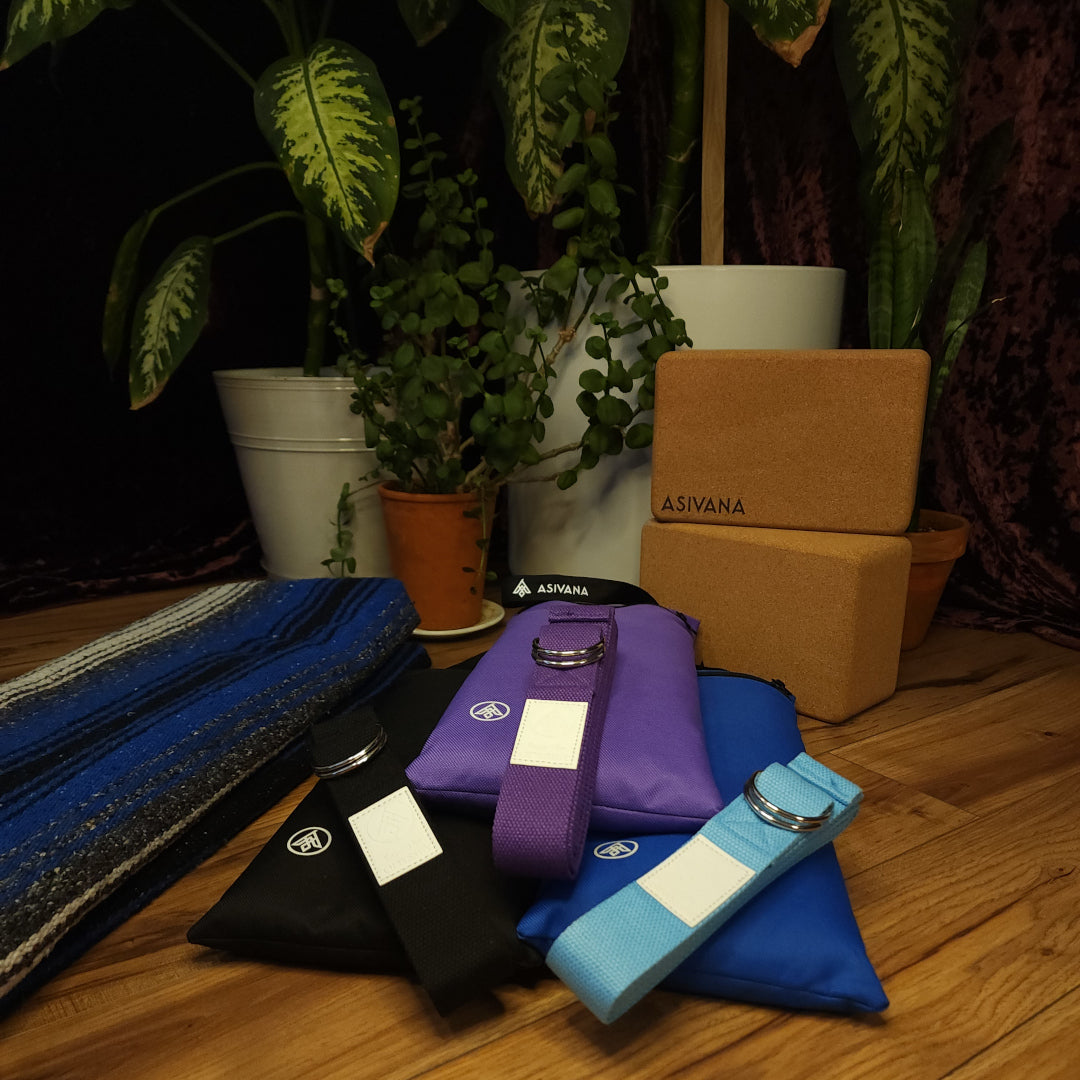
A typical arrangement might include a bolster supporting the spine, folded blankets under the knees or head, blocks to create height where needed, and a strap to comfortably maintain leg position. Once the body is fully supported, the sandbag can be added to encourage further relaxation.
For example, in supported bound angle pose, a bolster supports the torso, blankets cushion the knees if needed, and a sandbag rests gently across the thighs. Each prop serves a different purpose, creating a balanced setup that allows the practitioner to remain still without unnecessary effort.
If you are building a home restorative practice, consider collecting props gradually. A few versatile pieces often provide more value than purchasing many specialized accessories at once. Asivana Yoga offers categories of yoga props that can help create a comfortable restorative space, allowing you to choose the combination that best fits your practice.

Restorative poses where a sandbag can be helpful
Supported bound angle pose
This is one of the most common uses for a sandbag. Gentle weight across the thighs may encourage the hip muscles to soften while the bolster supports the spine.
Reclined rest with bent knees
Lying on your back with knees supported by a bolster or blankets creates a restful position. A sandbag across the front of the pelvis may increase the feeling of stability for some practitioners.
Legs resting on a chair
With the calves supported on a chair seat, placing a light sandbag across the feet or lower legs can provide additional grounding if it remains comfortable.
Seated forward fold with support
In a restorative version of a seated fold, the torso rests on a bolster rather than reaching deeply. A sandbag across the hands can reduce effort in the shoulders and arms.
During each pose, remain attentive to your breath and overall comfort. If the weight causes you to brace, hold your breath, or feel compressed, remove it or choose a lighter option.
How to choose a yoga sandbag for restorative yoga
When selecting a sandbag, focus on practical qualities rather than unnecessary features.
- Weight: Choose a weight that feels calming without creating pressure or discomfort. Lighter bags are often more versatile for home practice.
- Shape: A flexible bag that conforms to the body usually distributes pressure more comfortably.
- Cover: A durable, washable cover helps keep the prop clean with regular use.
- Filling: Evenly distributed filling helps the bag rest smoothly across the body.
- Handle: A carrying handle can make moving and positioning the sandbag easier.
If you are purchasing your first restorative prop, think about how it will fit into your overall practice. A sandbag complements bolsters, blankets, blocks, straps, and eye pillows rather than replacing them.

Common mistakes and simple adjustments
The most common mistake is using more weight than necessary. Restorative yoga is intended to reduce effort, so additional weight should support that goal instead of creating more work.
Another common issue is placing the sandbag before the rest of the pose is fully supported. Build the pose first with bolsters, blankets, or blocks. Once you feel comfortable, add the sandbag and notice whether it increases your sense of ease.
Some practitioners also remain in a pose too long after discomfort appears. Restorative practice values awareness. If numbness, pain, or restricted breathing develops, adjust the props or come out of the pose.
Finally, remember that every body responds differently. A placement that feels grounding for one person may feel distracting for another. Small adjustments often make a meaningful difference.
FAQ
How heavy should a yoga sandbag for restorative yoga be?
Choose a weight that provides gentle pressure without causing strain. Many practitioners prefer a lighter sandbag because it can be used in more positions comfortably.
Can beginners use a yoga sandbag?
Yes. Beginners can benefit from a sandbag when it is used thoughtfully and combined with supportive props. Start with simple placements and pay attention to comfort.
Do I need a sandbag if I already have bolsters and blankets?
Bolsters and blankets provide support and cushioning, while a sandbag provides gentle weight. They serve different purposes and can work well together.
Can I substitute a household item for a yoga sandbag?
A securely closed fabric bag filled evenly with rice or another suitable material may work temporarily, provided it distributes weight comfortably and can be positioned safely.
When should I avoid using a yoga sandbag?
Avoid using one if the weight interferes with breathing, causes pain, or aggravates an injury. If you have specific medical concerns, seek guidance from an appropriate healthcare professional before using weighted props.