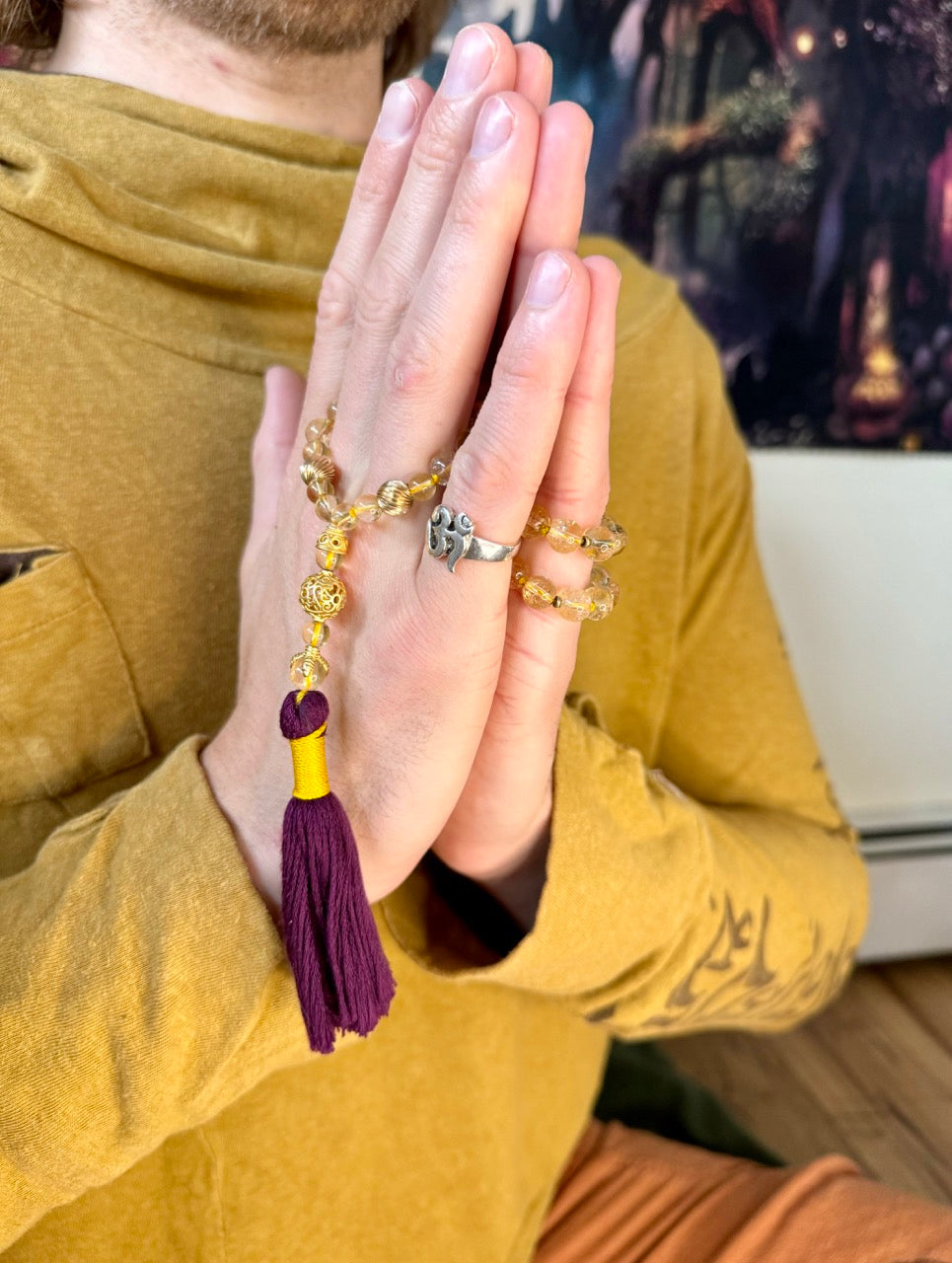
Upasana: Meaning and Definition
Jack UtermoehlShare
Upasana (worship; reverent meditation; devotional contemplation)
- Devanagari: उपासना
- IAST: upāsanā
- Pronunciation: oo-PAA-suh-naa. Keep the first “oo” short, lengthen the “aa” in PAA and the final “aa,” and pronounce each of the four syllables clearly. Classical Sanskrit uses vowel length rather than strong English-style stress.
- Alternate spellings: Upaasana
Definition
Upasana means worship, reverent meditation, or sustained devotional contemplation. In yoga and Vedanta, Upasana refers to intentionally placing and repeatedly steadying the mind on a sacred object, deity, symbol, mantra, or teaching, usually with an attitude of reverence. Depending on the tradition, Upasana may include mental worship, prayer, visualization, ritual observance, or contemplative meditation. The translation “worship” is accurate yet incomplete because Upasana can describe both outward devotional practice and an inward, continuous mode of attention.
Upasana describes a way of drawing near through focused and reverent attention. The term can refer broadly to serving or worshiping someone worthy of honor, and it also carries a technical meaning in Vedanta, where it often names a sustained contemplation taught by scripture. For yoga practitioners, Upasana is best understood as a family of devotional and contemplative practices rather than a single standardized technique.
What does Upasana literally mean?
Upasana comes from a Sanskrit verb formed with a prefix meaning “near” and a verbal root meaning “to sit.” Its underlying image is sitting near, attending upon, or remaining close to someone. From this sense of respectful proximity, the word developed meanings such as service, attendance, worship, contemplation, and religious meditation.
“Sitting near” is a helpful etymological explanation, although Upasana should not be understood as a compound made from the familiar yoga posture term Asana. The word is derived from a verb meaning to sit near, attend upon, or worship. The headword used here is the common feminine noun. Sanskrit lexicons also record a related neuter form ending in a short final vowel.
What does Upasana mean in yoga?
In yoga-related practice, Upasana refers to focused engagement with a sacred or spiritually significant object. The object may be Ishvara, an Ishta Devata, a Mantra, Om, a divine form, a symbol, or a teaching about Brahman or Atman. Attention is sustained through repetition and recollection so that the chosen object increasingly shapes the practitioner’s thought and orientation.
Upasana is not listed as a separate limb in Patanjali’s eight-limbed system. Its methods can overlap with Dharana and Dhyana because they require steady attention. When the focus is Ishvara, Upasana may also overlap with Isvara Pranidhana. These terms remain context-dependent: Dharana emphasizes holding attention, Dhyana emphasizes the continuity of meditation, and Upasana commonly adds reverence, devotion, or a scripturally defined way of contemplating the object.
A modern yoga teacher may use Upasana for mantra repetition, devotional meditation, visualization, or quiet contemplation of a sacred principle. When teaching the term, it is useful to identify the object of contemplation and the tradition or method being followed rather than presenting Upasana as one universal practice.
How is Upasana used in the Upanishads and Vedanta?
In Upanishadic and Vedantic interpretation, Upasana often refers to a prescribed contemplation in which the practitioner repeatedly attends to a particular understanding of a deity, cosmic principle, ritual element, symbol, or Brahman. Many such contemplations are also called Vidya, meaning a form of knowledge or contemplative teaching. They may direct the practitioner to contemplate one reality through another, such as a sacred sound, the mind, the vital force, or an aspect of the cosmos.
Vedanta commentators describe Upasana as a continuing flow of related thoughts toward one object, protected from interruption by unrelated thoughts. This definition explains why Upasana involves repetition and sustained recollection rather than a single intellectual statement. The Brahma Sutra commentary attributed to Shankara associates Upasana with maintaining a continuous stream of similar cognition and explains why seated stillness supports the practice.
Vedanta traditions differ in the spiritual role they assign to Upasana. In many Advaita presentations, Upasana is a deliberate mental practice that develops concentration, devotion, and readiness for knowledge of Brahman. Liberating knowledge is then distinguished from a meditation produced through personal effort. In Vishishtadvaita, Ramanuja treats Upasana more closely as continuous, loving remembrance of the Supreme and relates it to Bhakti as a direct means toward liberation. These differences reflect distinct accounts of knowledge, devotion, grace, and spiritual realization.
How is Upasana used in devotional practice?
In devotional traditions, Upasana is the practice of approaching and honoring the divine. It may include Puja, Japa, Archana, prayer, visualization, offerings, remembrance, or meditation on an Ishta Devata. The exact method depends on the practitioner’s Sampradaya, deity, initiation, and received instructions.
The Bhagavad Gita uses forms of the related verb for both worship and meditation. In chapter 12, the text applies the verb to those who contemplate the imperishable and to those who worship Krishna while meditating on him with undivided attention. This usage shows why English translations vary among “worship,” “meditate upon,” and “revere.” Each translation captures part of the word’s range.
Upasana and Bhakti frequently overlap, especially when contemplation is directed toward a personal form of the divine. Bhakti names devotion, participation, or loving relationship more broadly. Upasana names the active practice of attending to and worshiping the chosen object. In some traditions, the two become nearly synonymous because sustained contemplation is itself understood as mature devotion.
How does Upasana differ from Dhyana, Puja, and Sadhana?
Upasana has overlapping boundaries with several familiar Sanskrit terms. Context determines whether it refers primarily to inward meditation, outward worship, or a complete devotional discipline.
- Dhyana emphasizes sustained meditation or an ongoing flow of attention. Upasana may take the form of Dhyana when the meditation has a sacred, reverential, or scripturally prescribed object.
- Puja usually refers to a structured act of worship that may involve offerings, gestures, mantra, and a sacred image. Puja can be one expression of Upasana.
- Bhakti refers broadly to devotion and loving participation in relation to the divine. Upasana is one way Bhakti may be practiced and cultivated.
- Japa is the repeated recitation or remembrance of a mantra or divine name. Japa becomes Upasana when it functions as focused worship and contemplation.
- Sadhana is the broader category of disciplined spiritual practice. Upasana may be one part of a person’s Sadhana.
- Isvara Pranidhana is dedication or surrender to Ishvara. Upasana directed toward Ishvara may express this dedication, although the terms are not interchangeable in every text.
How can yoga teachers explain Upasana accurately?
A clear teaching definition is: “Upasana is reverent worship or sustained contemplation through which a practitioner attends closely to a deity, sacred symbol, mantra, or spiritual teaching.” This wording preserves the devotional meaning while leaving room for the term’s contemplative uses.
When introducing Upasana, name the specific form being practiced. A teacher might describe mantra Upasana, meditation on Om, worship of an Ishta Devata, or contemplation of a teaching from the Upanishads. This prevents the term from becoming a vague synonym for any quiet or mindful activity.
Teachers should also avoid describing Upasana as an Asana technique simply because the word evokes sitting. A seated posture may support Upasana, yet the defining feature is sustained and reverent attention to the chosen object.
Related Sanskrit Terms
- Bhakti
- Dhyana
- Puja
- Japa
- Mantra
- Ishta Devata
- Ishvara
- Isvara Pranidhana
- Dharana
- Sadhana
- Vedanta
- Upanishad
- Brahman
- Atman
- Om
- Archana
- Sampradaya
- Nididhyasana