5-Minute Meditations: Three Guided Practices You Can Use Today
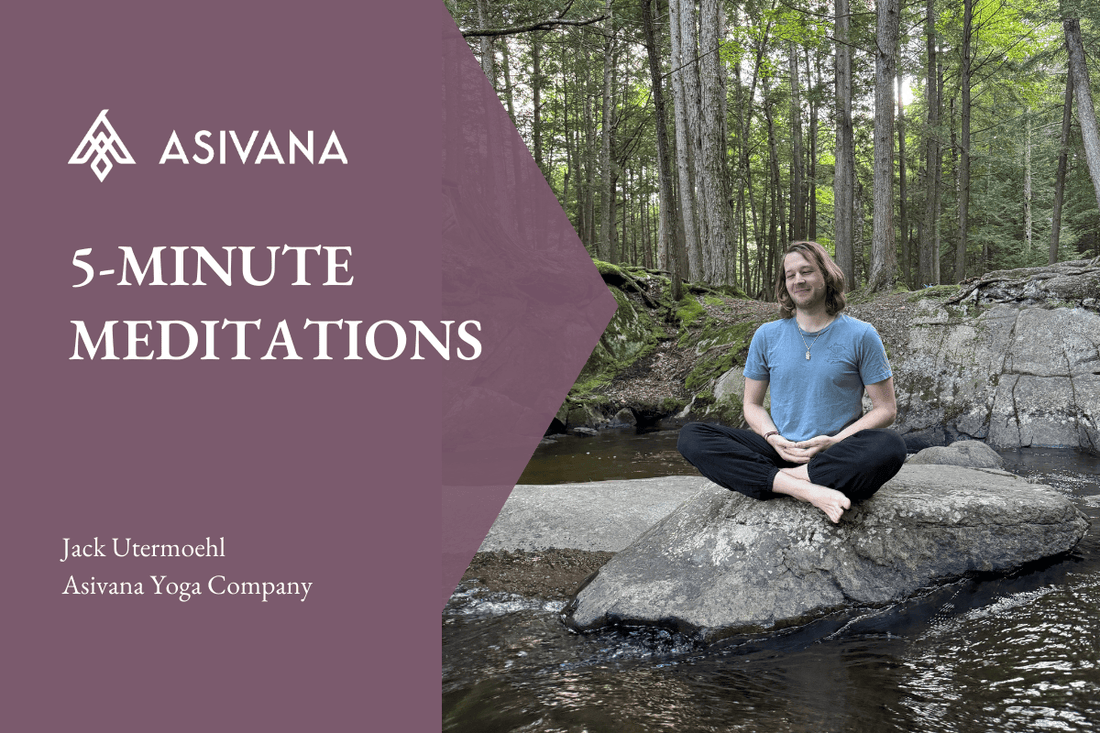
Jack UtermoehlA five-minute meditation is enough time to practice directing attention, noticing experience, and returning to a chosen focus. You can do it while sitting in a chair, resting on a cushion, or lying comfortably. Choose one of the three guided practices below: breathing awareness, a short body scan, or a compassion practice. The goal is to practice consistently, not to force the mind to become quiet.
Choose a practice
Three five-minute meditations
Breathing awareness for a steady focus, a body scan for physical awareness, or loving-kindness for a deliberate practice of goodwill. Each follows a minute-by-minute structure below.
A five-minute breathing meditation
0:00–1:00: Sit comfortably, with the feet supported or the legs resting naturally. Notice the contact between your body and the seat. Allow the shoulders to settle without forcing a posture.
1:00–2:00: Notice the breath wherever it is easiest to feel, perhaps at the nostrils, chest, or abdomen. Let your breathing follow its natural rhythm.
2:00–3:00: When attention moves to a memory or concern, notice that movement and return to the breath. Nothing needs to be corrected or judged.
3:00–4:00: Continue following a single inhale and exhale at a time. If the breath becomes difficult to observe, feel the hands resting on the knees or lap.
4:00–5:00: Widen your awareness to the room, the sound around you, and your posture. Finish by deciding how you want to carry that attention into your next activity.
A five-minute body scan
0:00–1:00: Sit or lie in a comfortable position. Notice where the body meets the floor, chair, or cushion.
1:00–2:00: Bring attention to the feet and lower legs. Observe pressure, warmth, coolness, or any neutral sensation.
2:00–3:00: Shift awareness to the thighs, hips, and lower back. Adjust your position if the body asks for support.
3:00–4:00: Notice the abdomen, chest, shoulders, arms, and hands. Give each region time without trying to manufacture a particular sensation.
4:00–5:00: Include the neck, face, and the whole body in awareness. Gently return to your surroundings when the five minutes finish.
A five-minute loving-kindness meditation
0:00–1:00: Settle in your seat and recognize someone or something toward which you naturally feel goodwill. Begin with a realistic feeling of care.
1:00–2:00: Repeat a simple intention such as “May I be safe. May I be well. May I live with ease.” Let the words be invitations rather than a test of emotion.
2:00–3:00: Bring to mind someone close to you and offer the same intention.
3:00–4:00: Include an acquaintance or another person whose well-being matters to you. Keep the practice gentle.
4:00–5:00: Offer goodwill more broadly. Finish by noticing your posture and attention. Warmth may arise, or it may not; either outcome is an ordinary part of practice.
Which five-minute meditation should you choose?
Choose breathing awareness when you want one simple point of attention. Choose a body scan if it is easier to notice physical sensation than the breath. Choose loving-kindness when you want a deliberate practice of goodwill or compassion.
Different practices can suit different circumstances. A five-minute meditation is a short exercise in attention, not a guarantee of sleep, stress relief, or a particular emotional state. If a practice feels agitating, change posture, open your eyes, or choose another exercise.
How to build a repeatable habit
Try attaching a five-minute practice to a reliable part of your day, such as sitting down before work or ending a yoga session. A short routine performed regularly can be more realistic than an ambitious routine you seldom use.
You can use a silent timer, a familiar playlist that lasts roughly five minutes, or no timer at all. The time boundary is there to make the practice approachable. Give yourself permission to continue longer when that feels appropriate, and to finish on time when other responsibilities are waiting.
If you prefer a particular meditation method, our yoga articles on mindfulness, mantra, and meditation offer deeper options. The practice itself is the important part; a cushion or other equipment is optional.
Meditation and realistic expectations
During five minutes, attention may wander repeatedly. That does not mean the practice failed. Observing the wandering and returning to the chosen focus is part of learning to pay attention.
Short meditation is not a substitute for medical or mental-health treatment. If focusing inward brings up distressing sensations, you may prefer eyes-open awareness of the room, a walking practice, or guidance tailored to your needs.
Related reading: what is the goal of meditation and introduction to mantra meditation.
Frequently asked questions
Is five minutes of meditation enough?
Five minutes is enough to complete a short attention practice. Longer duration can be explored gradually according to your interests and needs.
What if my attention wanders?
Noticing distraction is ordinary. Return to the practice without treating it as failure.