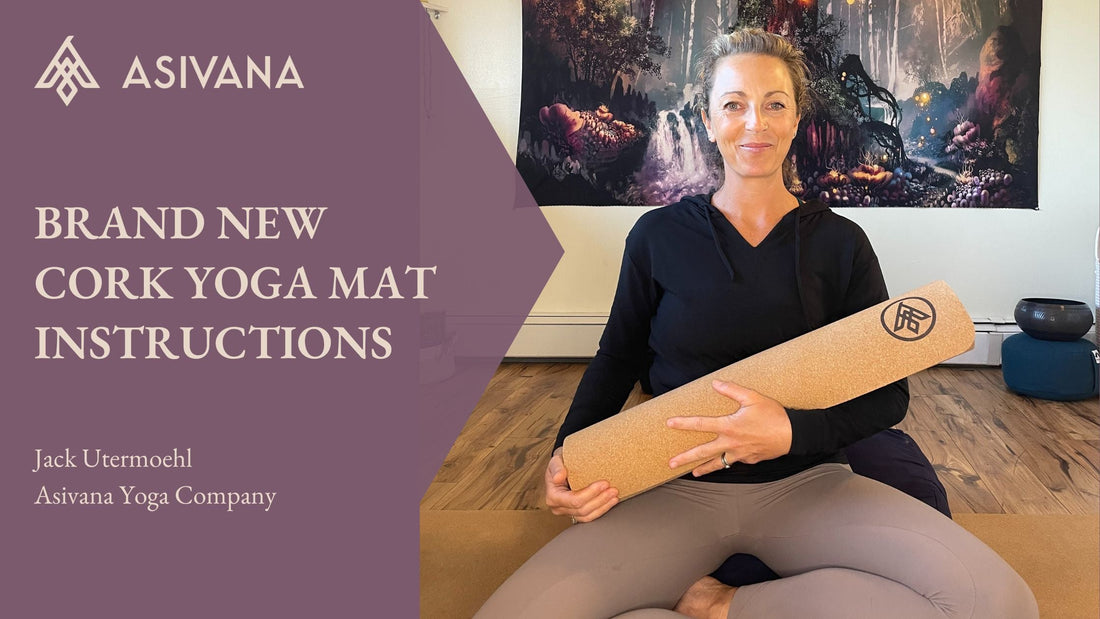
Asivana Cork Yoga Mat Care: Cleaning, Storage, and Grip
Jack UtermoehlTo care for an Asivana cork yoga mat, wipe it gently after practice, let both sides dry fully, and store it rolled with the cork facing outward. Keep it away from heavy soaking, abrasive scrubbing, extreme temperatures, and prolonged direct sunlight. This guidance matches the current Asivana Cork Yoga Mat, which has a cork surface and natural rubber base. If you own an earlier Flux-branded cork mat, consult its original care card before trying any new cleaning solution.
After-practice checklist
Five simple cork mat care steps
- Shake off dust and check the practice surface.
- Wipe away sweat or dirt with a clean, soft cloth.
- Use a manufacturer-approved cork mat cleaner only if needed.
- Let the cork and rubber backing dry fully in a ventilated area.
- Roll the cork side outward and store in a cool, dry place.
Which Asivana cork mat do you have?
The current Asivana Cork Yoga Mat features an FSC-certified cork practice side and a natural rubber base. Its dimensions are 72 by 24 inches, with 5mm of cushioning. The cork surface is intended to become grippier with modest moisture. Those materials explain why dry storage and gentle wiping matter.
If your mat uses the older Flux name, identify its actual layers and original care guidance. Product names and construction can change over time. Do not assume every previous Flux version is compatible with a newly marketed cleaner or cleaning technique.

How to clean a cork yoga mat
Wipe rather than scrub
Use a soft cloth to clear skin oils, dust, or perspiration. Work gently over the practice surface. Avoid hard brushes, abrasive pads, and aggressive rubbing that might lift or fray cork particles. Cleaning more forcefully is not necessarily cleaning more effectively.
Choose cleaning products carefully
For the current mat, follow the product's care instructions first. The Natural Cork Yoga Mat Cleaner Spray is formulated for cork, but it contains essential oils and is not a universal solution for every yoga mat material. Check compatibility and the label, particularly if you own an older construction.
Do not assume household vinegar, bleach, disinfecting wipes, strong detergent, or an essential-oil mixture is safe for a cork and rubber mat. Cleaning products may affect the surface, grip, or backing. For other materials, consult the full yoga mat care guide.

Dry the surface and base completely
Lay the mat open in a well-ventilated indoor space until the cork and rubber both feel dry. Avoid a hot radiator or prolonged direct sun. Rolling a damp mat tightly can trap moisture and create unwanted odor or stress on its materials.
How to roll and store an Asivana cork yoga mat
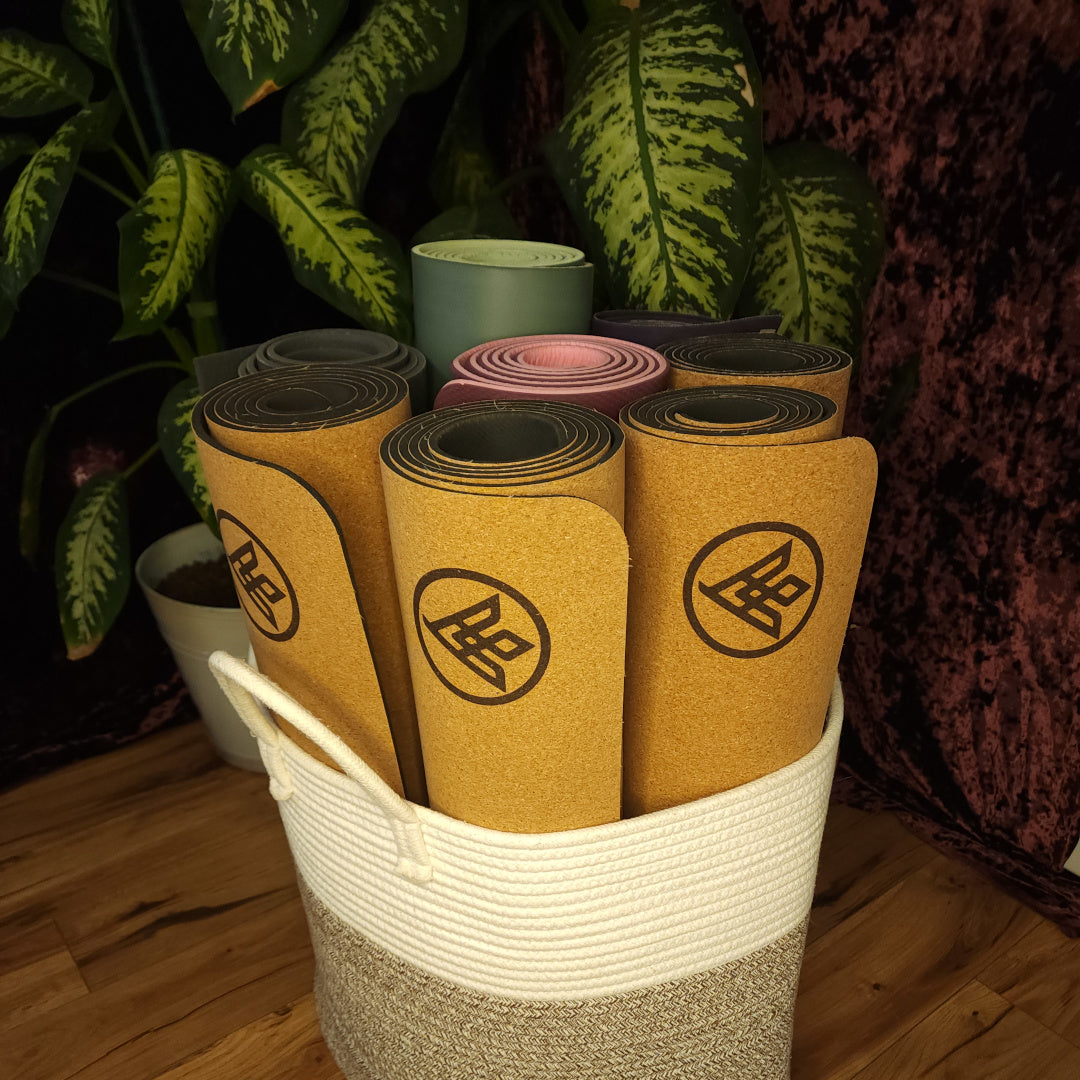
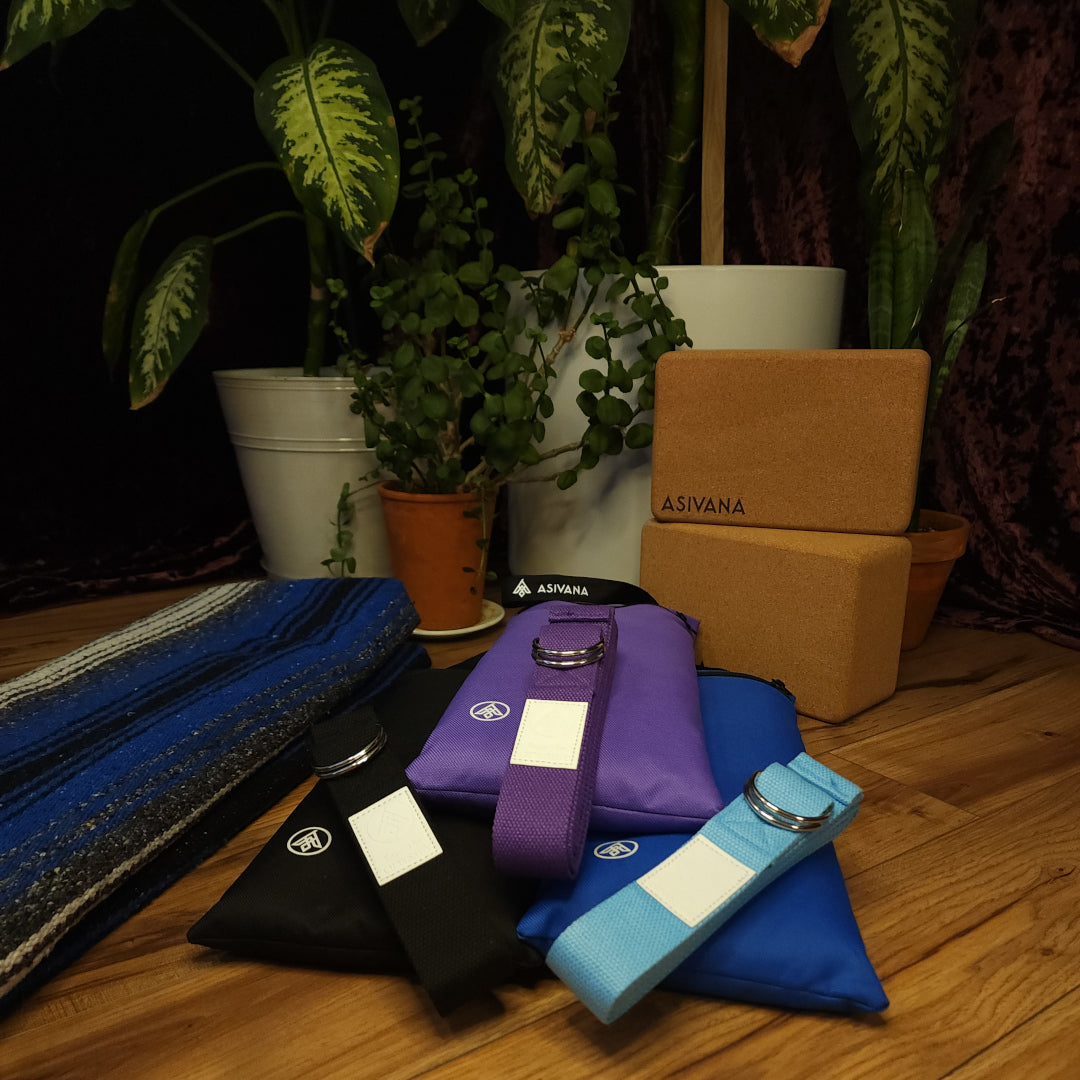
Roll with the cork practice side facing outward, as specified for the current Asivana mat. Keep the roll relaxed rather than forcing a tight coil. A carrying strap or breathable bag is useful after the mat has dried, especially when transporting it to and from classes.

Store the mat indoors, away from extreme temperatures and direct sunlight. A very hot vehicle, wet storage area, or extended outdoor exposure is not a good long-term home for a cork mat. If you use it outside, clear grit from the surface before rolling it.
Why a new cork mat can feel slippery
Cork grip behaves differently from the texture of some synthetic yoga mats. Modest moisture can improve traction on the current Asivana mat, though excess water or product residue may make a practice unstable. First, make sure the surface is clean, and allow time to become familiar with the mat.
Do not sand the cork to break it in or use strong cleaners to force grip. If traction remains an issue, read why a yoga mat becomes slippery and check your mat's intended use rather than applying untested treatments.
When should you replace your cork yoga mat?
Widespread flaking, peeling layers, deep tears, exposed backing, persistent slipperiness, or deformation can indicate that a mat no longer provides dependable support. Notice the real condition of the surface rather than assuming there is one fixed replacement age for every practice.

The article How Long Do Yoga Mats Last explains other signs of wear. A mat that no longer feels stable should be replaced rather than patched with improvised adhesives or abrasives.
Frequently asked questions
Can I machine wash an Asivana cork yoga mat?
No. The current cork and natural rubber mat is intended to be gently wiped and dried, not machine washed or submerged.
Should the cork face inward or outward when rolling?
Roll the current Asivana mat with the cork side facing outward.
Can I use my cork yoga mat outdoors?
Yes, on an appropriate clean surface. Remove grit after practice, then clean and dry it before indoor storage.
Does every Flux cork mat have the same care instructions?
Not necessarily. Older versions may differ, so consult the care information provided with that product.