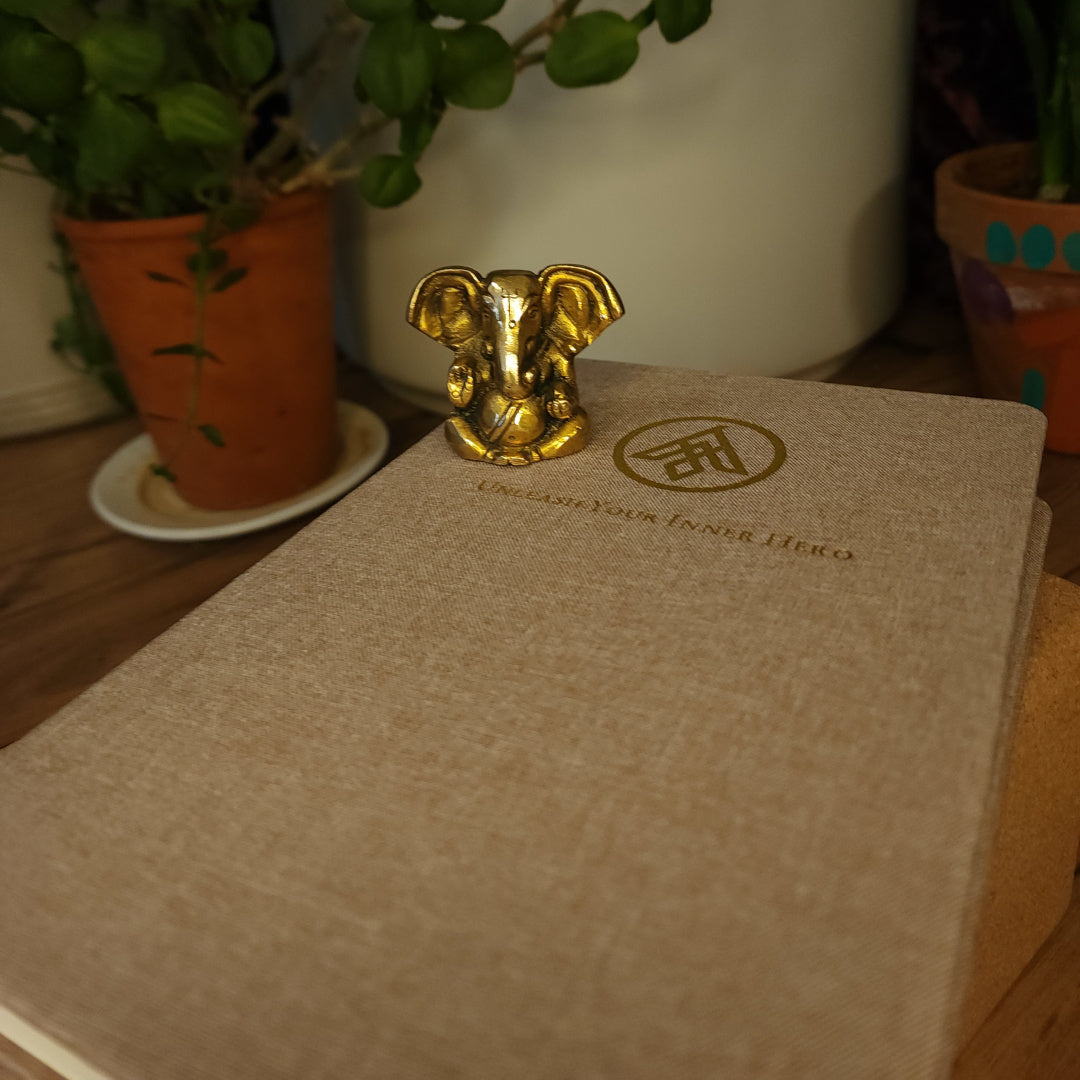
Hero's Journey Journal Method: Twelve Stages and Writing Prompts
Jack UtermoehlThe Hero's Journey Journal Method uses a familiar story arc as a way to reflect on your own experiences. Identify a current challenge, choose a stage that resembles where you are, and answer one honest question. You do not have to cast yourself as a triumphant hero or treat every hardship as a necessary lesson. This method is a creative journaling framework inspired by hero's journey storytelling, not a scientifically established treatment or a prediction of how life should unfold.
Start journaling
A three-step journal entry
- Name the situation: What challenge, project or transition am I thinking about?
- Choose a story stage: What does this situation remind me of in the hero's journey?
- Write one answer: Which question from the stage prompts below is useful today?
Ten minutes is enough to make an entry. You can revisit the same stage or skip stages entirely.
Where the Hero's Journey framework comes from
Joseph Campbell popularized an influential comparative storytelling model, discussed in The Hero with a Thousand Faces. Many books and creative teachers have adapted hero's journey structures since then.
The twelve-stage framework below is a practical journaling adaptation, not a claim that Campbell presented every stage in this precise order, that all cultures share a single story, or that everyone's personal development follows a fixed arc. For historical context, see the Joseph Campbell Foundation.

The twelve stages and one prompt for each
You may use one stage at a time or sketch a broader story across a few journal pages. Some stages can feel meaningful for a particular experience and irrelevant for another.
The names below follow this original article's adapted framework. They are prompts for reflection rather than obligations or diagnostic categories.
| Stage | Journal prompt |
|---|---|
| 1. Ordinary World | What does life look like before anything changes? |
| 2. Call to Adventure | What question, desire or challenge is asking for my attention? |
| 3. Refusal of the Call | What concerns or obligations make me hesitate? |
| 4. Crossing the Threshold | What small step would signal that I am beginning? |
| 5. Meeting the Mentor | Who or what offers trustworthy guidance? |
| 6. Challenges | Which difficulties have I encountered, and what have I learned? |
| 7. Temptations | What shortcuts or distractions pull me away from my intention? |
| 8. Revelation or Turning Point | What have I come to understand differently? |
| 9. Transformation | What has changed in my habits, choices or understanding? |
| 10. Atonement | Is there a relationship, responsibility or action I want to repair? |
| 11. Gift of the Goddess | What support, insight or unexpected gift can I acknowledge? |
| 12. The Return | How can I bring what I learned back to ordinary life? |
Example: journaling through a difficult career change
Imagine you are considering a new career path. The ordinary world might be your current work routine. The call could be a growing interest in a different field. Refusal may include reasonable questions about income and responsibility.
Crossing the threshold might be taking one class, while meeting a mentor could mean speaking with someone who has made a similar change. Challenges and temptations may arise repeatedly. The return might be bringing a new skill or clearer understanding into your current work even if you never change careers.
This example is deliberately ordinary. A useful reflection can lead to staying with the life you have, changing direction or asking for more information. The method should not pressure you toward a dramatic ending.

How to make the method your own
Choose a notebook or digital document that is easy to maintain. Give each entry a date, a chosen stage, and one clear question. You can use drawings, short lists or longer prose; a compelling narrative is optional.
The stage list may help you make sense of a past experience, a transition underway or a story you are still uncertain about. You can revise your interpretation as circumstances change.
Use the method without forcing a positive story
Some challenges remain unresolved, unfair or painful. Journaling does not require finding a gift in every event or making a difficult experience sound beneficial. The metaphor should serve your reflection, not overwrite what actually happened.
If writing about trauma or overwhelming experiences becomes distressing, pause and choose another focus; professional support may be more appropriate than a structured self-reflection prompt.

A practical weekly writing habit
Writing about a turning point becomes more useful when it informs an ordinary decision. Our guide to Off the Mat Yoga offers examples of carrying reflection into daily choices, conversations and responsibilities.
Try writing once a week: identify a current question, select a stage and answer one prompt with concrete examples. On another day, revisit the entry and ask whether your perspective changed.
You may find that 'Challenges' remains relevant for several weeks or that your experience does not fit one stage at all. That is useful information about the limitations of the metaphor, not a sign of journaling incorrectly.
Connecting the method to yoga study
If you are using journaling alongside yoga, you can separately record how your practice, study or teaching affects a situation. A yoga class or philosophical teaching may prompt questions, but the hero's journey is a literary framework rather than a classical yoga scripture.
For more ways to keep yoga study notes, see What to Write in a Yoga Journal. Your notebook can include sequence sketches, citations to texts and practical reflection without trying to fit every topic into a story.

Hero's journey journaling FAQ
Do I have to complete every stage? No. The stages are optional metaphors that can be combined, repeated or ignored.
Is the method part of traditional yoga? No. It is a modern storytelling-inspired journaling exercise that can accompany personal reflection.
Can I use it for difficult situations? You may, but you do not have to frame a painful event as a journey of required growth.