What to Write in a Yoga Journal: Prompts and Examples
Jack UtermoehlIf you don't know what to write in a yoga journal, start with three simple observations: what you practiced, what you noticed, and what you want to explore next. A useful yoga journal can contain class sequences, teaching cues, meditation reflections, philosophy notes, questions, or memories from a festival. You do not have to record every session or write a long personal essay. Short, accurate notes that you can find again are usually more helpful.
Writing prompts
Six things to write in your yoga journal
| Context | Questions to answer |
|---|---|
| After a class | What pose felt steadier? What transition challenged me? What cue helped? |
| Home practice | What did I practice today? What felt supported? What do I want to repeat? |
| Yoga philosophy | Which teaching am I studying? What question remains? How might I explore it? |
| Teacher training | What did the teacher demonstrate? What modifications were used? What should I verify? |
| Meditation | What was the focus? How did I respond when attention moved? What did I notice? |
| Retreat or festival | Who did I study with? What did I learn? What idea deserves follow-up? |
Use a simple journal entry template
Date and location: note where you practiced and the general class format. Practice: write down the poses, breathing exercises, or meditation method. Observation: record one or two things you noticed without needing to judge them. Next step: choose a question or a practice to revisit.
For example, a short entry might say: “Twenty minutes of slow Vinyasa. Low Lunge felt more stable with blocks. Research shoulder position in Downward-Facing Dog. Try a shorter practice tomorrow.” That is enough to make the journal useful.
Write down yoga sequences and helpful cues
Recording a sequence can improve recall, especially when studying with different teachers. You can use a numbered list, short phrases, or stick figures; polished drawing is unnecessary.
Include transitions, hold times when important, prop setup, and which side was practiced first. Label cues as an instructor's guidance rather than a universal alignment rule. Different bodies and traditions use different approaches.

Track your own yoga practice
You might record attendance, practice duration, what felt comfortable, and a question that came up. Avoid turning every entry into a demand for achievement. Patterns can be useful without reducing yoga to metrics.
If a position causes discomfort, note it and consider adjustments rather than using the journal to push toward an extreme shape. A journal helps you remember your experience; it is not a substitute for individualized injury guidance.
Take useful notes during yoga teacher training
Record class planning, sequencing methods, language you found clear, modifications, and questions that deserve a source. Keep Sanskrit terms with appropriate spelling and a reference to the text or teacher that supplied them.
Separate what you observed from how you interpret it. For instance, one teacher may offer a cue for a standing pose that differs from another's. Comparing those perspectives is more useful than treating one notebook entry as universal doctrine.

Use a journal for yoga philosophy study
A page for the Yoga Sutras, the Bhagavad Gita, or another text can include the source, translation, verse number, your notes, and a question. Specific citations matter because different translations and commentaries may make different choices.
Consider a running glossary of Sanskrit terms you want to understand better. Leave space to revise your notes as your studies advance rather than copying a brief internet definition as the final meaning.
Write after meditation
Choose a few observations: the method, the duration, whether you practiced with eyes open or closed, and what attracted your attention. A meditation entry does not need a story about a special state.
For example: “Five minutes of breathing awareness. I noticed sounds from outside several times and returned to the breath.” Simple observation is useful. You may also record a phrase, teaching, or personal intention if it belongs to your practice.
Capture workshops, retreats and yoga festivals
After a workshop, record the teacher's name, the date, sources mentioned, practical exercises, and which ideas you'd like to investigate. A photo of a handout or a quick diagram can help if the event permits it.
A yoga festival may expose you to several lineages or teaching approaches in a short time. Notes help you distinguish them later and remember where a quote or practice came from.

Organize the journal so you can use it again
Number pages and reserve the first few for a simple index. Use brief topic labels such as “Sequences,” “Sutra study,” “Meditation,” and “Teacher training.” You can add page references to the index as you go.
If you prefer separate sections, mark them with tabs or use symbols in the margins. Keep the organization lightweight enough that it doesn't prevent you from writing. A notebook that is easy to maintain will likely get more use.
Paper or digital yoga journaling?
Paper makes it easy to draw a pose or jot notes without opening another app. Digital notes can be easier to search, back up, or share. Either can work; choose the format you actually enjoy using.
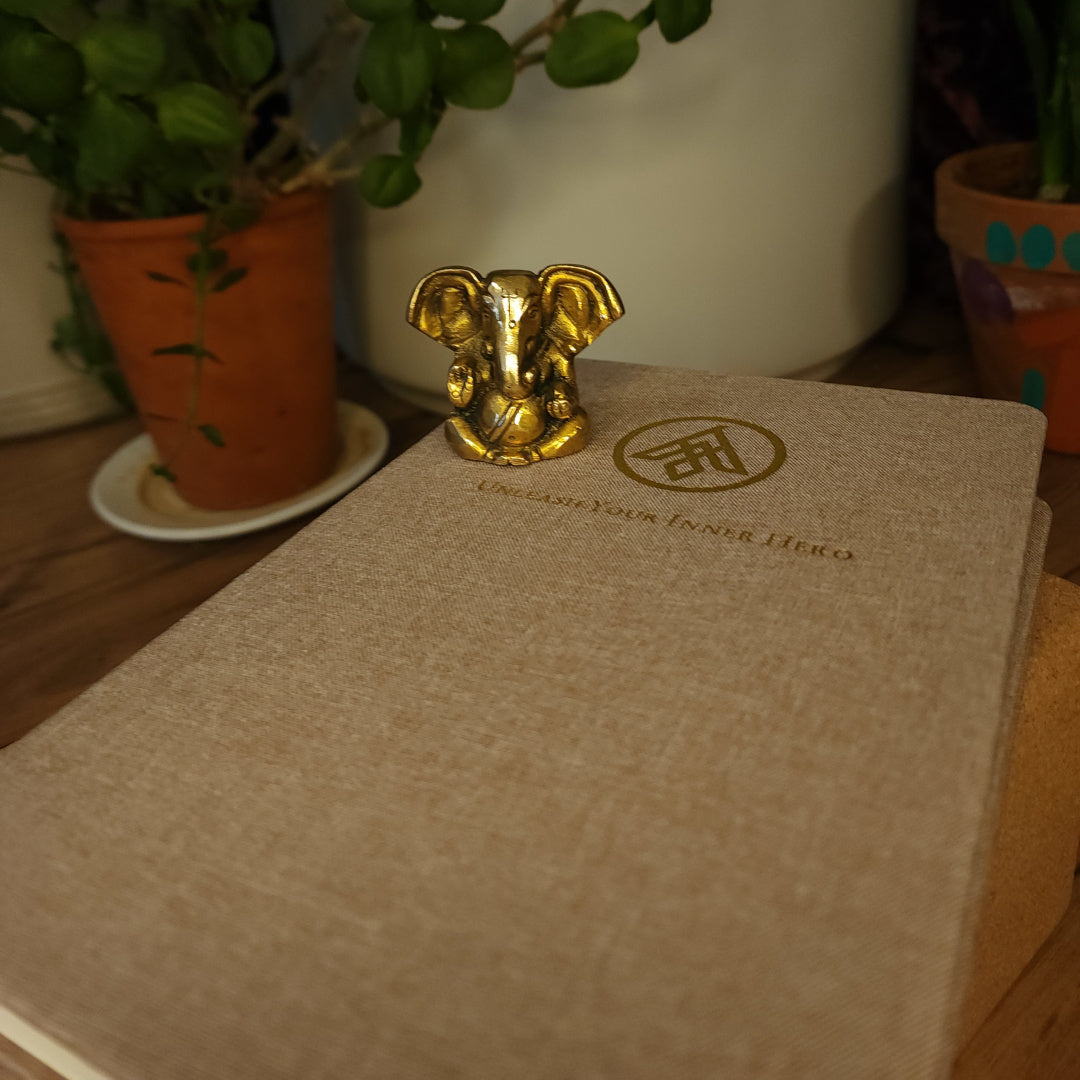
For handwritten notes, a journal that opens comfortably, carries well, and has a suitable page layout may matter more than decorative details. The Asivana Yoga Journal is one option, using FSC-certified paper. You can also compare our cork hardcover journals if you prefer another format.
For a short journaling exercise after practice, try one of our Five-Minute Meditations and record what you noticed. If you're reflecting on the purpose behind regular practice, see What Is the Goal of Meditation?.
A five-minute reflection to try tonight
Write the date, name one practice you completed, record a sensation or learning without judging it, and choose one small topic for tomorrow. End with a sentence that reflects your present intention.
You can use the same prompt for a week and review your entries afterward. Growth may show up as clearer observations or stronger recall, even when individual entries seem uneventful.
Yoga journaling FAQ
How often should I write? As often as it serves you. One concise entry after a meaningful class may be more useful than daily notes you never review.
Do I need special prompts? No. “What did I practice, notice, and want to revisit?” is enough to begin.
Can I draw poses instead of writing? Yes. Diagrams, abbreviations, and sketches can make sequences easier to recall.