Yoga Beads
Jack UtermoehlYoga beads are a strand of meditation beads, often called a mala, used to count mantra repetitions, support concentration, and encourage a steady meditation practice. While many people wear yoga beads as meaningful jewelry, their primary purpose is to help keep attention on breath, mantra, or intention. Understanding their traditional role can help you choose and use them with greater awareness and respect.
What Are Yoga Beads?
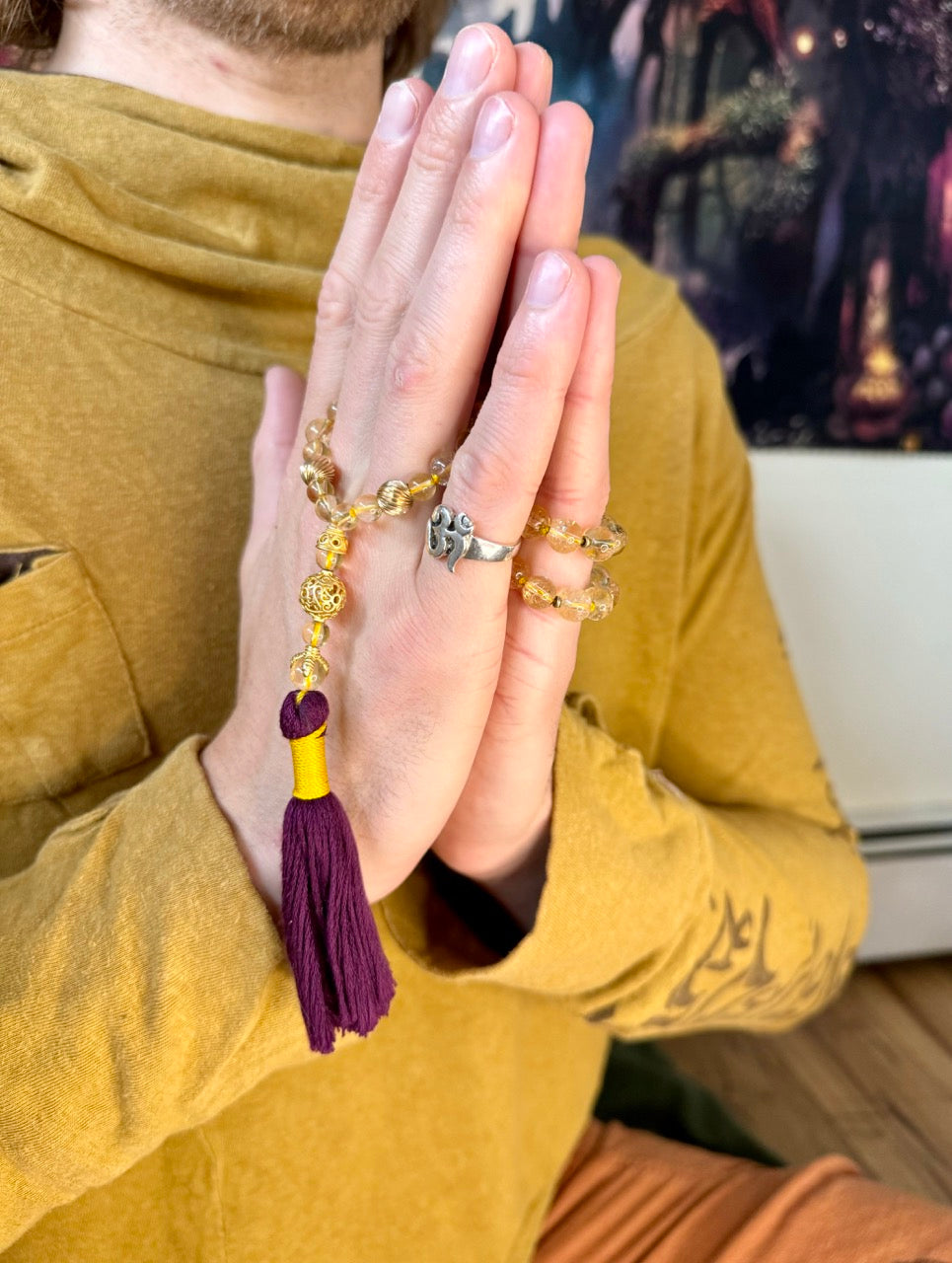
The phrase yoga beads commonly refers to a mala, a string of beads traditionally used in yoga, meditation, and several spiritual traditions. A full mala often contains 108 beads plus one larger guru bead, although shorter versions also exist for travel or everyday use.
During meditation, each bead marks one repetition of a mantra, affirmation, or breath cycle. Instead of mentally counting, the practitioner gently moves from bead to bead. This simple action gives the hands a quiet task, making it easier to stay present.
Many practitioners also wear yoga beads throughout the day as a reminder of values they are cultivating such as patience, compassion, or steadiness. Wearing a mala does not replace practice, but it can serve as a physical reminder to return to it.

How Yoga Beads Support Meditation and Mantra
Using beads creates a rhythm that helps reduce distractions. The tactile sensation of moving one bead at a time can anchor attention when the mind begins to wander.
Counting mantra repetitions
A common use is silently or softly repeating a chosen mantra once for each bead. After reaching the guru bead, many practitioners pause instead of crossing over it. If they continue, they reverse direction.
Following the breath
If mantra does not resonate with your practice, yoga beads can also be paired with breathing. One bead can represent one complete inhale and exhale, encouraging a calm and consistent pace.
Building consistency
Meditation often benefits from regular repetition more than long, occasional sessions. Completing one round of beads each day creates a clear beginning and ending for practice that many people find easier to maintain.
Common Materials and Their Meaning
Yoga beads are made from many natural materials. Personal preference, symbolism, durability, and feel all influence the right choice.
Wood
Wooden beads have a warm, natural feel and are widely used for meditation. They are generally lightweight and comfortable for daily handling.
Seeds
Certain seed malas have traditional significance in different lineages. People often choose them because they appreciate the cultural and spiritual associations connected with those traditions.
Gemstones
Gemstone malas are popular for their appearance and personal meaning. While many traditions associate specific stones with symbolic qualities, these meanings vary. It is helpful to view them as personal reminders rather than guaranteed outcomes.
Metal and decorative elements
Some malas include metal spacers or decorative tassels. These details can add visual interest while still allowing the beads to function as a meditation tool.

How to Choose Yoga Beads
The best choice depends on how you plan to use them.
If your primary goal is meditation, consider how the beads feel in your hand. Comfortable texture, balanced weight, and smooth movement matter more than appearance during long sessions.
If you expect to wear them regularly, think about durability and comfort alongside personal style. A strand that fits naturally into daily life is more likely to remain a meaningful reminder.
You may also wish to consider:
- Bead size that feels comfortable between your fingers.
- Length that suits meditation, wearing, or both.
- Natural materials that align with your preferences.
- Craftsmanship that appears secure and well finished.
If you are exploring meditation accessories, Asivana Yoga offers thoughtfully selected yoga jewelry and related practice items that can complement a mindful routine without distracting from the practice itself.
Using Yoga Beads with Respect
Yoga beads come from living traditions that deserve thoughtful engagement. Learning the basic customs surrounding their use helps preserve their meaning.
If you use a mantra from a particular lineage, take time to understand its pronunciation and context. If you are unsure where to begin, following the breath or repeating a simple intention such as peace or kindness can provide a meaningful starting point.
Many practitioners store their mala in a clean place when it is not being used. Some reserve one strand specifically for meditation while wearing a different one during daily activities. These practices are personal rather than universal, but they reflect an attitude of care.
Respect also includes recognizing that yoga beads are tools for attention and reflection. Their value grows through consistent use rather than appearance alone.

Bringing Yoga Beads Into a Daily Practice
You do not need a lengthy meditation routine to benefit from a mala. Even five to ten minutes can create a reliable habit.
A simple practice might begin by sitting comfortably, holding the first bead next to the guru bead, and choosing either a breath count or a meaningful phrase. Move to the next bead after each repetition. Continue until you return to the guru bead, then pause for a few quiet breaths before finishing.
Some people also use yoga beads before yoga practice to settle the mind or afterward to reflect on the experience. Others keep them nearby during journaling or quiet contemplation. The common thread is using the beads to encourage presence rather than rushing through a routine.
FAQ
Are yoga beads the same as mala beads?
Yes. Yoga beads commonly refer to mala beads used for meditation, mantra repetition, and mindful reflection.
Why do many malas have 108 beads?
The number 108 has traditional significance in several spiritual traditions. Different explanations exist, but the count has long been used as a standard for meditation malas.
Can beginners use yoga beads?
Yes. Beginners can use them to count breaths, repeat a simple affirmation, or support a basic meditation practice without needing advanced experience.
Do I have to use a Sanskrit mantra?
No. While many practitioners choose traditional mantras, you can also focus on your breath or use a meaningful word or intention that supports mindful attention.
Can yoga beads be worn every day?
Many people wear them daily as a reminder of their practice. If you choose to wear them, treating them with care and respect reflects their traditional purpose.