Yoga Block Poses for Beginners
Jack UtermoehlYoga block poses for beginners help create better support, balance, and awareness in common yoga postures. A yoga block can bring the floor closer to you, reduce unnecessary strain, and encourage steadier alignment while flexibility and strength develop over time. Used thoughtfully, blocks make many standing, seated, and restorative poses more approachable while helping you understand how each posture is meant to feel.
Why use a yoga block as a beginner?
A yoga block is one of the most useful yoga props because it adapts the practice to your body instead of asking your body to force a shape. Every practitioner has different proportions, mobility, and previous movement experience. Blocks provide options that support those differences.
Using a block can help you:
- Improve balance by creating a stable point of contact.
- Reduce excess reaching or rounding through the spine.
- Explore healthy alignment with more confidence.
- Stay in poses long enough to develop awareness instead of struggling to maintain position.
- Practice with greater comfort while mobility gradually improves.
Many experienced teachers continue using blocks throughout their practice because they provide valuable feedback, even after years of yoga.

How to choose and place your yoga block
Most yoga blocks can be used at three different heights. Standing the block on its tallest side gives the greatest lift. Turning it to the medium height provides moderate support. Laying it flat creates the lowest level of assistance.
Choose the height that allows you to maintain steady breathing and comfortable alignment. If you find yourself collapsing into your shoulders, twisting awkwardly, or holding your breath, try increasing the height.
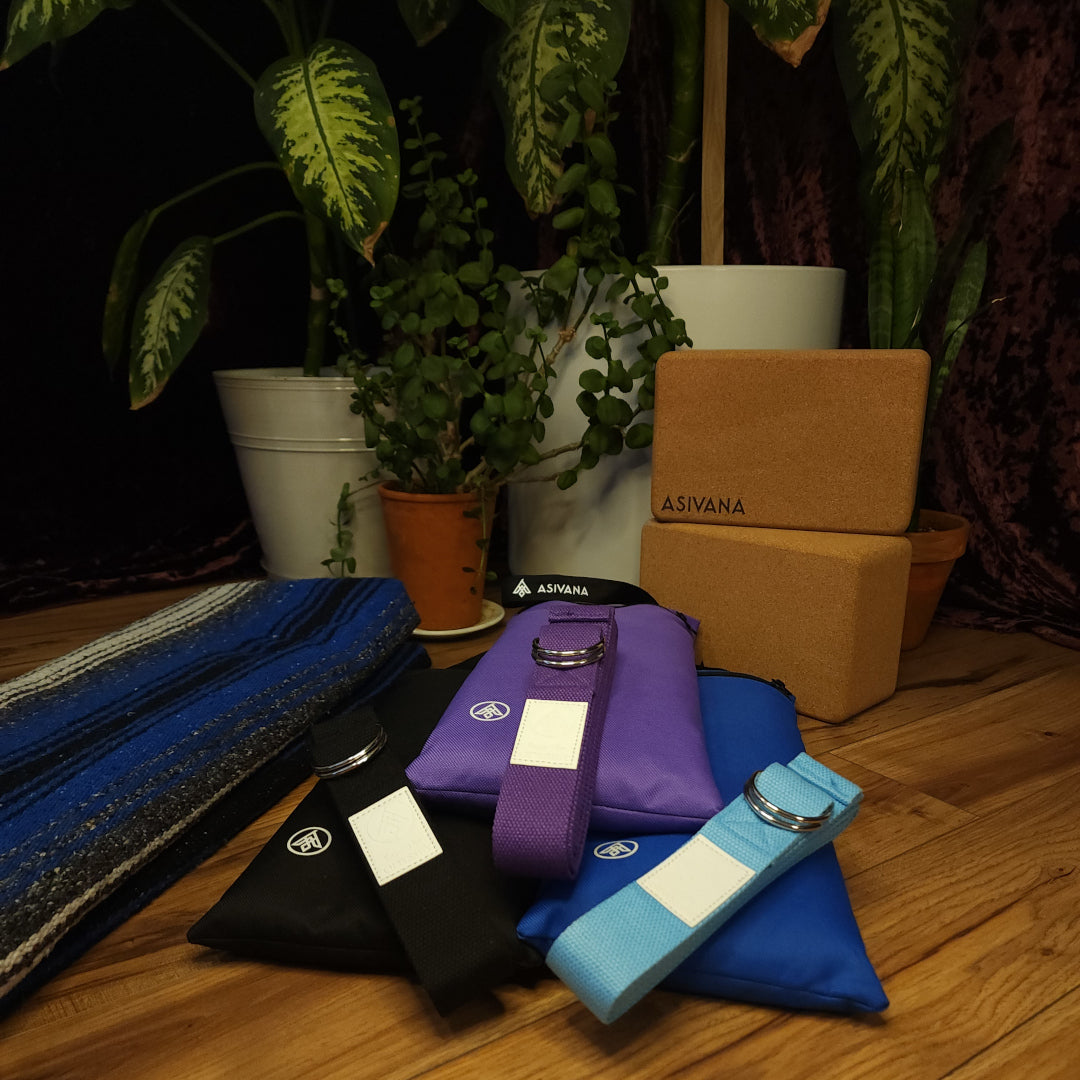
If you are building a home practice, having two yoga blocks offers more setup options for symmetrical poses and seated postures. Asivana Yoga offers yoga props that can help support a thoughtful practice, and blocks are among the most versatile tools to include in your space.
The Asivana Cork Yoga Block provides a firm cork option measuring 9 × 6 × 4 inches, with rounded edges. If you are deciding how many to use, the one yoga block or two guide compares common setups.
Essential yoga block poses for beginners
Triangle Pose (Trikonasana)
Place a block beside your front foot. Rest your lower hand on the block instead of reaching toward the floor. This helps keep the chest more open while reducing strain through the side body and lower back.
Half Forward Fold (Ardha Uttanasana)
Place two blocks under your hands if the floor feels too far away. Press gently into the blocks while lengthening your spine forward. This encourages a flatter back instead of excessive rounding.
Low Lunge (Anjaneyasana)
Place blocks on either side of your front foot. Rest your hands on the blocks to create more space across the chest and reduce pressure through the hips while you settle into the pose.
Seated Forward Fold (Paschimottanasana)
Sit on a block to gently elevate your hips. This often allows the pelvis to tilt more naturally, making it easier to lengthen through the spine as you fold forward.
Bridge Pose (Setu Bandha Sarvangasana)
For a supported variation, place a block under the sacrum after lifting the hips. Rest your weight onto the block rather than actively holding the pose. This creates a gentle restorative experience.
Child's Pose (Balasana)
Place a block beneath your forehead if it does not comfortably reach the floor. The support often allows the neck and shoulders to relax more fully.
Extended Side Angle Pose (Utthita Parsvakonasana)
Rest your lower hand on a block inside or outside the front foot. The block helps you rotate the chest upward while maintaining stability through the legs.

Tips for getting the most from yoga block poses for beginners
There is no single correct block height for every body. Experiment with different positions until the pose feels steady and your breath remains smooth.
Keep these guidelines in mind:
- Choose stability before depth.
- Move the block closer if reaching causes strain.
- Press lightly into the block instead of leaning heavily unless the pose is intentionally supported.
- Continue breathing naturally throughout each posture.
- Adjust the block whenever your alignment changes.
Blocks are tools for learning. As your mobility changes over time, you may use them differently rather than stopping their use altogether.
Common mistakes to avoid
Many beginners assume a lower block is always better. In reality, using a taller height often creates healthier alignment. Another common mistake is placing the block too far away, which encourages overreaching and instability.
Avoid locking your joints simply because the block provides support. Keep a gentle engagement through the muscles around your knees, shoulders, and elbows.
Finally, remember that blocks are meant to assist your practice. Using them is a thoughtful choice, not a sign of limited ability.

FAQ
Do beginners really need yoga blocks?
They are not required, but they are among the most helpful props for improving comfort, alignment, and confidence while learning yoga.
Should I use one block or two?
Many poses work well with one block, while two blocks provide balanced support in standing folds, lunges, and seated positions.
What height should my yoga block be?
Use the height that allows you to maintain steady breathing and good alignment. Many beginners benefit from starting with the tallest setting.
Can yoga blocks help improve flexibility?
Blocks support gradual progress by allowing you to practice with better positioning and less unnecessary strain. Consistent practice contributes more than forcing deeper stretches.
Are yoga block poses for beginners useful even after gaining experience?
Yes. Many teachers and experienced practitioners continue using blocks to refine alignment, explore variations, and support restorative practice.