Yoga Props for Tight Hips
Jack UtermoehlYoga props for tight hips can make hip opening more comfortable, stable, and effective by reducing unnecessary strain while helping you find appropriate alignment. Blocks, straps, blankets, and bolsters each support the body in different ways, allowing your hips to gradually adapt to movement instead of being pushed beyond their current range. Used thoughtfully, props encourage steady progress through consistent practice rather than forcing deeper stretches.
Why props help when your hips feel tight
Tight hips can develop for many reasons, including long hours of sitting, repetitive movement patterns, previous injuries, strength imbalances, or simply individual anatomy. The sensation of tightness does not always mean a muscle is short. Sometimes it reflects limited joint motion, protective muscle tension, or a lack of stability.
Yoga props create a more supportive environment so your body can work with less compensation. Instead of reaching for the floor or forcing a pose, a prop brings the pose closer to you. This often allows the surrounding muscles to soften while maintaining good posture and steady breathing.
When students stop chasing depth and begin working with appropriate support, they frequently experience a more sustainable practice. Comfort and stability encourage consistency, and consistency usually matters more than intensity.

The most useful yoga props for tight hips
Yoga blocks
Blocks are often the first prop to reach for when working with the hips. They reduce the distance between your body and the floor, making seated and standing poses more accessible.
Examples include placing a block beneath the pelvis in seated forward folds, supporting the hands in low lunge, or sitting on one or two blocks during cross-legged meditation. Elevating the hips often makes it easier for the pelvis to tilt forward, reducing unnecessary rounding through the spine.
Yoga straps
A strap extends your reach without asking you to sacrifice alignment. In reclining hamstring stretches, bound angle pose, or leg stretches, a strap allows the shoulders to remain relaxed while the hips receive steady attention.
Rather than pulling aggressively, use the strap to maintain a comfortable amount of tension while breathing evenly.
Yoga bolsters
Bolsters provide broad, supportive cushioning that encourages longer holds. They are especially useful in restorative poses where the nervous system benefits from slowing down.
In supported butterfly pose, placing a bolster beneath the knees or beneath the spine can reduce muscular effort and help the hips relax over time.
Yoga blankets
Folded blankets offer subtle height adjustments and soft support. Sitting on a folded blanket often improves pelvic positioning in seated poses. Blankets can also cushion sensitive knees during lunges or provide support beneath the thighs during restorative work.
Helpful poses using yoga props for tight hips
Bound Angle Pose
Sit on a folded blanket or block if your lower back rounds. Place blocks or folded blankets beneath each knee if the legs feel unsupported. This setup allows the inner thighs to relax while maintaining an upright spine.
Pigeon Pose
If the front hip floats away from the floor, place a folded blanket or block beneath that side of the pelvis. The goal is balanced support rather than reaching the floor.
Low Lunge
Place blocks beneath both hands to reduce pressure through the hips and lower back. A folded blanket under the back knee adds comfort so attention can remain on steady movement.
Reclining Hand-to-Big-Toe Pose
Loop a strap around the foot and keep a slight bend in the lifted knee if needed. This allows the pelvis to remain stable while exploring hip mobility.
Wide-Legged Forward Fold
Rest your hands on blocks instead of reaching toward the floor. Adjust the block height until you can lengthen through the spine without strain.

How to choose the right props
You do not need an extensive collection to support healthy hip mobility. Start with the props that solve the challenges you encounter most often.
- Choose blocks if you struggle to reach the floor or maintain balance.
- Choose a strap if flexibility limits your reach.
- Choose a blanket if you need extra comfort or a small amount of elevation.
- Choose a bolster if you enjoy longer supported stretches or restorative yoga.
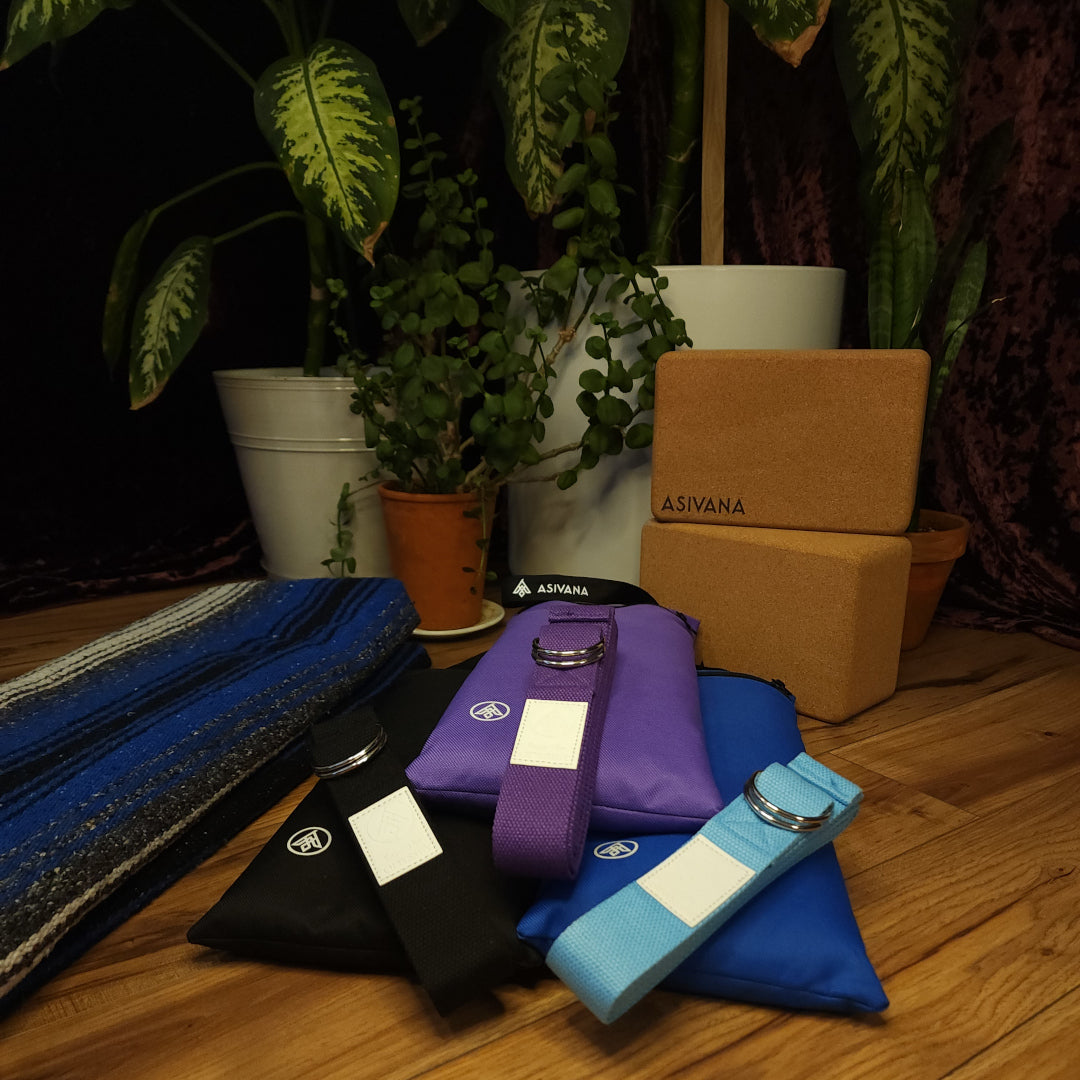
If you are building a home practice space, selecting quality yoga prop categories that you will use regularly is usually more valuable than collecting many specialized accessories. Asivana Yoga offers yoga props that can support a thoughtful and consistent practice without distracting from the purpose of the work itself.
To compare the equipment discussed here, see the Asivana Cork Yoga Block for its 9 × 6 × 4-inch dimensions and the Asivana II 8-foot Yoga Strap for its recycled polyester construction and adjustable metal D-ring closure.
Common mistakes when using props for tight hips
One common mistake is viewing props as a sign that a pose is being done incorrectly. In reality, experienced teachers often use props to refine alignment and improve awareness.
Another mistake is using a prop to force a deeper position. A block or strap should improve support, not create additional leverage that causes discomfort.
Holding the breath is another frequent habit. Hip-opening postures can feel intense even when they are safe. Maintaining slow, steady breathing helps you observe the difference between productive sensation and pain.
Finally, avoid comparing your range of motion with others. Hip structure varies considerably between individuals. Your practice should reflect your own body rather than an external image of a pose.

Building a consistent hip mobility practice
Improving hip mobility rarely depends on one long stretching session. Short, regular practice often produces better results because the body has repeated opportunities to adapt.
A balanced session may include gentle movement, active strengthening, supported stretching, and a few minutes of quiet rest. Props make this approach easier because they reduce unnecessary effort while allowing better positioning.
As your comfort improves, you may gradually reduce reliance on certain props in some poses while continuing to use them in others. The purpose of a prop is to support your practice where support is useful.
Yoga props for tight hips are most effective when they help you move with awareness, patience, and consistency instead of chasing maximum range of motion.
FAQ
Which yoga prop is best for tight hips?
Blocks are often the most versatile choice because they improve access to many standing and seated poses. A strap is also valuable if reaching your feet comfortably is difficult.
Can props help beginners with hip-opening poses?
Yes. Props reduce unnecessary strain, improve alignment, and make common hip-opening poses more comfortable while you develop mobility and strength.
Should I feel pain when stretching tight hips?
No. Mild stretching sensations are common, but sharp, pinching, or lingering pain is a signal to reduce intensity, adjust your setup, or seek guidance from a qualified teacher or healthcare professional.
How often should I practice if my hips feel tight?
Practicing a few times each week, or even for ten to fifteen minutes most days, is generally more helpful than occasional intense sessions.