Om Namo Narayanaya: Meaning, Translation, Pronunciation, and How to Chant
People chant Om Namo Narayanaya as a prayer of reverence, remembrance, and surrender directed toward Narayana. Its basic meaning is “Om. Reverence to Narayana,” or idiomatically, “I bow to Narayana.” This Sanskrit mantra is central to Vaishnava traditions and is known as the Ashtakshara, or eight-syllable, mantra. It may be repeated quietly, mentally, in devotional worship, or through group singing. In Sri Vaishnavism, its formal practice and deeper interpretation are traditionally received from a teacher.
The Mantra
Translation
Om. Reverence to Narayana.
Oṃ; homage or obeisance to Nārāyaṇa.
Nārāyaṇāya means “to or for Narayana.” “I bow to Narayana” is a natural English rendering, but the Sanskrit does not state a first-person verb. Narayana is a proper divine name and is best left untranslated.
How to Pronounce the Mantra
naa-raa-yuh-naa-yuh
| Mantra | Pronunciation | Notes |
|---|---|---|
| oṃ | OHM, with a gently nasalized ending | The o is a long, pure vowel rather than the English diphthong in “home.” The final sound may be expressed as nasal resonance or an m-like closure, depending on recitation style. |
| namo | nuh-MOH | The first a is short and the final o is long. Namo is the form used before the following n sound. |
| nārāyaṇāya | naa-raa-yuh-naa-yuh | Keep the five syllables distinct: nā-rā-ya-ṇā-ya. The ā vowels are long. The ṇ is pronounced with the tongue tip curled slightly back from the position of an English n. |
Pronunciation Notes
- IAST transliteration is more precise than an English phonetic guide.
- Avoid collapsing Narayanaya into four syllables. The full Sanskrit pronunciation has five syllables: nā-rā-ya-ṇā-ya.
- Long vowels matter in Sanskrit: nā, rā, and ṇā are each held longer than a short a.
- A relatively even rhythm is preferable to heavy English-style stress.
How to Chant Om Namo Narayanaya
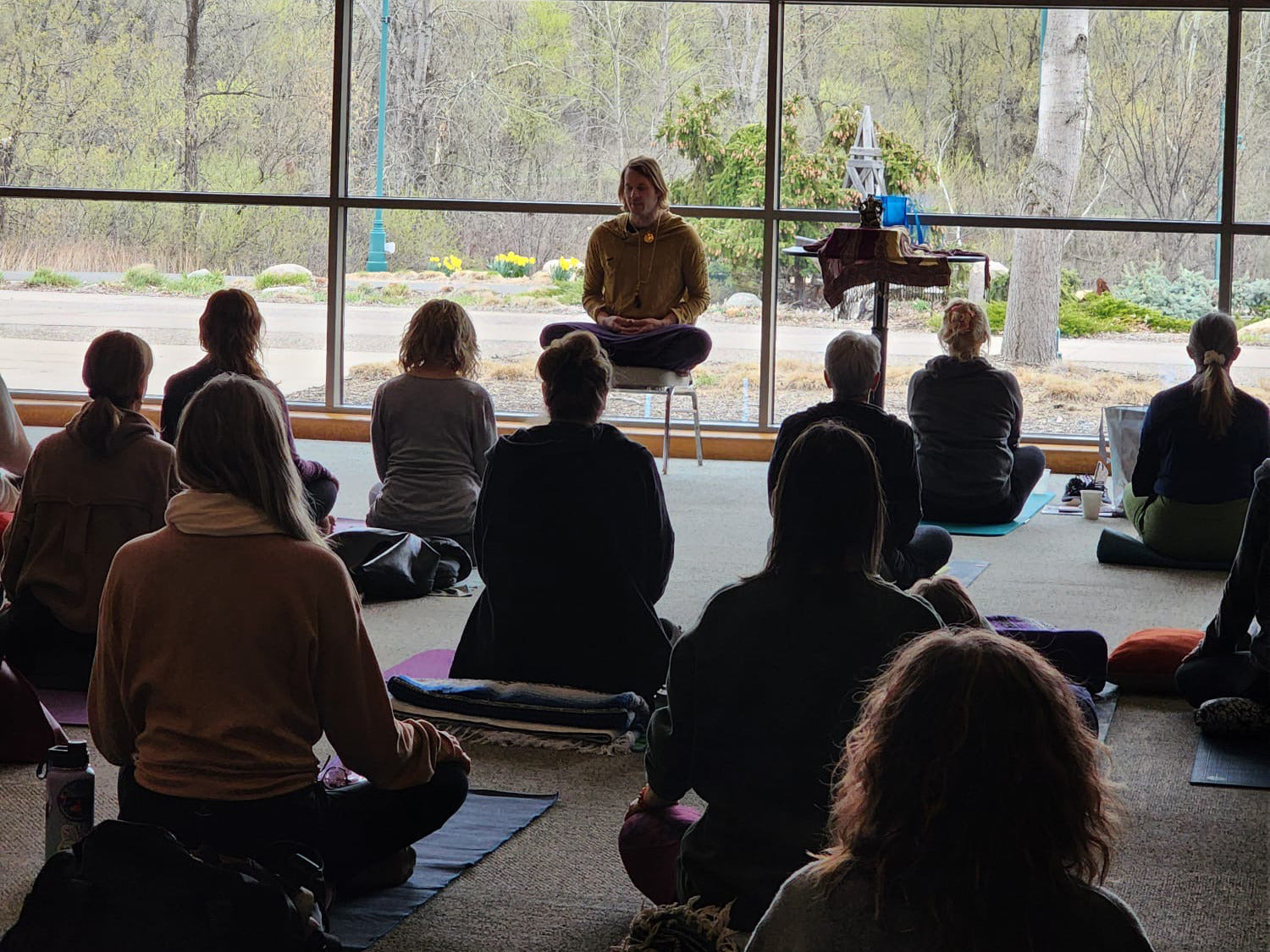
You can chant this mantra aloud, softly, or silently as a focused practice of remembering and honoring Narayana. The public form of the mantra is widely used in devotional and contemporary yoga settings, while formal Sri Vaishnava practice has its own initiation-based context.
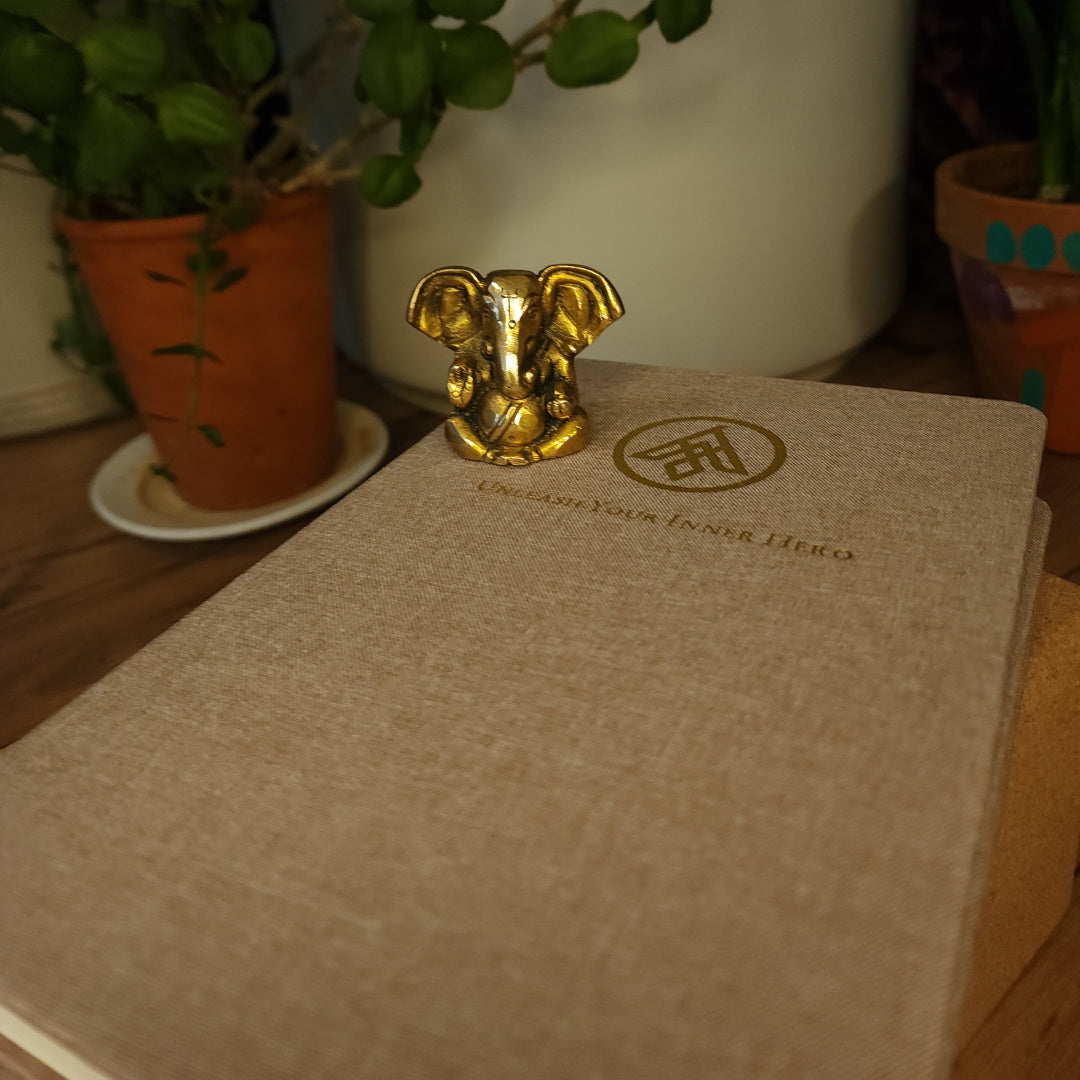
Begin by sitting or standing in a comfortable, steady position. Repeat “Om Namo Narayanaya” at a pace that allows each syllable to remain clear. You may place attention on the sound, on the act of reverence expressed by the words, or on Narayana as the recipient of the mantra. Traditional sources describe concentrated repetition and contemplation of Vishnu-Narayana, sometimes in a clean or secluded place or before an image of Vishnu. These are practices from particular ritual contexts, not universal requirements for a first-time practitioner.
- Japa, or repeated mantra recitation
- Quiet or mental repetition
- Audible devotional chanting
- Mantra upasana, or contemplative worship through the mantra
- Nama-smarana, remembrance of the divine name
- Puja and ritual recitation
- Modern kirtan or call-and-response chanting
No single repetition count is built into the mantra itself. The Narayana Upanishad calls for recitation and mantra-upasana but does not require 108 repetitions. Some later ritual texts give specific counts for particular observances, but these should not be treated as a universal instruction. You may choose a duration or number that supports attentive practice, or follow the guidance of your teacher or lineage.
A japa mala can be used to count repetitions. Completing 108 beads is a common convention in Hindu japa, but it is not a mantra-specific command in the principal Upanishadic passage on this mantra. If you practice within a lineage, use the method and mala material taught there.
The words are publicly available and widely chanted. In Sri Vaishnavism, however, the Ashtakshara is one of three rahasya, or sacred teachings traditionally received from an acharya, a qualified teacher, during initiation. Readers seeking formal Sri Vaishnava practice or its esoteric interpretation should consult a qualified acharya rather than trying to reconstruct lineage procedures from an article.
Mantra at a Glance
| Tradition | Vaishnava, especially Pancharatra and Sri Vaishnava |
|---|---|
| Language | Sanskrit |
| Also known as | The Ashtakshara or eight-syllable Narayana mantra; Tirumantra in Sri Vaishnavism |
| Associated with | Narayana, identified with Vishnu and the supreme Lord in Vaishnava traditions |
| Primary textual witness | Narayana Upanishad, section 3 |
| Common practices | Japa, contemplation, remembrance of Narayana, ritual recitation, and devotional singing |
| Access | Publicly known, with formal initiation-based transmission in Sri Vaishnavism |
Word-by-Word Meaning
| Mantra | Basic Meaning | Grammar / Context |
|---|---|---|
| Om, oṃ | The sacred syllable known as the pranava | An indeclinable sacred utterance placed at the beginning of the formula. It is not adequately captured by a simple dictionary translation. |
| Namo, namo | Homage, obeisance, reverence | This is the sandhi form of namaḥ before the initial n of nārāyaṇāya. “I bow” is an idiomatic English rendering, not an explicit verb in the Sanskrit. |
| Narayanaya, nārāyaṇāya | To or for Narayana | This is the dative singular form of the proper name Nārāyaṇa. The dative marks Narayana as the recipient of the homage. |
Meaning of Om Namo Narayanaya
At its most direct level, Om Namo Narayanaya is a concise expression of homage addressed to Narayana. Repeating it places attention on Narayana through a simple formula of reverence.
The Sanskrit says only the sacred syllable Om, an expression of homage, and Narayana as the one receiving that homage. It does not literally mention peace, protection, healing, energy, chakras, manifestation, or alignment.
In Vaishnava practice, people use the mantra to remember Narayana, express devotion, and orient themselves toward surrender and service. In Sri Vaishnava interpretation, namaḥ is understood more deeply as relinquishing independent self-ownership, while Nārāyaṇāya directs the self and its service toward the Lord. This is a traditional lineage interpretation, not the bare grammatical translation.
The Narayana Upanishad presents Narayana as the divine reality from whom beings and cosmic principles arise, in whom they function, and into whom they dissolve. It connects mantra-upasana with immortality and Vaikuntha, the divine realm associated with Vishnu-Narayana. These are theological claims made within the text.
Narayana in Vaishnava Tradition
Narayana is a major divine name associated and frequently identified with Vishnu. In Vaishnava theology, especially Sri Vaishnavism, Narayana is understood as the supreme personal Lord, the inner ruler, refuge, and ground of all beings.
This is more specific than the simplified description of Vishnu as only the “preserving” member of a creator-preserver-destroyer framework. Vaishnava traditions commonly understand Narayana as supreme, though other Hindu theological systems may frame the name and its status differently.
In this mantra, Narayana is the grammatical recipient of homage. The mantra invokes the deity by name rather than describing a particular story, image, or cosmic function.
Origin and History of the Mantra
Om Namo Narayanaya belongs to Sanskrit Vaishnava devotional and ritual traditions. Its history includes Upanishadic teachings about mantra, Pancharatra ritual traditions, Tamil Alvar devotion, Sri Vaishnava teacher lineages, Puranic praise texts, and modern devotional chanting.
The Narayana Upanishad is a major explicit textual witness to the complete formula oṃ namo nārāyaṇāya. It instructs that Om comes first, namas second, and narayanaya last, and identifies the result as an eight-syllable mantra.
The exact date of the Narayana Upanishad is uncertain. For that reason, it cannot safely be identified as the single earliest occurrence of the mantra across all traditions. Academic scholarship also notes related Narayana salutations and references to the sacred eight syllables in Tamil Alvar literature, roughly from the seventh through ninth centuries, as well as possible early Pancharatra references whose chronology needs caution.
Sri Vaishnava teachers later made the Ashtakshara, also called the Tirumantra, one of the tradition’s three central rahasya teachings. The Narasimha Purana preserves a developed praise and practice framework for the mantra, including visualization, ritual observances, and text-specific repetition disciplines.
Today, the mantra circulates widely through temples, recordings, meditation groups, yoga classes, and kirtan. This public use is real, but it differs from the formal, initiated practice maintained in Sri Vaishnava lineages.
Traditional Interpretations
Narayana Upanishad: The text presents the formula as Narayana’s eight-syllable expression. It interprets Om as the pranava form of Brahman, describes Narayana as the all-pervading divine reality, and connects mantra-upasana with immortality and Vaikuntha.
Sri Vaishnavism: The Tirumantra is interpreted as a compact teaching about the relationship between the dependent self and Narayana. In this reading, Om indicates the self’s belonging to the Lord, namaḥ indicates relinquishment of egoistic possessiveness, and Nārāyaṇāya identifies Narayana as the recipient, goal, means, and object of service.
Puranic Vaishnavism: The Narasimha Purana praises the mantra as a supreme formula for Vishnu-oriented japa and places it within practices of visualization, worship, purity, and liberation-oriented discipline.
Traditional explanations of the name Narayana: Texts and teachers explain the name in several ways, including as the one whose abode is the primordial waters, the refuge or abode of beings, or the one in whom beings dwell and who dwells within them. These are important theological etymologies, not one uncontested historical linguistic definition.
Sanskrit and Grammar
The underlying grammatical expression is oṃ namaḥ nārāyaṇāya. In continuous Sanskrit pronunciation, the final -aḥ of namaḥ changes before the following n sound, producing namo nārāyaṇāya.
Nārāyaṇāya is the masculine dative singular form of Nārāyaṇa. The dative indicates the one to whom homage is offered.
The formula has no finite verb. English translations such as “I bow to Narayana” naturally supply a verb, while the more literal wording is “homage to Narayana.”
The name Ashtakshara means “eight-syllabled.” The Narayana Upanishad counts oṃ as one syllable, na-mo as two, and nā-rā-ya-ṇā-ya as five.
Variations of the Mantra
Underlying grammatical form
This displays the unsandhied form namaḥ. Canonical presentation and continuous recitation normally use namo nārāyaṇāya.
Namo Narayanaya
This related salutation occurs in devotional and historical contexts, including forms noted in Alvar literature. Without Om, it is not the complete eight-syllable mantra described by the Narayana Upanishad.
Aum Namo Narayanaya
Aum is a modern Roman spelling that visually reflects the traditional analysis of oṃ as a-u-m. It does not usually mean that three separate syllables should be chanted here.
Musical repetition
Om Namo Narayanaya
Repeated lines, melodic extension, and leader-group alternation are kirtan arrangements rather than a longer canonical mantra.
How This Mantra Is Used Today
In contemporary yoga and devotional communities, Om Namo Narayanaya is used for personal meditation, group chanting, recorded sound practice, mala japa, temple worship, and call-and-response kirtan.
In a kirtan setting, a leader and group may repeat the same line responsively or together. This format can support communal participation, but it is not required by the older textual witnesses.
Popular descriptions often associate the mantra with calm, grounding, protection, healing, or energetic alignment. These are contemporary practitioner interpretations and should not be treated as literal translations or guaranteed effects of the Sanskrit words.
For practitioners drawn to Sri Vaishnava tradition, formal study with an acharya offers the lineage context for the mantra’s initiated use and deeper interpretation.
Related Concepts
Ashtakshara · Pranava · Japa · Nama-smarana · Prapatti or sharanagati · Pancha-samskara or samashrayanam · Rahasya-traya · Vaikuntha
Related Mantras
Om Namo Bhagavate Vasudevaya · Dvaya Mantra · Namo Narayana · Om Namah Shivaya
Common Questions About Om Namo Narayanaya
What does Om Namo Narayanaya literally mean?
The most defensible translation is “Om. Homage to Narayana.” “I bow to Narayana” is a natural English rendering, although the Sanskrit does not contain an explicit first-person verb.
Why is it called the Ashtakshara mantra?
Ashtakshara means “eight-syllabled.” The Narayana Upanishad counts oṃ as one syllable, namo as two, and nārāyaṇāya as five, for a total of eight.
Is Narayana simply the preserving aspect of God?
That is a simplified modern description. In major Vaishnava traditions, Narayana is understood as the supreme Lord and ground of all reality, not merely as one functional aspect of divinity.
Does Om Namo Narayanaya require initiation?
Its words are public and widely chanted in many settings. In Sri Vaishnavism, however, the Tirumantra and its formal interpretation are traditionally received from an acharya during pancha-samskara. Practice expectations differ among communities.
Must I chant it 108 times?
No. The principal Narayana Upanishad passage does not command 108 repetitions. A 108-bead mala is a common japa convention, while other texts give different counts for specific ritual observances.
Is Namo a misspelling of Namah?
No. Namo is the regular Sanskrit sandhi form of namaḥ before the initial n in nārāyaṇāya.
Is Om Namo Narayanaya a kirtan or a japa mantra?
It is historically a mantra for recitation and contemplative worship, and it is also used in modern kirtan. Call and response is a musical arrangement, not a requirement of the mantra.
Does the mantra literally promise peace, protection, or healing?
No. Those ideas do not occur in the grammar of the mantra. Traditional texts make theological claims about divine attainment and liberation, while modern wellness descriptions should be understood as interpretations rather than literal meanings or guaranteed results.
Sources and Further Reading
- Narayanopanishat or Narayana Atharvashirsha, Traditional Sanskrit text; electronic edition prepared by Sunder Hattangadi and Gaura Nitai Dasa, Sanskrit Documents
- Narayana Upanishad 3, Vedapath
- Om Namo Narayanaya Ashtakshara Mahatmyam, Narasimha Purana, Chapter 17, Traditional Sanskrit text; Sanskrit Documents electronic edition
- Brahmanas, Pancaratrins, and the Formation of Srivaisnavism, Katherine K. Young
- Frequently Asked Questions: Samashrayanam and Pancha Samskara, Sri Parakala Matham
- Ashtakshara: Sri Vaishnava Dictionary, Uveda.org
- Namas: Sanskrit Dictionary Entry, Sanskrit Dictionary, incorporating Monier-Williams and Apte lexicons
- Etymology of Narayana and Ramayana, Sukumar Sen
- Vishnu Purana, Book 1, Chapter 4, Traditional Sanskrit text; English translation hosted by Internet Sacred Text Archive
- Japa-mala: Sri Vaishnava Dictionary, Uveda.org