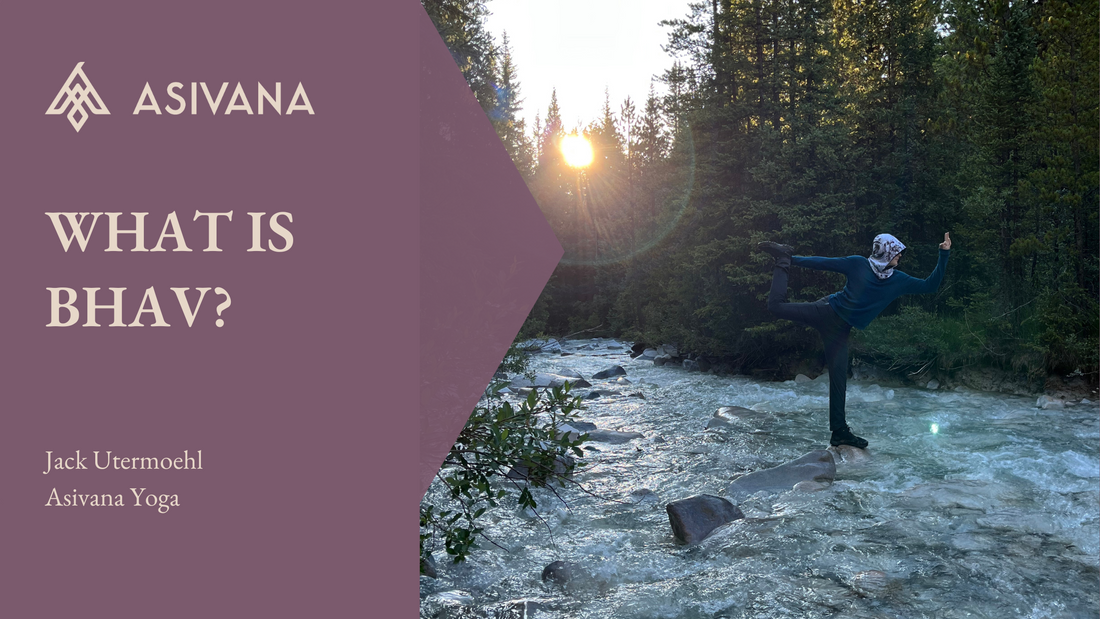
What is Bhav?
Jack UtermoehlBhav (more formally bhāva, भाव) means a state of being, feeling, disposition, or inner attitude. In yoga, it describes the quality of attention and feeling you bring to practice. In Bhakti Yoga, it can describe a devotional relationship with the divine. The meaning depends on the tradition and context; it cannot be reduced to a single emotion or a psychological flow state.
When I speak about bringing Bhav to yoga, I mean practicing with sincere inner participation. A familiar posture may feel different when approached with gratitude, contemplation, or devotion. The physical shape remains recognizable while the inner experience gains a particular quality.
What does Bhav mean in Sanskrit?
Bhav is a common modern spelling related to Sanskrit bhāva, a word whose range includes being, becoming, state, character, inclination, feeling and sentiment. A useful starting definition is the inner disposition through which you meet an experience. Its precise use varies across yoga philosophy, devotional religion, performance and Indian aesthetics. For a more detailed linguistic entry, read our Sanskrit definition of Bhava or the Bhav dictionary entry.
Bhav in yoga practice
Consider a standing pose. You can focus on your feet and alignment, the rhythm of breathing, or a feeling of reverence. These are different dimensions of the same practice. Bhav describes the felt orientation, especially when a practice carries spiritual meaning. In a devotional context, chanting, service, prayer and contemplation can express Bhav even without an asana.

Five devotional Bhavs
Several Vaishnava Bhakti traditions describe five principal devotional orientations. These are relationships toward the divine, rather than universal personality types or five compulsory steps for every yoga student. Their relative emphasis and theological meaning vary among lineages.
- Shanta Bhav: peaceful contemplation and reverence.
- Dasya Bhav: dedicated service offered with love.
- Sakhya Bhav: friendship and intimacy in devotion.
- Vatsalya Bhav: protective, nurturing parental affection.
- Madhurya Bhav: the beloved relationship expressed through intimate devotional love.
Swami Sivananda's teaching on the five Bhavas is one traditional expression of this classification. These categories are especially meaningful in Bhakti contexts. In everyday yoga instruction, Bhav may be used more broadly to describe the feeling or sincerity brought to practice.
How can you cultivate Bhav?
- Name your intention. Before asana, meditation or Japa Yoga, consider the attitude you wish to embody.
- Give your attention to one activity. Notice breath, posture, mantra or the person you are serving.
- Let feeling develop naturally. Sincerity matters more than forcing a particular emotional response.
- Reflect afterward. Ask what was present, what changed and whether the practice influenced how you acted.
You do not need to manufacture exalted experiences. An ordinary moment of honest care, focused practice or service can provide a useful starting point. Over time, devotional traditions offer more specific methods that belong within their own teachings and relationships.

Bhav and the experience of yoga
In my experience, Bhav is particularly noticeable when attention settles and a simple practice feels personally meaningful. Some students relate to it through a mantra or sacred image. Others recognize a thoughtful attitude in service, gratitude or practice. These experiences are individual. They do not prove a particular neurological mechanism, and there is no need to equate a devotional concept with a clinical outcome.
I have often returned to a short personal reflection that I call the Bhav Sutras:
Bhav is the only thing there is
Rest is noise
We then abide in the Bhav
These are my own reflective lines, not verses presented as coming from a traditional Sanskrit scripture. They remind me to consider the quality of awareness that I bring to what is directly in front of me.

Bhav, Rasa and meditation: common questions
Is Bhav the same as flow?
No. Flow is a concept used in psychology for deeply absorbed engagement in an activity. Bhav has broader historical and religious meanings and, in devotional settings, refers to a particular feeling or relationship toward the divine. Some experiences may overlap, but the terms are not interchangeable.
Is Bhav always devotional?
No. The word has a wide lexical range. In Bhakti Yoga it often concerns devotion, while in other contexts it can name a mental state, disposition or represented emotion. Rasa is a related but distinct concept in Indian aesthetics and devotional interpretation.
Can a yoga teacher use Bhav as a class theme?
Yes, with context. A teacher might invite students to approach a familiar sequence with steadiness, care or gratitude, while explaining when a devotional application belongs to a specific tradition. The point is thoughtful practice rather than assigning students an emotional state.
Continuing your practice
For reflection, see what to write in a yoga journal. My Inner Hero Yoga Journal and Asivana Cork Yoga Mat can support a regular practice, although neither determines the quality of Bhav. The meaningful part begins with the attitude you bring.