Lokah Samastah Sukhino Bhavantu: Meaning, Translation, Pronunciation, and How to Chant
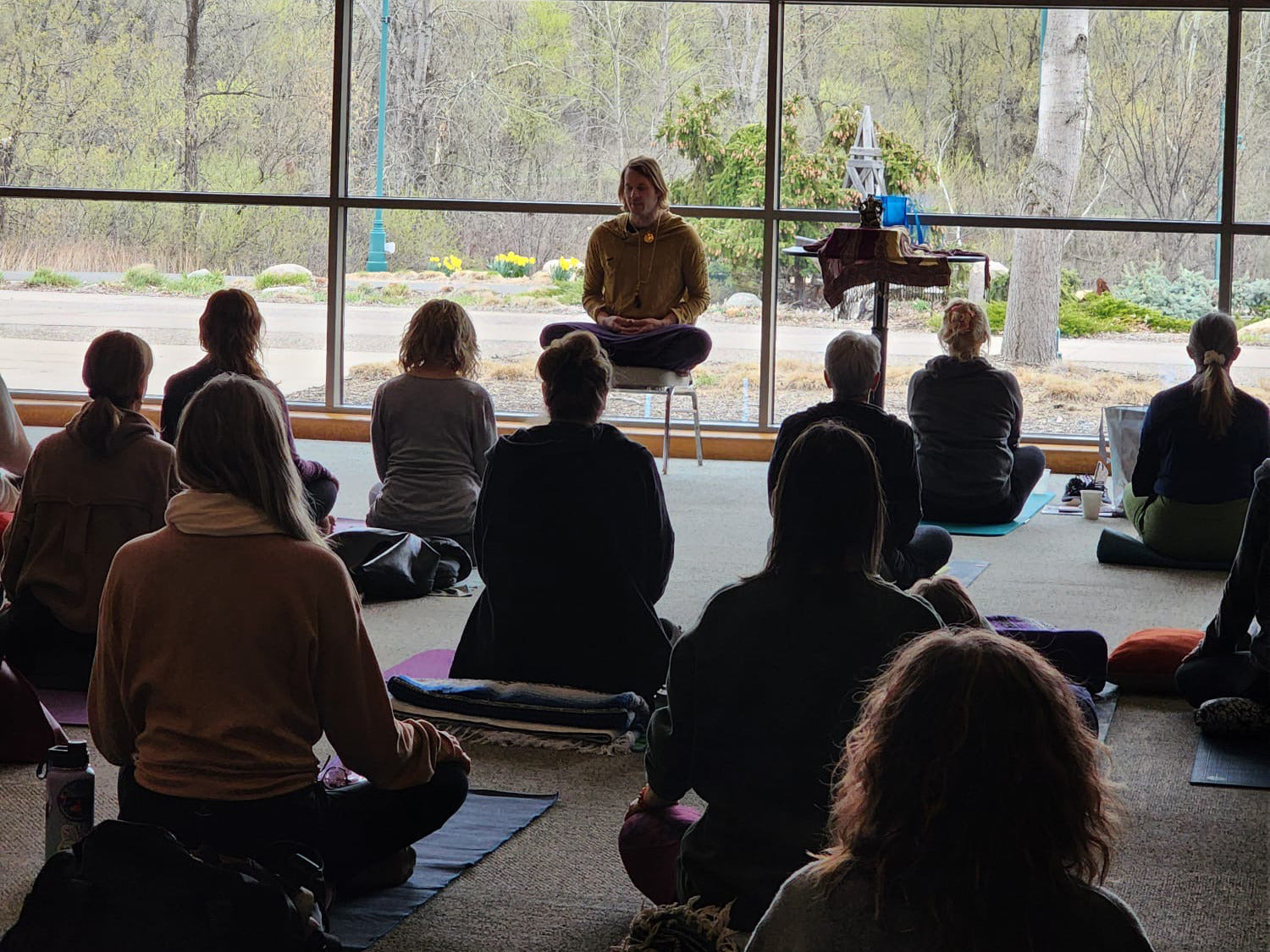
People chant Lokah Samastah Sukhino Bhavantu as a prayer for the happiness and well-being of all. It can be used after yoga, meditation, devotional singing, or personal practice as a way of extending goodwill beyond oneself. The phrase is a Classical Sanskrit universal-welfare benediction used in Hindu devotional settings and modern yoga communities. It may be spoken, sung, repeated in a group, or used as a closing chant.
The Mantra
lokāḥ samastāḥ
sukhino bhavantu
The complete line may then be repeated. Oṃ may be added at the beginning, and some performances end with oṃ śāntiḥ śāntiḥ śāntiḥ. These are common musical or liturgical additions, not required parts of the core sentence.
Translation
May all beings in every world be happy.
May all the worlds, all together or in their entirety, be happy.
Loka can mean a world, realm, sphere, community, or people. “All beings in every world” is a natural traditional interpretation of the plural lokāḥ, though the word itself literally refers to worlds or realms. The familiar wording “May all beings everywhere be happy and free” is associated with Jivamukti Yoga; “free” is an ethical and lineage interpretation, not a word-for-word translation of the Sanskrit.
How to Pronounce the Mantra
sa-ma-staa(h)
su-khi-no
bha-van-tu
| Mantra | Pronunciation | Notes |
|---|---|---|
| lokāḥ | loh-kaa(h) | The ā is long. The final ḥ is visarga, a light voiceless release after the vowel rather than a strongly pronounced English h. |
| samastāḥ | sa-ma-staa(h) | Keep the first three vowels short and the final ā long. The t is dental, made with the tongue near the upper teeth. |
| sukhino | su-khi-no | The kh is an aspirated k with a puff of air. The i is short, even when singers lengthen it musically. The final o is naturally long. |
| bhavantu | bha-van-tu | The bh is an aspirated b. Sanskrit v may sound between English v and w. The n and t are dental, and the final u is short. |
Pronunciation Notes
- IAST transliteration is more precise than an English pronunciation guide.
- Avoid heavy English word stress. In Sanskrit recitation, syllables are generally given a clearer and more even value.
- Keep the short u sounds in su- and -tu brief rather than holding them like English “oo.”
- In connected recitation, the visarga before s may sound like a light breath or assimilate toward s. The standard written IAST remains lokāḥ samastāḥ.
- Common spellings such as “Samastha” and “Bhavanthu” reflect regional pronunciation or English transcription habits rather than precise IAST.
How to Chant Lokah Samastah Sukhino Bhavantu
Chant the complete phrase as a wish for the happiness and well-being of all worlds, communities, or beings. It can be recited quietly, spoken together in a group, or sung as a simple repeating chant.
Begin by settling into a comfortable position. Recite the four-word phrase at an unhurried pace, allowing each syllable to be distinct. As you chant, hold the prayer’s broad intention of universal well-being. In a group, a leader may chant the full line for everyone to repeat, or divide it after samastāḥ.
You may use the phrase by itself, as the final line of a longer blessing, or with Oṃ at the beginning and a threefold śāntiḥ at the end when that is customary in your community or lineage.
- Closing benediction after yoga practice
- Spoken or sung prayer
- Mantra meditation
- Repeated recitation or japa
- Kirtan and devotional singing
- Group chanting
- Call and response
- Closing prayer after puja or bhajan
No universal scriptural repetition count has been identified for this phrase. Some Sathya Sai materials describe chanting a related form three times after bhajans, while an Arsha Bodha compassion meditation directs three or more recitations in that specific practice. Kirtan repetitions follow the melody, and some modern recordings use 108 repetitions. These are practice-specific conventions, not a required count.
The phrase can be repeated as japa, but using a mala is not intrinsic to its documented role as a benediction or closing chant. No mandatory bead count was found.
This is a public prayer. No initiation, empowerment, caste restriction, or other access requirement was found. When practicing in a particular lineage setting, follow the teacher’s guidance on pronunciation and chant arrangement.
Mantra at a Glance
| Tradition | Hindu universal-welfare benediction; also used in modern yoga, bhajan, and kirtan |
|---|---|
| Language | Classical Sanskrit |
| Type | Mangala or svasti benediction, often used as a closing chant |
| Core meaning | A wish for happiness and well-being throughout all worlds |
| Common use | Yoga classes, meditation, devotional gatherings, kirtan, and personal prayer |
| Access | Public and unrestricted |
Word-by-Word Meaning
| Mantra | Basic Meaning | Grammar / Context |
|---|---|---|
| lokāḥ | worlds, realms, spheres; also peoples or communities | Masculine nominative plural of loka. It is the grammatical subject of the sentence. Interpreting it as including the beings who inhabit the worlds is natural but interpretive. |
| samastāḥ | all, entire, assembled, taken together | Masculine nominative plural adjective agreeing with lokāḥ. It qualifies the worlds, realms, peoples, or communities. |
| sukhino | happy, at ease, prosperous, possessing well-being | The connected-speech form of sukhinaḥ, a masculine nominative plural predicate adjective. Before bhavantu, regular Sanskrit sound change produces sukhino. |
| bhavantu | may they be; may they become | Third-person plural present imperative of the root bhū, “to be” or “to become.” Its plural form agrees with lokāḥ. |
Meaning of Lokah Samastah Sukhino Bhavantu
Lokah Samastah Sukhino Bhavantu is a universal benediction. It expresses the wish that all worlds, communities, or beings understood as inhabiting those worlds may be happy and possess well-being.
For a yoga practitioner, the chant can serve as a way to broaden the focus of practice. Rather than making a request only for oneself, the prayer extends goodwill outward toward all of creation.
The phrase does not name a particular deity. In Hindu devotional use, it may be offered as a prayer to God. In other yoga settings, people may use it as an ethical intention, a dedication of practice, or a general blessing.
Modern yoga traditions often connect the mantra with compassion, non-harm, service, and responsibility toward human and nonhuman beings. These are meaningful applications of the prayer, but they are not all stated word-for-word in the four Sanskrit words.
Universal Well-Being and Loka-Kshema
This mantra is not addressed to a named deity. Its central concern is universal well-being, often described by the Sanskrit expression loka-kṣema, meaning the welfare, security, or well-being of the world or worlds.
The phrase states the desired outcome directly: may all worlds be happy. Different Hindu and yoga communities may understand this as a prayer to God, a dedication of practice, an ethical aspiration, or a broad benediction for creation.
Origin and History of the Mantra
The Sanskrit sentence is clear, but its original source and date are not securely established. No reliable verse reference in the Vedas, the principal Upanishads, or another canonical Sanskrit work has been identified for this exact line.
The phrase circulates independently and as the final line of a longer svasti or mangala benediction. That longer prayer asks for the welfare of people, just governance by rulers, and continuing auspiciousness for cattle and brahmanas before ending with the wish that all worlds be happy.
A frequently repeated claim places the wording in a Sangama-dynasty inscription dated broadly between 1336 and 1485 CE, citing an epigraphic corpus edited by Shrinivas Ritti and B. R. Gopal. However, the exact inscription, date, and wording could not be directly inspected in the available record, so this medieval attribution remains provisional.
Secure modern documentation includes Sathya Sai materials from 1978 and 1979. During the twentieth century, the phrase became widely known through South Indian devotional practice, Sathya Sai communities, Mata Amritanandamayi’s community, Ashtanga Vinyasa Yoga, Jivamukti Yoga, and international kirtan.
It is sometimes incorrectly described as a Rig Veda verse, an Atharva Veda verse, or the opening prayer of the Katha Upanishad. Available textual and institutional sources do not support those claims. The familiar Katha Upanishad invocation is Oṃ saha nāvavatu.
Traditional Interpretations
In South Indian Hindu liturgical use, the line completes a wider blessing for society and creation. Its expansive final wish follows prayers for people, leaders, cattle, and brahmanas.
Mata Amritanandamayi’s community presents it as a prayer for harmony and blessings for all creation. The community also notes that the phrase is not found in the surviving Vedic branches, while understanding its outlook as consistent with a universal Vedic spirit.
Jivamukti Yoga is especially associated with the expanded English rendering, “May all beings everywhere be happy and free,” followed by a dedication that one’s thoughts, words, and actions contribute to that happiness and freedom. This is a lineage interpretation and ethical pledge, not a literal translation of the Sanskrit.
In Sathya Sai devotional practice, the phrase has been used as a prayer for universal happiness after bhajans. In 2008, the organization adopted the reordered form Samasta Lokah Sukhino Bhavantu as a lineage-specific variation.
Ashtanga Vinyasa Yoga uses the full svasti prayer as a closing mangala chant, extending the end of practice toward the welfare and peace of the world.
Sanskrit and Grammar
The sentence consists of a plural subject phrase, lokāḥ samastāḥ, followed by the predicate adjective sukhinaḥ and the third-person plural imperative bhavantu. A close word-separated analysis is lokāḥ samastāḥ sukhinaḥ bhavantu: “May all the worlds be happy.”
In connected Sanskrit recitation, sukhinaḥ changes to sukhino before the voiced bh of bhavantu. This regular sound change is called visarga sandhi. For that reason, the standard recited and written form is lokāḥ samastāḥ sukhino bhavantu.
The plural lokāḥ has a broad range of possible meanings, including worlds, realms, communities, and peoples. This is why translations vary between “all worlds,” “all people,” and “all beings in every world.”
Variations of the Mantra
Longer svasti or mangala benediction
गोब्राह्मणेभ्यः शुभमस्तु नित्यं लोकाः समस्ताः सुखिनो भवन्तु॥
This longer liturgical form places the famous line after petitions for the welfare of people, just governance, and auspiciousness for cattle and brahmanas. Minor wording and spelling variations occur.
Om and threefold shanti framing
ॐ शान्तिः शान्तिः शान्तिः॥
Oṃ may be prefixed and a threefold peace invocation may be appended. These are common performance and liturgical additions, not grammatical parts of the four-word core sentence.
Samasta Lokah Sukhino Bhavantu
This Sathya Sai lineage variation reorders or compounds the expression for “all worlds.” Sathya Sai sources state that it replaced Lokah Samastha in that community in 2008 and is commonly repeated three times after bhajans. The original lokāḥ samastāḥ can also grammatically mean “all worlds.”
South Indian and popular Roman spelling
This reflects regional pronunciation or English transcription. The precise IAST transliteration is lokāḥ samastāḥ sukhino bhavantu.
Kirtan repetition
sukhino bhavantu
Kirtan performers may divide and repeat the phrase to fit a melody or call-and-response structure. No single melody, division, or response pattern is canonical.
How This Mantra Is Used Today
Lokah Samastah Sukhino Bhavantu is widely used at the beginning or end of yoga classes, in meditation, devotional recordings, kirtan, interfaith gatherings, bhajans, and personal prayer.
In Western yoga settings, it is often chanted as a closing dedication after physical practice. The prayer gives practitioners a way to extend the intention of practice toward the welfare of others.
The popular Jivamukti wording “May all beings everywhere be happy and free” has strongly shaped modern English-language use. It is best understood as an expanded interpretation rather than a literal translation.
There is no universal requirement to chant it 108 times, include Oṃ, append śāntiḥ three times, or use a particular melody. These choices depend on the teacher, community, or setting.
Related Concepts
Loka-kshema · Mangala · Svasti · Ahimsa · Karma yoga · Maitri
Related Mantras
Sarve Bhavantu Sukhinah · Svasti Prajabhyah Paripalayantam · Om Shanti Shanti Shantih · Saha Navavatu
Common Questions About Lokah Samastah Sukhino Bhavantu
What does Lokah Samastah Sukhino Bhavantu literally mean?
A close grammatical translation is “May all the worlds, all together, be happy.” “May all beings in every world be happy” is a natural interpretive rendering.
Does the mantra really mean “May all beings everywhere be happy and free”?
“Happy” is supported by sukhino, but “free” is not explicitly present in the Sanskrit. The familiar wording is a Jivamukti Yoga interpretation and ethical expansion.
Is Lokah Samastah Sukhino Bhavantu from the Rig Veda?
No verifiable Rig Veda reference has been established for this phrase. Institutional sources also state that it is absent from the surviving Vedic branches.
Is it the opening prayer of the Katha Upanishad?
No. The Katha Upanishad is traditionally framed with the invocation Oṃ saha nāvavatu, not Lokah Samastah Sukhino Bhavantu.
What is the correct Sanskrit spelling?
The standard Sanskrit text is लोकाः समस्ताः सुखिनो भवन्तु॥, transliterated lokāḥ samastāḥ sukhino bhavantu.
Why is it sukhino rather than sukhinah?
The underlying grammatical form is sukhinaḥ. Before the voiced bh of bhavantu, a regular Sanskrit sound change called visarga sandhi produces sukhino.
Should Om or Shanti Shanti Shantih be included?
Oṃ and a threefold śāntiḥ are common liturgical framing additions, but they are not required components of the core four-word sentence.
How many times should this mantra be repeated?
There is no universal canonical repetition count. Some lineages use three repetitions in particular settings, while kirtan and personal practice may repeat it according to melody or preference.
Can anyone chant this mantra?
Available institutional sources teach the phrase publicly, and no initiation or access restriction was found. It is commonly used in public yoga, devotional, and meditation settings.
What is the difference between Lokah Samastah and Samasta Lokah?
Samasta Lokah Sukhino Bhavantu is a prominent Sathya Sai lineage variation adopted in 2008. Both forms can express the idea of all worlds, though their construction and word order differ.
Sources and Further Reading
- Inscriptions of the Vijayanagara Rulers: Inscriptions of the Rulers of the Sangama Dynasty (1336 A.D. - 1485 A.D.), Volume 1, Shrinivas Ritti and Balakrishnan Raja Gopal, editors; Indian Council of Historical Research
- Katha-Upanisad, GRETIL
- Katha Upanishad, Sanskrit Documents
- Om Lokah Samastah Sukhino Bhavantu: May Peace & Happiness Prevail, Amritapuri / Mata Amritanandamayi Math
- Swami Nirmalananda, Jivamukti Yoga
- The Jivamukti Chant Book: Harmonium Course, Jivamukti Yoga
- Samastha Lokah, Sri Sathya Sai International Organization
- Summer Showers in Brindavan 1979, Chapter 13: Karma Yoga, Sri Sathya Sai Books and Publications Trust
- Happy Birthday, Sri Sathya Sai Speaks / Sri Sathya Sai Media Centre
- Cologne Digital Sanskrit Dictionaries, Institute of Indology and Tamil Studies, University of Cologne
- Enjoyable Sanskrit Grammar Series, Volume 2: Phonetics and Sandhi, Medha Michika, Arsha Avinash Foundation / Arsha Vidya Center
- Meditation: A Journey of Exploration, Swami Tadatmananda, Arsha Bodha Center
- Brahma-Vid Ashirvada Paddhati: Svasti-Mantrah, Arsha Drishti / Arsha Vidya tradition
- The Chants, Ashtanga.yoga