
Om Aim Saraswatyai Namah: Meaning, Translation, Pronunciation, and How to Chant
People chant Om Aim Saraswatyai Namah as a prayer of reverence to Saraswati, especially in connection with learning, speech, music, study, and the arts. Its basic meaning is “Reverence to Saraswati,” with Om and Aim framing the salutation as sacred mantra syllables. This short Sanskrit mantra is used in Hindu devotional worship, meditation, japa, and modern group chanting. For simple devotional practice, it is generally publicly taught; more formal tantric practices may require guidance from a teacher or lineage.
The Mantra
Translation
Om. With the seed syllable Aim, salutations to Saraswati.
Oṃ [a sacred opening syllable]; aiṃ [a bija associated with Saraswati and speech]; sarasvatyai [to Saraswati]; namaḥ [obeisance, reverence, a bow].
The grammatical core is sarasvatyai namaḥ, meaning “obeisance to Saraswati.” Aim is a bija, or seed syllable, rather than an ordinary Sanskrit word. It should not be literally translated as “knowledge,” “wisdom,” or “creativity.”
How to Pronounce the Mantra
suh-ruhs-vuht-YEYE
nuh-MUH(H)
| Mantra | Pronunciation | Notes |
|---|---|---|
| oṃ | OHM | Use a sustained o sound followed by nasal resonance or a light m closure. It is one syllable. |
| aiṃ | EYE(M) | In a common Sanskrit teaching pronunciation, ai sounds approximately like English “eye,” not the vowel in English “aim.” The final anusvara nasalizes or lightly closes the syllable. Some modern Indian recitation traditions may realize ai closer to a long open “eh” sound. |
| sarasvatyai | suh-ruhs-vuht-YEYE | Approximately four syllables: sa-ras-vat-yai. Keep the final tyai together. Sanskrit v may sound between English v and w. |
| namaḥ | nuh-MUH(H) | The final ḥ is visarga, a light breath after the preceding vowel. In many living recitation styles it is audibly released as nama-ha, which helps explain the common spelling Namaha. |
Pronunciation Notes
- IAST transliteration is the most precise Roman spelling; English phonetics are only an approximation.
- Sanskrit does not use English-style lexical stress, so prioritize clear vowels and consonants rather than heavily stressing one syllable.
- The common spelling Aim can lead English speakers to pronounce it like the English word “aim,” but aiṃ is commonly taught closer to “eye(m).”
- Pronunciation varies across regional, pedagogical, and lineage traditions, especially for ai, anusvara, visarga, and v.
How to Chant Om Eim Sarasvatiyei Namaha
For simple devotional practice, chant the complete four-part formula as a short prayer of reverence to Saraswati.
Recite the mantra in order: oṃ, aiṃ, sarasvatyai, namaḥ. Keep aiṃ clear and keep the final tyai together in sarasvatyai. You may chant aloud, whisper it, or repeat it mentally according to your established practice. In Saraswati puja, the mantra may accompany offerings to Saraswati.
- Japa, or repeated mantra recitation
- Saraswati puja and devotional offerings
- Meditation or quiet prayer
- Group chanting
- Modern kirtan or call-and-response arrangements
No universally binding repetition count for this exact standalone mantra was verified. Counts such as 108 are common in modern japa practice, but they are not intrinsic or mandatory for this mantra. You may follow a teacher, household custom, temple procedure, or a personally chosen consistent count.
A mala can be used for counted japa, but it is not required when using the mantra as a brief prayer or puja formula. No specific mala material was verified as universally prescribed for this mantra.
Simple devotional recitation is publicly taught and printed. Seek lineage-specific guidance before undertaking formal tantric practices such as nyasa, mantra-siddhi, intensive observances, or practices involving additional bija syllables and ritual procedures.
Mantra at a Glance
| Tradition | Hinduism; especially Shakta, tantric, Smarta, and general Saraswati devotion |
|---|---|
| Language | Sanskrit |
| Type | A short Saraswati salutation containing the bija aiṃ |
| Associated with | Saraswati, sacred speech, learning, knowledge, music, and the arts |
| Common uses | Japa, prayer, puja, meditation, and group chanting |
| Access | Open for ordinary devotional recitation; formal tantric use may require initiation |
| Textual history | The complete popular form is not verified as Vedic; a related form without Om appears in a Mahānirvāṇa Tantra ritual gloss |
Word-by-Word Meaning
| Mantra | Basic Meaning | Grammar / Context |
|---|---|---|
| ॐ, oṃ | A sacred syllable used to open or frame mantras | A mantra syllable rather than an inflected lexical word in this formula. Traditional descriptions such as “primordial sound” are theological interpretations, not required dictionary translations. |
| ऐं, aiṃ | A bija traditionally associated with Saraswati, Vāc, and speech | A non-lexical seed syllable rather than an ordinary noun or verb. It does not literally mean knowledge, wisdom, creativity, or intelligence. |
| सरस्वत्यै, sarasvatyai | To Saraswati; for Saraswati | The dative singular feminine form of Sarasvatī. The dative identifies Saraswati as the recipient of the reverence expressed by namaḥ. |
| नमः, namaḥ | Obeisance; reverence; a bow | A conventional salutation formula used with a dative recipient. English translations often supply “I bow,” though the Sanskrit contains no explicit first-person verb. |
Meaning of Om Aim Saraswatyai Namah
Om Aim Saraswatyai Namah is a compact act of reverence addressed to Saraswati. The central grammatical meaning is sarasvatyai namaḥ, “obeisance to Saraswati” or “reverence to Saraswati.”
Practitioners commonly use the mantra as a prayerful way to approach Saraswati in areas traditionally associated with her, including learning, study, articulate speech, music, and the arts. This devotional interpretation comes from Saraswati’s established identity in Hindu traditions, rather than from separate Sanskrit words in the mantra that literally mean academic success, memory, creativity, or eloquence.
Om opens the formula as a sacred syllable. Aim marks the mantra’s association with Saraswati and speech-related mantra traditions. Aim is not an ordinary dictionary word, so it is more accurate to describe it as a bija, or seed syllable, than to assign it a direct English translation.
In ritual settings, the formula can accompany offerings in Saraswati puja. In personal practice, it may be used as japa, meditation, devotional prayer, or a simple invocation before study, teaching, writing, music, or artistic work.
Saraswati and Sacred Speech
Saraswati is an ancient Hindu goddess whose identity developed across many periods of Indian religious history. In the Rigveda, Sarasvatī is praised prominently as a river and divine power. Later traditions increasingly connect her with Vāc, or sacred speech, as well as learning, knowledge, poetry, music, and the arts.
In this mantra, Saraswati is the direct recipient of the salutation. The educational and artistic associations that many practitioners bring to the practice arise from her developed devotional identity. They are not literal translations of Aim or of the mantra as a whole.
Some later Shakta and Vedantic materials interpret Saraswati in expansive ways, relating her to sacred knowledge, consciousness, or Brahman. These theological perspectives can provide meaningful context, but they go beyond the short mantra’s basic grammar.
Origin and History of the Mantra
Saraswati’s ancient history as a goddess should be distinguished from the history of this particular mantra. Sarasvatī appears in the Rigveda, but the complete formula oṃ aiṃ sarasvatyai namaḥ has not been verified as a Vedic mantra.
The presence of aiṃ, a bija associated with Saraswati and speech, places the formula more naturally within later Shakta and tantric mantra culture. It was subsequently adopted broadly in devotional puja and japa contexts.
The earliest securely located witness in this research is the related form aiṃ sarasvatyai namaḥ, without the initial oṃ, in a ritual gloss associated with the fifth ullāsa of the Mahānirvāṇa Tantra. This witness is useful historical evidence, but it does not establish the absolute first composition of the formula. The Mahānirvāṇa Tantra is generally treated in scholarship as a relatively late tantric work, probably connected with eighteenth-century Bengal, and its textual history is layered.
The full form oṃ aiṃ sarasvatyai namaḥ is now widely printed in Saraswati-puja manuals and commonly used in devotional practice. Western spellings such as Om Eim Sarasvatiyei Namaha are pronunciation-oriented adaptations rather than normalized Sanskrit transliteration.
Traditional Interpretations
In Shakta and tantric mantra traditions, aiṃ is often called a Vāgbhava bija, meaning a speech-related seed syllable. It is treated as a sonic mantra element associated with Saraswati rather than as a normal word with a dictionary definition.
In general Hindu devotional practice, the mantra functions as a concise salutation to Saraswati. It may be used in worship, study-related observances, music, prayer, and the beginning of educational activity.
The Sarasvatī-rahasya Upaniṣad places Saraswati in a Shakta-Vedantic framework that relates sacred speech and knowledge to Brahman. This is a broader theological interpretation and should remain distinct from the mantra’s literal wording.
In modern yoga and kirtan settings, people often chant the mantra before writing, study, teaching, or artistic practice. Language about “flow states” is a modern interpretation rather than a literal translation or an established historical explanation of the mantra.
Sanskrit and Grammar
The grammatical core of the mantra is sarasvatyai namaḥ. Sarasvatyai is the dative singular form of the feminine name Sarasvatī, meaning “to Saraswati” or “for Saraswati.”
Namaḥ is a conventional expression of reverence or obeisance that takes a dative recipient in this kind of Sanskrit formula. An idiomatic English translation may say “I bow to Saraswati,” but the Sanskrit does not explicitly state an English-style subject and verb.
Om and Aim stand outside the ordinary nominal syntax. Om is a sacred opening syllable, while Aim is a bija. The spelling Sarasvatiyei does not represent the Sanskrit grammatical form; the normalized IAST transliteration is sarasvatyai.
Variations of the Mantra
Form without Om
aiṃ sarasvatyai namaḥ
This form omits the opening oṃ. It is the historically relevant form printed in a ritual gloss associated with Mahānirvāṇa Tantra 5.75.
Popular complete form
oṃ aiṃ sarasvatyai namaḥ
This is the common contemporary puja and japa form. It adds oṃ before the bija aiṃ.
Expanded Saraswati mula-mantra
oṃ aiṃ hrīṃ śrīṃ sarasvatyai namaḥ
This expanded form adds the bija syllables hrīṃ and śrīṃ. Arsha Vidya Gurukulam records its formal transmission to students, so it should not be substituted casually for the shorter public mantra.
Aim Klim Saraswati mantra
aiṃ klīṃ sarasvatyai namaḥ
This related formula adds klīṃ and is identified in secondary scholarship as an eight-syllabled Saraswati mantra associated with Devībhāgavata Purāṇa 9.4. It is a distinct mantra, not another spelling of the same text.
Musical repetition
Om Aim Saraswatyai Namah
Melody, elongated syllables, repeated bija sounds, and call-and-response sections can be part of a modern musical arrangement, but they are not additions to the underlying canonical wording.
How This Mantra Is Used Today
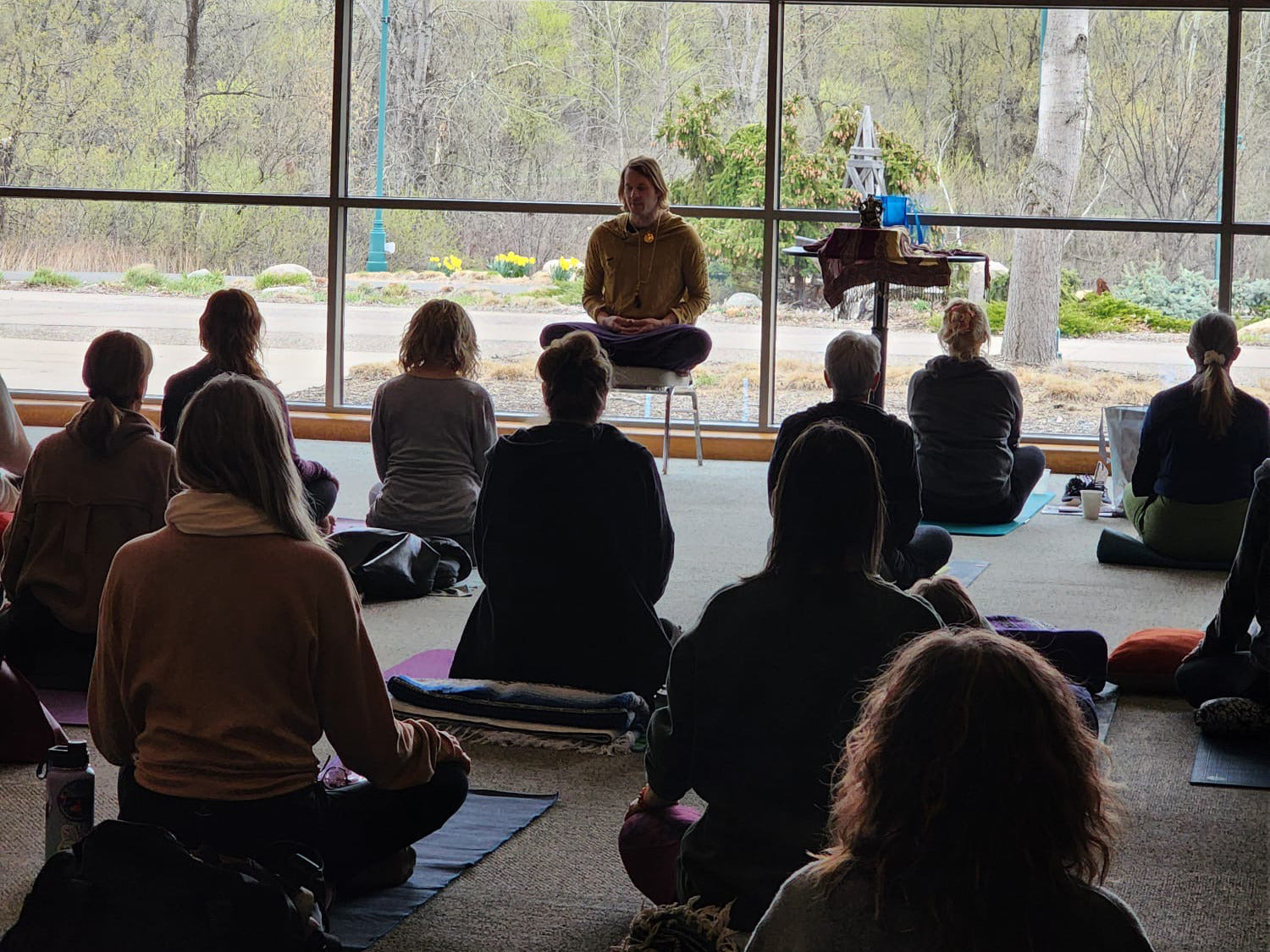
Today, Om Aim Saraswatyai Namah is used internationally in yoga classes, recorded meditation tracks, devotional music, Saraswati worship, study rituals, and invocations before artistic work.
The mantra may be chanted individually, repeated with a mala, spoken during puja, or sung in a group. In modern kirtan, a leader may chant the complete formula and a group may repeat it in response.
Many modern presentations associate the mantra with concentration, memory, creativity, exam performance, chakra activation, healing, or a flow state. These claims should not be treated as literal meanings or guaranteed outcomes. The historically supported basis is its devotional association with Saraswati, sacred speech, learning, music, knowledge, and the arts.
Related Concepts
Saraswati · Vāc · Aim · Vāgbhava bija · Saraswati puja · Vidyārambha · Namaḥ with the dative
Related Mantras
Aim · Aim Klim Saraswatyai Namah · Om Aim Hrim Shrim Saraswatyai Namah · Ya Kundendu Tusharahara Dhavala · Sarasvati-rahasya Upanishad mantras
Common Questions About Om Eim Sarasvatiyei Namaha
Is the correct spelling Eim or Aim?
The Devanagari syllable ऐं is academically transliterated aiṃ. Aim is the usual plain-English spelling. Eim is a pronunciation-oriented adaptation, not standard transliteration.
Is it Sarasvatiyei or Saraswatyai?
The normalized Sanskrit form is sarasvatyai, which is the dative singular of Sarasvatī. Sarasvatiyei is not standard Sanskrit transliteration.
Does Aim literally mean knowledge?
No. Aiṃ is a bija, or seed syllable, rather than an ordinary lexical word. Its association with knowledge and speech comes through Saraswati’s traditional identity.
Should the mantra end with Namah or Namaha?
The written Sanskrit form is namaḥ, ending with visarga. Namaha represents a common audible release of the final visarga in living recitation styles.
Is Om Aim Saraswatyai Namah a Vedic mantra?
Saraswati is a Vedic deity, but the complete mantra has not been verified in the Vedas. Its bija structure is more characteristic of later Shakta and tantric mantra traditions.
Does this mantra require initiation?
Simple devotional recitation is publicly taught and printed. Formal tantric sadhana, expanded bija forms, nyasa, mantra-siddhi, and intensive ritual observances may require lineage authorization.
How many times should I chant Om Aim Saraswatyai Namah?
No universal repetition count for this exact mantra was verified. While 108 and other counts are common japa conventions, they are not intrinsic or mandatory. You may follow a teacher, temple custom, household practice, or a consistent count of your choice.
Can this mantra be sung as kirtan?
Yes. In modern practice, it may be sung with melody or call and response. These musical features are arrangements of the mantra rather than part of its fixed Sanskrit wording.
Sources and Further Reading
- Mahānirvāṇa Tantram, Central Sanskrit University, formerly Rashtriya Sanskrit Sansthan; edition attributed on file to Ajaya Kumar Uttam
- Tantra of the Great Liberation: Mahānirvāṇa Tantra, Arthur Avalon, pseudonym of Sir John Woodroffe
- Puja Sangraha, Sri Rama Ramanuja Achari, Srimatham
- Śrī Sarasvatīrahasya Upaniṣat, SanskritDocuments.org
- Sarasvati Rahasya Upanishad, K. Narayanaswami Aiyer translation, reproduced by the International Gita Society
- The Elusive Sarasvatī: A Goddess, a River, and the Search for the Universal in the Particular, Elizabeth Mary Rohlman
- Arsha Vidya Newsletter, October 2016: Navaratri Puja at AVG, Arsha Vidya Gurukulam
- Sarasvatī-vandanā, Swami Dayananda Saraswati, Arsha Vidya Gurukulam
- Pronunciation Guide, Malcolm Keating, Oxford University Press
- A Sanskrit Grammar for Students, Arthur Anthony Macdonell
- Tirumantiram Preface, Kauai's Hindu Monastery, Himalayan Academy
- Later Vedic Goddesses: Sarasvati, Wisdom Library reproduction of academic thesis material
- The Notion of Dharma in the Mahānirvāṇa-Tantra, Sergey Pakhomov, Manuscripta Orientalia





1 comment
I LOVE Sarasvati!