How to Choose a Yoga Mat: Grip, Thickness, Material, and Sustainability
Jack UtermoehlIf you’re unsure how to choose a yoga mat, focus on four pillars: grip, thickness, material, and sustainability. A mat should keep you steady when dry or sweaty, offer the right cushioning without sacrificing stability, use materials that suit your values, and be sustainably sourced and durable.
In most cases, a 4–5 mm natural rubber or cork mat with a polyurethane or cork surface offers balanced grip and support and minimizes environmental impact.
Read on for practical guidance.
Quick Recommendation: Best Yoga Mat by Practice Style
| Yoga style | Suggested mat type | Why |
|---|---|---|
| Hot Yoga / Power Vinyasa | 4-5 mm cork–rubber or PU–rubber mat | Moisture-activated grip and antimicrobial properties |
| Dynamic Flow (Vinyasa, Ashtanga) | 4–5 mm natural rubber or PU mat | Firm connection to the floor with reliable dry and wet traction |
| Gentle Hatha / Iyengar | 5–6 mm natural rubber or cotton-mix mat | Extra cushioning supports joints without being too squishy |
| Restorative / Yin | 6–8 mm cork–rubber or cotton mat | Maximum comfort and warmth for long holds |
| Travel / On-the-go | 1.5–3 mm travel mat (natural rubber or TPE) | Lightweight and packable while maintaining grip |
How to Choose a Yoga Mat
Choosing a yoga mat isn’t about buying the most expensive option; it’s about aligning the mat’s characteristics with your body, practice style, and values. Consider:
Grip: Does the surface keep you steady when dry and sweaty? Look at textures and whether the mat absorbs or repels moisture.
Thickness: Mats range from 1.5 mm (travel) to 8 mm or more (restorative). Thickness affects cushioning, stability, and portability.
Material: PVC, TPE, natural rubber, cork, cotton, jute, and polyurethane each have distinct feel, durability, and environmental profiles.
Sustainability: Consider how the raw material is sourced, whether the mat contains harmful chemicals, its longevity, and end-of-life options.
Test mats whenever possible. Bring a towel or spray bottle to see how the surface handles sweat, try balancing poses to judge stability, and notice how the mat feels under your hands and feet.
Yoga Mat Grip: What Keeps You Steady
Grip determines whether your hands and feet stay planted in downward dog or slide out in warrior poses. Two types of grip matter:
Dry grip: This is the tackiness you feel with clean, dry hands. Natural rubber and some polyurethane (PU) surfaces provide excellent dry grip because they are slightly sticky and textured. Jute surfaces offer a textured dry grip that feels grounded and breathable.
Wet grip: When sweat builds up, cork mats become grippier because moisture activates the waxy surface. PU top layers found on premium mats absorb moisture to maintain traction during hot yoga sessions.
Texture adds friction. Raised patterns or woven fibers can enhance grip but may feel abrasive to some. If you sweat heavily, pair a towel with your mat or look for cork or PU surfaces that perform better when wet.
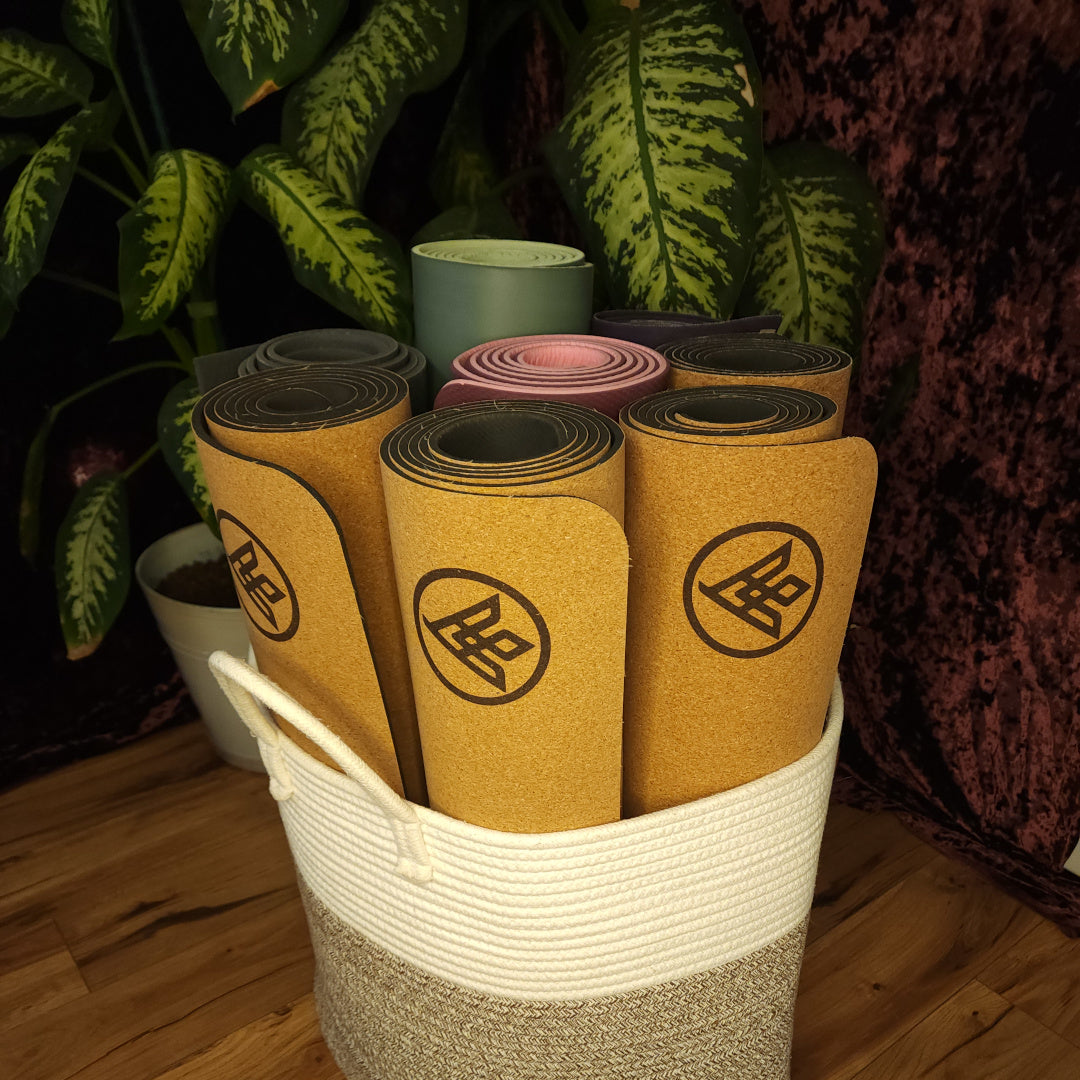
The Asivana Cork Yoga Mat combines cork and natural rubber, so you get reliable dry grip and increased traction with moisture. Its cork top naturally repels bacteria and doesn’t hold odors, while the rubber base anchors the mat to the floor.
Yoga Mat Thickness: Comfort, Stability, and Joint Support
Thickness influences how much cushioning you feel and how connected you are to the ground. A standard 1/8-inch (~3 mm) mat provides a stable base for flowing practices, while travel mats around 1.5–2 mm offer portability at the expense of cushioning. Mats between 3 mm and 5 mm balance cushioning and stability and are ideal for most practices. Thicker mats (6+ mm) offer more comfort for sensitive joints but can reduce stability in standing poses. Mats thicker than 8 mm are mainly for restorative yoga, where comfort outweighs balance.
Choose thickness based on your practice style, joint health, and whether you move or travel often. If you practice dynamic flows or balancing poses, stay at or under 5 mm. For seated or restorative practices, consider 5–8 mm. Remember that density matters: a dense 4 mm natural rubber mat can feel more supportive than a spongy 8 mm foam mat.

Yoga Mat Material: What Your Mat Is Made From
The material influences grip, feel, durability, environmental impact, and price. Below is a comparison of common materials.
| Material | Grip (dry/wet) | Cushioning & durability | Sustainability | Best use | Concerns |
|---|---|---|---|---|---|
| Cork | Moderate dry grip; grip increases when wet | Firm cushioning; durable when bonded to rubber | Renewable; harvested without cutting trees | Hot yoga, moderate-sweat flows | Less cushioning than foam mats; can crack if folded |
| Natural Rubber | Excellent dry grip and good wet grip | Dense cushioning; long-lasting | Renewable but dependent on responsible harvesting | All-around practice, power yoga | Contains latex (allergy risk); heavier; may have natural odor |
| Polyurethane (PU) | High dry and wet grip; absorbs sweat for hot yoga | Firm feel; paired with rubber base for durability | Synthetic; not biodegradable | Advanced practice, sweaty sessions | Requires regular cleaning; can degrade faster when exposed to oils |
| Thermoplastic Elastomer (TPE) | Good dry grip; moderate wet grip | Lightweight; less durable than PVC | Recyclable and PVC-free but still synthetic | Beginners, travel mats | May compress over time; recycling facilities are limited |
| Polyvinyl Chloride (PVC) | Very sticky dry grip; slippery when sweaty | Highly durable; spongy feel | Not biodegradable; production releases toxic chemicals | Budget mats, occasional practice | Contains phthalates; difficult to recycle |
| Jute | Strong dry grip; less effective when sweaty | Moderate cushioning when paired with rubber; textured feel | Natural fiber; biodegradable; eco-friendly story | Hatha, gentle flows, dry to lightly sweaty practice | Not ideal for hot yoga; can fray; needs rubber base for stability |
| Organic Cotton | Soft dry grip; improves with moisture when paired with latex | Comfortable and breathable; moderate durability | Renewable, biodegradable, and free of harmful chemicals | Restorative, meditation, home practice | Requires a non-slip rubber base; not ideal for dynamic flows |
Choose materials that align with your values. If you prioritize performance and natural feel, cork–rubber or PU–rubber mats excel. If you have latex allergies, look for TPE or cotton options. Avoid mats labeled “PER” or “eco PVC,” which studies found to be the same as PVC and still release toxic chemicals.
Yoga Mat Sustainability: What Actually Matters
Eco-friendly marketing can be misleading. Here are concrete factors to consider:
Renewable sourcing: Cork is harvested by stripping bark from cork oak trees without cutting them down, and trees regenerate bark every 9–12 years. Natural rubber comes from tapping latex sap; sustainable plantations and certifications (FSC, Rainforest Alliance) ensure habitat protection.
Non-toxic construction: Avoid mats containing PVC or undisclosed additives. The Ecology Center found that mats labeled as “PER” (polymer environmental resin) were actually PVC, and Greenpeace noted that PVC is toxic from manufacture to disposal.
Durability and replacement frequency: A durable mat reduces waste. High-performing natural rubber and cork mats can last years, while cheap TPE or foam mats may degrade within months losing their cushion and grip. Long-lasting mats also amortize the environmental cost over more sessions.
End-of-life: Look for take-back programs or mats that can be repurposed. Cork and natural rubber are biodegradable under proper conditions, though adhesives may slow decomposition. Synthetic mats often end up in landfills for hundreds of thousands of years.
Packaging and shipping: Recycled or minimal packaging and carbon-neutral shipping reduce environmental impact.
Ethical sourcing: Support brands that ensure fair labor and transparent supply chains. Asivana works with partners who adhere to responsible forestry and fair trade standards.
When you no longer use your mat, consider donating it to animal shelters, schools, or art projects. Turning old mats into kneeling pads or drawer liners extends their life.
Yoga Mat Size and Dimensions
Most standard yoga mats measure 68-72 inches long and 24 inches wide, accommodating average-sized practitioners. Taller yogis may prefer extra-long mats up to 80–85 inches to keep their head and feet on the mat during poses like savasana. Wider mats (28–36 inches) provide more lateral space and are helpful in crowded classes or for broader frames.
When selecting a mat length, choose one that is at least 6 inches longer than your height for full support. For more detail, see our Yoga Mat Dimensions guide. Remember that longer and wider mats weigh more, so balance comfort against portability.
Note: Studios may frown upon larger mats if the person obviously doesn't need the extra space. Other studios will outright ban the use of larger mats because it takes more space than they have allotted for their studio space. Check with your yoga studio if it's ok to use an extra large mat before purchasing.
Best Yoga Mat by Practice Style
Different yoga styles benefit from different surfaces. Here’s a deeper look beyond the quick recommendation:
Hot Yoga/Bikram: Choose a cork–rubber or PU–rubber mat. Cork’s grip improves with moisture, and PU surfaces absorb sweat to maintain traction. Bring a towel to manage pooled sweat.
Vinyasa/Ashtanga: A 4–5 mm natural rubber mat offers reliable dry grip, stability, and durability. If you sweat heavily, a PU or cork top adds wet traction.
Hatha/Iyengar: You may appreciate extra padding for longer holds. A 5–6 mm rubber or cotton-mix mat cushions joints while still providing stability. Cotton tops are soft and paired with a latex base to prevent slipping.
Restorative/Yin: Comfort matters more than grip. Thicker mats (6–8 mm) made from cork–rubber or organic cotton provide warmth and softness. A cotton mat with a non-slip latex backing offers a grounded, traditional feel.
Pilates/Core workouts: A durable PVC or TPE mat may suffice. These practices focus less on standing poses, so high grip is less critical. Consider a mat with at least 6 mm cushioning to protect your spine.
Travel or Multi-use: A 1.5–3 mm foldable natural rubber or TPE travel mat fits in your backpack and can be used on top of studio mats or carpets for hygiene and grip.
Yoga Mat Care and Longevity
Proper care extends the life of your mat and supports hygienic practice. I recommed wiping your mat with a mild, non-abrasive mat wash or diluted soap after each practice.
Avoid harsh cleaners that can break down materials. For cork mats, simply wipe with a damp cloth; cork’s antimicrobial properties resist bacteria and odors. Natural rubber and PU mats benefit from occasional deep cleans with a gentle vinegar solution and should dry away from direct sunlight. Always roll or hang your mat loosely to prevent creases.
Asivana provides detailed care guides for different materials. Visit our Yoga Mat Care page and our specific Asivana Cork Yoga Mat Care article for instructions. Storing your mat away from extreme temperatures and cleaning it regularly will ensure it lasts for many years.
Common Mistakes When Buying a Yoga Mat
Ignoring your practice style: Buying a thick, plush mat for power yoga can make balance difficult. Conversely, a thin travel mat may leave knees aching in restorative classes.
Falling for “eco” marketing without research: Terms like “PER” or “eco PVC” may mask harmful materials. Always verify the material composition and look for certifications.
Underestimating grip needs: Many, most, mats claim to be “non-slip,” but performance varies with sweat and surface. Test mats under conditions similar to your practice to avoid disappointment.
Overlooking size: Choosing a mat that’s too short or narrow can limit movement and reduce comfort. Ensure the mat fits your body and the space where you practice.
Not considering sustainability: Cheap mats may contain toxic chemicals and need frequent replacement. A durable, sustainably sourced mat often costs more upfront but saves resources and money over time.
Final Recommendation
Your yoga mat is a partner in practice. For most practitioners, a 4–5 mm cork–rubber or PU–rubber mat strikes the best balance: it offers reliable dry and wet grip, moderate cushioning, and a more sustainable footprint. If you sweat heavily or practice hot yoga, choose a mat with a moisture-activated cork or PU surface. If you prioritize softness and tradition, consider an organic cotton mat with a non-slip rubber base. Always research the materials, test the grip, and invest in a mat that aligns with both your practice and your values.
Ready to upgrade? The Asivana Cork Yoga Mat combines Portuguese cork and responsibly sourced natural rubber, providing dependable grip in dry or sweaty conditions, cushioning for everyday practice, and a renewable materials story. Check it out and see if it’s the right fit for you, but remember that the best mat is the one that supports your practice and principles.

FAQ - Frequently Asked Questions
What is the best yoga mat thickness?
- For most practices, a 4–5 mm mat balances cushion and stability. Travel mats (1.5–3 mm) suit portability, while restorative sessions benefit from 6–8 mm mats.
What yoga mat material is best?
- Natural rubber and cork provide excellent grip and durability. Choose PU coatings for wet grip, or organic cotton for comfort and tradition. Avoid PVC due to its environmental impact.
Is cork good for a yoga mat?
- Yes. Cork offers a naturally non-slip, antimicrobial surface and becomes grippier when wet. It’s also renewable and harvested without harming trees.
What yoga mat is best for hot yoga?
- Mats with moisture-activated surfaces; cork–rubber or PU–rubber are ideal. These materials maintain grip even when sweaty.
What yoga mat is best for beginners?
- A 4–5 mm natural rubber or TPE mat provides balance and comfort. Beginners who sweat lightly can also explore cork or cotton surfaces for a more natural feel.
Are thicker yoga mats better?
- Not always. Thicker mats (6–8 mm) cushion joints in restorative practices but may reduce stability in standing poses. Choose thickness based on your practice style and joint needs.
What is the most eco-friendly yoga mat?
- Mats made from renewable materials like cork and natural rubber are among the most eco-friendly. Ensure the rubber is sustainably harvested and that adhesives and dyes are non-toxic.
How long should a yoga mat last?
- A high-quality cork or natural rubber mat can last years with proper care. Frequent practice and poor maintenance shorten lifespan, while regular cleaning extends it.
What size yoga mat do I need?
- Standard mats measure about 72 × 24 inches. Taller yogis may need mats up to 80 inches long. Ensure the mat is at least 6 inches longer than your height.
How do I keep my yoga mat from slipping?
- Choose a mat with a grippy surface suited to your sweat level; cork and PU excel when wet. Clean your mat regularly to remove oils and use a towel or spray water at the start of practice to enhance grip.